

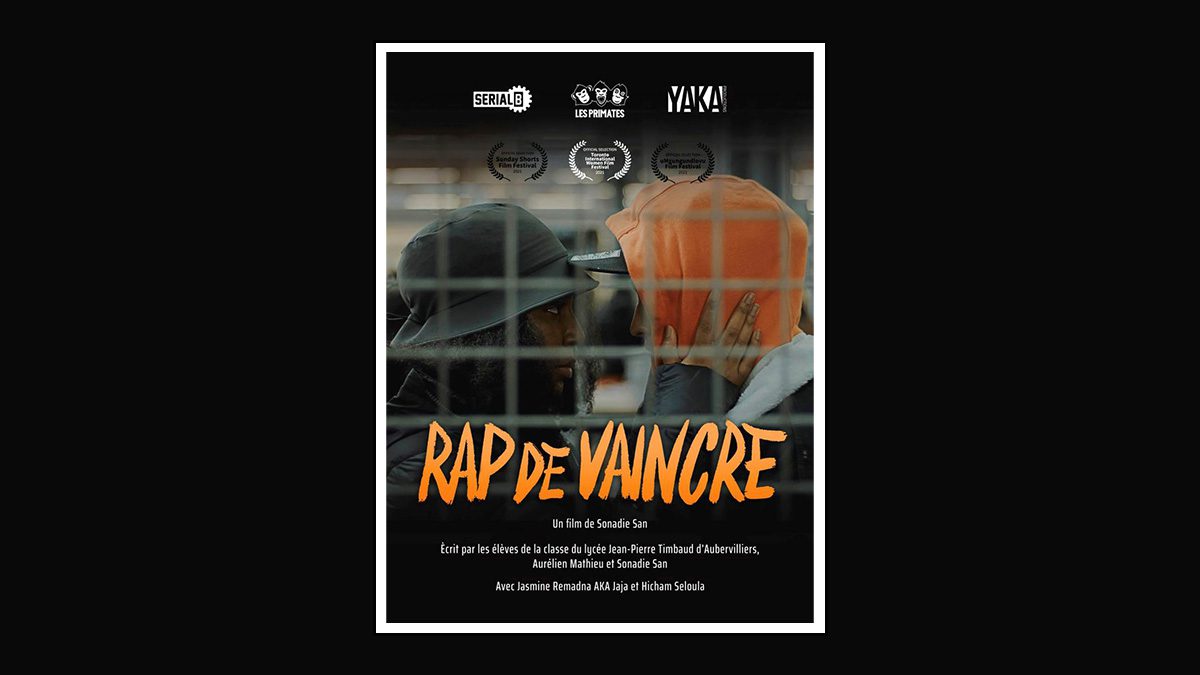
“RAP DE VAINCRE” by Sonadie San: A Female Perspective on Hip-Hop Cinema
The short film “Rap de Vaincre” shines a light on women in rap battles. We caught up with talented Franco-Cambodian director SONADIE SAN, who hails from Ivry-sur-Seine.


What’s the pitch behind “Rap de Vaincre”?
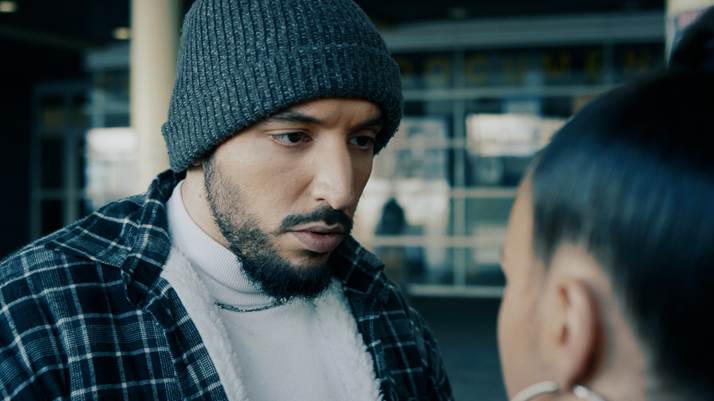
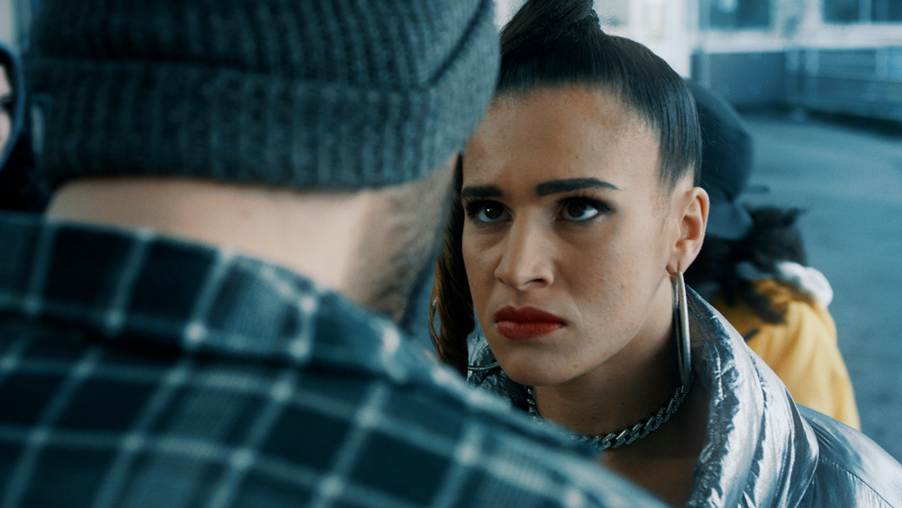
“Rap de Vaincre” is about Salima, a young woman who is used to rapping alongside her brother Ali. This time, she wants to sign up for a rap battle organized by her own brother, but he refuses: “Battles aren’t for girls.” So she uses every possible trick to make it onto that damn stage — and ends up clashing him! (Laughs)

Were you trying to reference Rap Contenders?
Not at all! People keep comparing it to “8 Mile” starring Eminem. And to be fair, when I rewatched it recently, there really is a strong nod to it, that’s true (laughs). I love that film — it’s excellent.

How was “Rap de Vaincre” made?
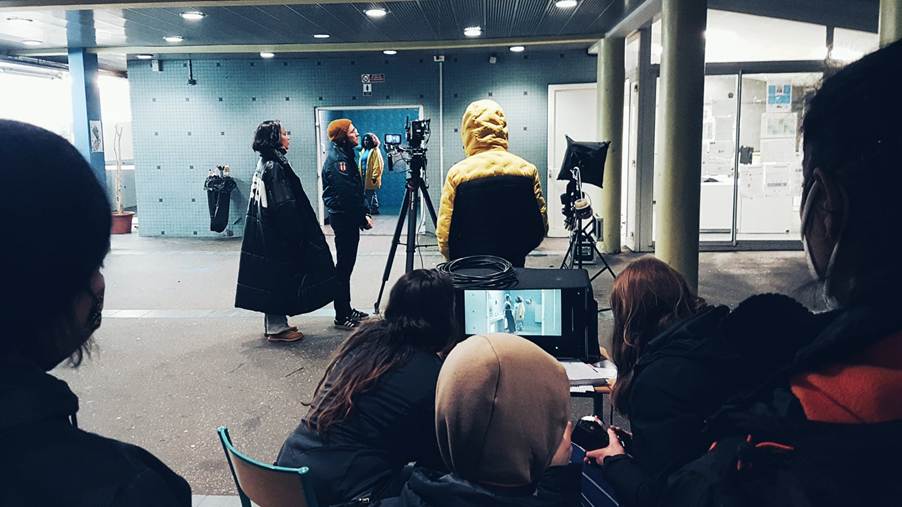
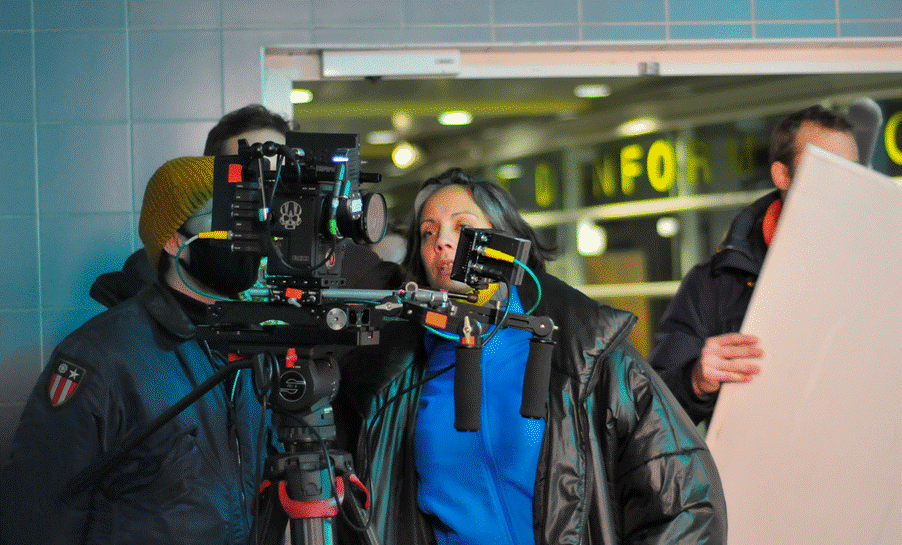
It’s a five-minute short film written with fifteen students — school dropouts from the Jean-Pierre Timbaud vocational high school in Aubervilliers. We wrote it over three months. They’re between 16 and 21 years old. It became a huge labor of love that brought together an incredible team. Yaka Productions, Serial B Studio and Les Primates joined me on the production side. During the shoot, the students got to try out every department on set: each of them spent half a morning in a different role, which meant everyone experienced four different jobs on set.
Can you tell us about the casting?
I chose the cast together with the students. At first we held a traditional casting with actors, but it just didn’t work — we needed real rappers for these roles. A week before the shoot, we still hadn’t found the right people. Then I was put in touch with the collective CallmeFemcee. Gotar, the producer working with female rappers, really has some incredible gems.

We cast those girls and that’s when we found Jasmine, aka Jaja. She’s from Asnières, she’s 28, a former PE teacher, professional dancer, graffiti artist, and now a rapper. She also competes in public speaking contests and she’s a really gifted writer. We instantly fell for her. Then we found rapper Hicham Seloula for the role of Ali.
Jasmine Remadna AKA Jaja

Who wrote the lyrics in the film?
It was Adrien Bassil, producer of Les Primates. It was an amazing collaboration. For every line, every punchline, I wanted a very specific meaning behind it. We went back and forth a lot together. Jaja was extraordinary. She’s a beginner, and she’s rapping opposite Hicham, who’s insanely good, yet she answers him bar for bar. She has real standards.
“Rap de Vaincre” was screened at the Grand Rex alongside the finalists of the Nikon Film Festival in Paris?
Yes, and we were so happy that filmmaker Maimouna Doucouré — who was on the jury — supported us! She sent us a beautiful message. My students were completely overwhelmed, they were so happy.
It feels incredibly rewarding to be acknowledged by a filmmaker like her.
Out of 1,614 films submitted — a record to beat — we ranked 16th. The platform BRUT, which usually gives only one prize at the Nikon Festival, was launching BRUT X that year, so they expanded their selection and created a list of 40 finalists.


And we made the shortlist among their eight finalists, which also led to a meeting with Pierre Lescure, president of the Cannes Film Festival.

He saw “Rap de Vaincre” and was fascinated by what we managed to say in such a short amount of time, and also by the way the film had been made. He told me, “You absolutely have to turn this into a feature film, it’s incredibly compelling!” After that, we talked about the visibility of the Asian community. It’s something he feels connected to because his daughter is Vietnamese. It was a beautiful moment of exchange.

Who are you, Sonadie San?
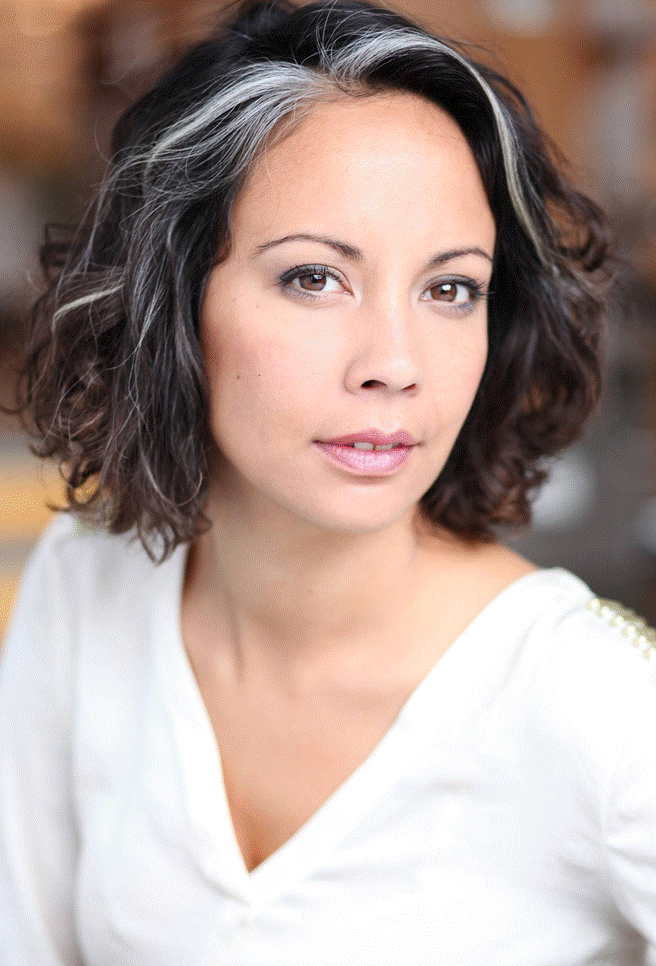
I was born in Ivry-sur-Seine and grew up in Lognes, in the Seine-et-Marne area. It’s one of those new towns shaped by immigrant communities, with a large Asian population and a strong Afro-descendant community as well. I’m of Cambodian origin. My background was very conventional: I studied sales, got a BTS degree, and became a manager in large-scale retail. I was bored out of my mind, and that very standard life made me anxious. At 28, I decided to return to theater. I took the entrance exam for Frédéric Jacquot’s drama school in Paris’ 15th arrondissement, which offered evening classes. I wrote my first play while still working in sales. Then I negotiated a severance package, and that’s really when everything started for me.

Did you then go on to work in theater?
Yes — as an actress, director, and also a coach. I coached a lot of comedians and staged two plays, “Enfante-moi” and “Je n’en crois pas mes lèvres”.
Did you grow up immersed in hip-hop culture?
I grew up in the suburbs, so hip-hop was very present. But I also had a very strict Cambodian upbringing. I wasn’t really allowed to go out much, so my relationship with hip-hop mostly stayed inside the house. Whenever I managed to sneak out and run away from home (laughs), I’d go hang out with friends and we’d blast hip-hop non-stop. I didn’t have those collective culture-sharing moments that many kids from the suburbs experienced, but it was still part of the landscape I grew up in.
Did cinema come into your life later on?
Yes. I didn’t have any role models. There are barely any Asians in French cinema. So much so that in my first four short films, I didn’t address my own community at all. Even in terms of legitimacy, I thought it would be boring to talk about it. I assumed nobody would care, because in my own life I had grown used to the feeling that nobody was interested in us. “Because we’re too serious,” “because we’re not funny,” “because we eat dogs,” “because the men have small dicks,” “because the women are submissive but somehow also sluts” — all that ugly nonsense… (Laughs). So naturally, my early short films weren’t about my own story. In cinema and on television, there’s almost nothing. You can name only a handful of Asian actors: Frédéric Chau, Steeve Tran, Mike Nguyen, Chinois marrant now too… you can count them on one hand.
Is it the same for directors?
Yes: Tran Han Huang, David Chou, Rithy Panh, and so on. But Asian actresses? Practically zero. I mean, they do exist — Elodie Yung, who was born in France and then left for Hollywood, Leana Chea, who had to move to Canada to find roles, Linh-Dan Pham, an extraordinary actress. She won a César, and normally that’s supposed to open doors. It didn’t. She had to go and work in England. She’s also in “Blue Bayou” by Justin Chon, and she’s magnificent in it. At some point, it becomes very limiting, you know?


That must have raised serious questions of legitimacy for you? Exactly. It deepens your insecurities, but at the same time it makes you think, “I really have to do this.” I’m also thinking about a wonderful director, the filmmaker behind “Allée des Jasmins”, Stéphane Ly-Cuong, who still has to fight hard to exist despite all the awards he’s won at festivals.

Did “Rap de Vaincre” mark the beginning of your festival run?
(Laughs) Yes — in South Africa at a women directors’ festival, then in London, and also at a women filmmakers’ festival in Toronto. (Laughs)
You’re also preparing a documentary series about female rappers — can you tell us more about that?
Yes, it’s my first documentary project, about the Tunisian rapper Medusa. She’s been living in France for six years and raps in Arabic, French, and English. It’s the first episode of “Libre comme l’Art”, a 12-minute pilot that I’ve already shot.

I want to make portraits of around ten women rappers in Paris.
The next one will be Thérèse, a Vietnamese and Chinese rapper. She’s blowing up right now. She’s in every magazine. She’s from Ménilmontant and she released a track about anti-Asian racism called “Chinoise?” She has a Cruella-like universe.
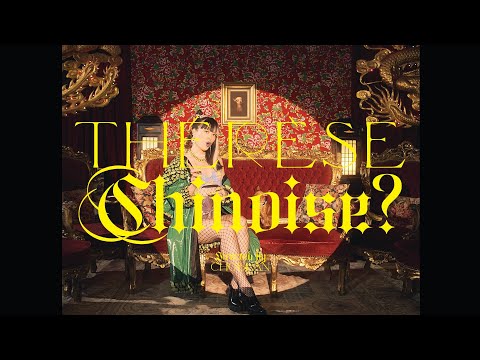
Then after that, rapper Eesah Yasuke. They all have incredible writing and very distinctive artistic worlds.

So what’s next for you?
I’m writing my next short film, this time about family transmission in my culture. I finally feel legitimate enough to talk about my Cambodian culture, and ready to share my stories.
It’s about a little Cambodian girl born in France who enters a competition and asks her mother for help. I’ve also started writing my first feature film, “Le Soleil du Manguier”, which I developed during the “Plume & Pellicule” writing residency. Right now, I’m looking for a producer to support me on these new projects. (Laughs)


