

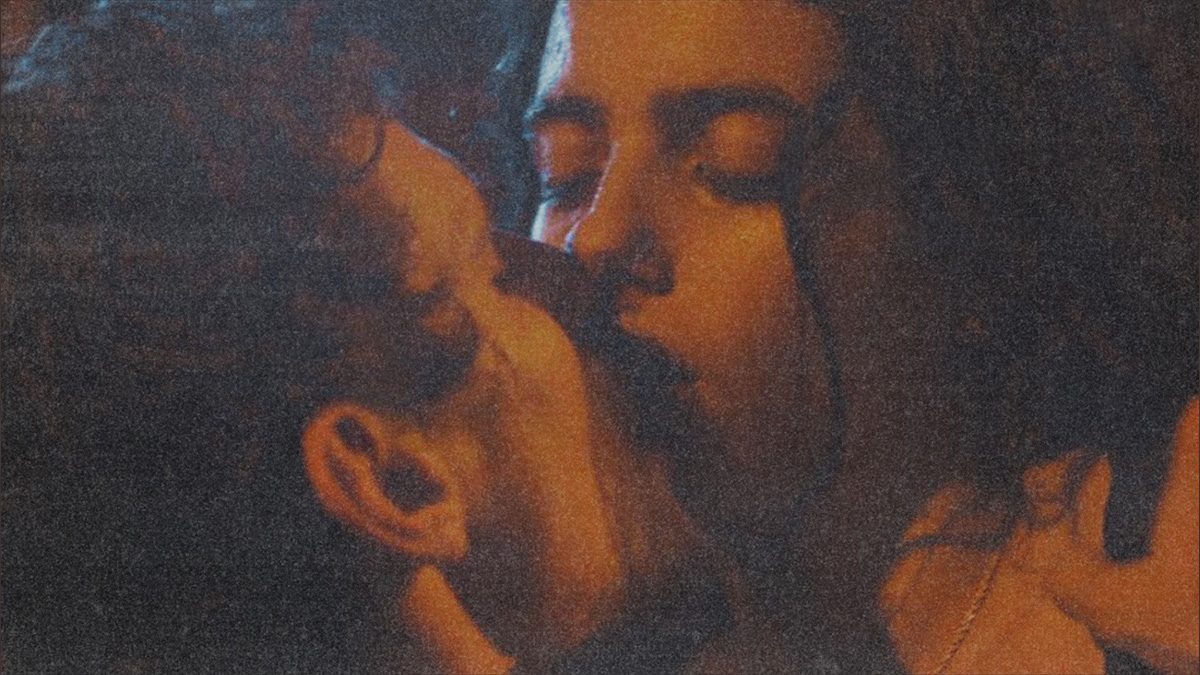
Over the past five years, self-produced feature films and Marseille-made web series have been redrawing the map of an alternative independent cinema. These DIY films shot in Marseille bring stories from overlooked neighborhoods to the forefront. Emerging filmmakers, unclassifiable artists, local actors, and homegrown technicians are shaping a protean Mediterranean identity and shaking up the rules to make room for other voices.
Underground dead end or Trojan horse?
In the early 2010s, a New Wave of guerrilla filmmaking—shot on the fly and held together by sheer talent—emerged on the other side of the Paris ring road: “Donoma” by Djinn Carrénard (2010), “African Gangster” (2010) and “Sans pudeur, ni morale” (2011) by Jean-Pascal Zadi, “Rue des Cités” by Hakim Zouhani and Carine May (2011), “Vole comme un papillon” by Jérôme Maldhé (2012), “Rengaine” by Rachid Djaïdani (2012), “Brooklyn” by Pascal Tessaud (2014), “Karma” by Dosseh (2014), and “Star” by Marc Aurèle Vecchione (2016). These films opened a breach in a French cinema stifled by insularity and shook up the rules.


Call it makeshift cinema, underground cinema, street cinema, outsider cinema, or free cinema—this suburban cultural phenomenon was, at its core, rooted in a territorial claim similar to that of its predecessors: Malik Chibane with “Hexagone” (1994), Jean-François Richet and Patrick Dell’Isola with “État des lieux” (1995), Youcef Hamidi with “Malik le Maudit” (1996), Djamel Ouahab with “Cour interdite” (1998), the Olivares brothers with “En attendant la neige” (1998), and later Rabah Ameur-Zaïmeche with “Wesh Wesh” (2001).


Vidéo d’archive INA
Pour des raisons de diffusion, cette vidéo est visible uniquement sur le site officiel de l’INA.
It must be said, however, that this underground way of cutting one’s teeth was not really carried forward in the Paris region. It is as if the cracks these self-taught filmmakers had opened in the walls of the industry were quickly sealed behind them. While some of them did manage to produce a second feature within the system—like Carrénard with “Faire l’Amour”, Zouhani & May with “La Cour des miracles”, Jean-Pascal Zadi, who won a César for “Tout simplement noir”, and Djaïdani with “Tour de France”—very few guerrilla films followed in the wake of that second wave. It is as if young urban filmmakers wanted to avoid the same financial hardship and were determined to fall into line, seeking the right funding in order to pay their crews. A perfectly understandable ambition.
Is French guerrilla cinema dead?
In the footsteps of masters like John Cassavetes and Melvin Van Peebles, the Do It Yourself ethos so central to American independent cinema made it possible for an impressive generation to emerge: from Spike Lee with “She’s Gotta Have It”, Kevin Smith with “Clerks”, Jim Jarmusch with “Permanent Vacation”, Gus Van Sant with “Mala Noche”, Robert Rodriguez with “El Mariachi”, Darren Aronofsky with “Pi”, to the Safdie brothers with “Daddy Longlegs”, the Russo brothers with “Pieces”, and Greta Gerwig with “Nights and Weekends”. All of them began in guerrilla mode before going on to build careers at the heart of the industry. That independent spirit is still very much alive today in standout festivals such as Sundance, Slamdance, Urbanworld, and SXSW, and in the work of demanding filmmakers like Qasim Basir with “Mooz-lum”, Sean Baker with “Tangerine”, and Andrew Patterson with “The Vast of Night”, among others.


During roughly the same period, four films from Marseille and its surrounding area—“Plan B” by Kamel Saleh (2010), who had previously co-directed “Comme un aimant” with Akhenaton; “Aouine” by Adam Pianko and Daniel Saïd (2016); “Caïd” by Ange Basterga and Nicolas Lopez (2017); and “Le crime des anges” by Bania Medjbar (2018)—helped renew the wave in Guédiguian’s region. The same urgency to speak, the same territorial claim, in stories set in Le Panier, La Savine, Martigues, or La Busserine, with intimate narratives that put local performers front and center.


A third wave is here
In recent years, it is once again in Marseille that the DIY movement has picked up the torch, with a remarkable string of singular guerrilla shoots. Carried by the city’s music scene—which never waited for Paris to validate its voice and has always expressed itself in full independence—Marseille films do not fit within the traditional distribution circuit.
Circulating online, at festivals, or on DVD, these films point to a guerrilla rebirth in the South. Media recognition came with César-winning Marseille actress Hafsia Herzi, who, to general surprise, directed her first feature, “Tu mérites un amour” (2019), without financing. The film made a strong impression at Cannes Critics’ Week, which later allowed her to fund the beautiful “Bonne mère” two years later.


In a completely different register, last year saw the DVD release of “Sans Peur”, a festival award-winner by Emmanuel Saez, who brings out the heavy artillery—and the SFX—to reconnect with the genre cinema so dear to guerrilla hero Robert Rodriguez, who famously made the emblematic feature “El Mariachi” for just a few dollars.
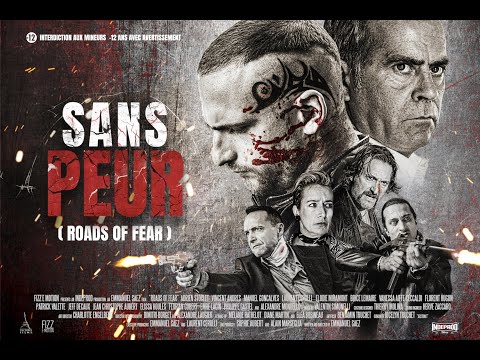


These unapologetically violent genre films have fun playing with the archetypes of the Marseille underworld. As B-movies, they embrace technical control and professional-grade special effects. A heterogeneous generation of young filmmakers is emerging: actress Sabrina Nouchi founded the acting school “La Fabrique de l’acteur” in Marseille and has racked up DIY shoots with “Le bruit des talons” (2012), “Juste Sam” (2015), and “Push It to the Limit” (2014). She then co-directed “En ground and pound” (2016) with Milo Chiarini, followed by “Juste une mise au point” (2020), which was screened at the Saint-André-des-Arts cinema in Paris. Chiarini, a former police officer turned actor, has just directed “Mon milieu” on his own, currently making the rounds on the festival circuit.


Other unknown figures are stepping into directing as well. In 2022, Sabry Jarod—a firefighter by trade and an actor—directed the self-produced feature “Dernière danse”, produced by South Films.

He had already co-directed the comedy “Battle Bordel” with Alexandre Laugier in 2019, starring Bengous and Dylan Robert (the César-winning actor from “Shéhérazade”). Laugier also directed “Amour-eux” on his own in 2019.
Another self-taught filmmaker, Tithia Marquez, directed her first feature with actor Moussa Maaskri, “Mon fils Malik” (2021), which has been touring the independent festival circuit. Likewise, Nicolas Lugli directed a first horror feature, “Smile”, again with Moussa Maaskri, the Marseille actor who has been among the strongest supporters of this third guerrilla wave. As for Kamel Saleh, he is back in action with his third guerrilla feature, “Rapsodie”, a hip-hop musical comedy starring rapper M.A Donn, who previously appeared in Carrénard’s film “Faire l’amour”.

Tired of being rendered invisible by Paris-based production companies and skeptical institutions, Marseille filmmakers have decided to create, produce, and act—to make personal street films far from cultural diktats. The use of 4K digital technology and the possibility of home-made post-production allow these no-budget films to compete technically with professional productions, drawing on a strong pool of Southern technicians and actors.


Over the past five years, around fifteen self-produced feature films have been made in Marseille, without receiving the slightest national media coverage from the specialist press. While Paris has laid down its arms and no major guerrilla film has emerged there since the heyday, the awakening in Marseille has still gone unnoticed by mainstream cinema and the media. Class contempt, or an elitist vision of centralized cinema? The rap industry was wrong to underestimate Marseille production: with the massive success of “Bande organisée”, the city of IAM became definitively unavoidable on the French production map. At a time when heavily financed and heavily marketed productions—from the series “Marseille” (Netflix) and “Validé 2” (Canal+) to “Bac Nord” and “Bronx” (Amazon)—capitalize on the imagery of the port city and its ultra-violent drug networks, it is fascinating to watch local productions emerge “without asking for permission,” as Oscar-winning filmmaker Steven Soderbergh—director of “Che” and “Traffic”—suggests, having shot his last four feature films on an iPhone.
And this is only the beginning of the wave.


M.A.R.S., capital of the street web series
For while this guerrilla feature-film production has not yet earned the same recognition as its Parisian cousins—who managed to convince arthouse distributors to release their gems in theaters and screen them at Cannes, Arte, or Canal+, thereby reaching established cultural media—another Marseille phenomenon has exploded: web series flooding the internet and pulling huge numbers. Writers and directors from working-class neighborhoods know that the doors to feature filmmaking are locked tight, that their tastes and creative impulses are unlikely to win over distributors, festival programmers, or television and platform executives. So, thanks to YouTube—freely accessible and in continuity with the exposure rap videos receive by reaching a large audience directly—creators of original series are launching into self-production with a precious freedom of tone and speaking straight to their public.
The web series “Les Déguns”, self-produced in 2013 by Nordine Salhi and Karim Jebli (and directed in particular by Alexandre Laugier), was first released on YouTube. Four seasons of ten episodes went on to rack up 190 million views.

As the buzz grew, guest appearances followed from names such as Soprano, Moussa Maaskri, JUL, L’Algerino, Sofiane, Rémy Cabella, Soolking, Camille Lellouche, and Pascal Légitimus, as well as reality TV personalities—another point of Marseille pride—like Stéphanie Durant and Anaïs Camizuli. The breakout web series was eventually aired on Canal+ and TFX. A genuine success story that propelled the two accomplices from La Sauvagère to the gates of the film industry, as they followed up this runaway success with two feature films, “Les Déguns” (2018) and “Les Déguns 2” (2023), directed by Cyril Droux and Claude Zidi Jr. To many people’s surprise, both installments reached 500,000 admissions in theaters. They were notably produced by Hyper Fokal and Cyril Hanouna’s Darka Movies.

National media outlets seized on it with disdain. Konbini wrote: “It is hard to understand how the film got made, as it is so heavy-handed and vulgar, like a parody made worse by Hanouna’s cameo as guest of honor. But there’s something for everyone!”


The Les Déguns formula inspired other talents from Marseille. The web series “Les SEGPA”, written by brothers Ichem and Hakim Bougheraba and directed by Ichem Bougheraba and Sylvain Bei, was released in 2015 and also became a huge success over three seasons: the first season reached 33 million views on YouTube, the second 44 million, and the last 157 million. The same rise as Les Déguns. The same explosive numbers as rap superstars.

The film “Les SEGPA” (2022), directed by Ali Bougheraba and Hakim Bougheraba and co-produced by Hanouna, reached 730,000 admissions despite being largely rejected by French critics, and will soon be followed by a sequel, “Les SEGPA font du ski”. The guerrilla web series is therefore a Trojan horse for conquering cinema, building buzz season after season. By directly reaching a fan base online, creators avoid smashing into the glass ceiling of criticism, which still largely determines theater attendance. It is a new strategy for entering the castle, at a time when auteur cinema has become an almost inaccessible keep for kids from the projects—deemed too vulgar, too uncultured, too lacking in nuance. The broader audience, by contrast, validates their boldness and refusal to conform to polite taste.
Télérama wrote: “Unsurprisingly, this feature film co-produced by Cyril Hanouna and now in theaters is staggering in its stupidity. It stigmatizes struggling students in general and vocational education tracks.”


Marseille comedy web series reach a broad popular audience across the country and can persuade the film industry to adapt these DIY web productions into theatrical features with bigger resources.
More dramatic self-produced works are also emerging. Rapper Soso Maness launched a four-episode web series, directed by young video directors Julio Ibarra and Katim Saïdi, to accompany the release of his albums: “Le vent tourne” (2019), “Le sang appelle le sang” (2020), “Avec le temps” (2021), and “Crépuscule” (2022), amassing more than 25 million views on YouTube.

It is worth noting that music video directors Julio Iborra and Katim Saïbi created their own production company, Drive By, and shot two guerrilla features in Marseille’s northern districts: “Enfants du soleil” in 2019 and “Microbe”, currently in post-production.


The democratization of filmmaking—and above all its mass circulation on YouTube—has inspired other Marseille projects. Imagined in prison, “Marsiglia”, a dramatic web series by Marcantonio Vinciguerra and Anthony Lopez (2 seasons of 6 episodes), has attracted close to 5 million views. A feature-film pilot has already been shot.

“Sous écrous” (2020), created by Ichem Boogy and Arriles Amrani and produced by Hyper Fokal, sees the SEGPA team dive into comedic prison storytelling, and they have already been approached to adapt the web series into a feature film.

In less than ten years, Marseille has become the world capital of guerrilla cinema.
Other web series are also emerging from the port city: “Deter” by Kamel Manoff (2021), “Kamar O” by Aroun Billal (2021), “Cappuccino” by Alexandre Laugier in 2021, produced by 13ème Art and South Films, and “La dernière année” by Nawyr Haoussi Jones (2021), produced by Yes We Cannes and Filmo2. Five episodes that explore political fiction. Altogether, around ten impactful web series made by Marseille-based writers and directors are helping redefine the city’s damaged image by immersing themselves in its cultural codes and local tastes. Fast talk, armed disputes, friendship, and a joy for life give Marseille new colors and shape a rich, diverse independent production scene. Guerrilla cinema is the extension of independent rap—its visual continuation in total freedom. Short films, web series, and feature films produced on the margins and far from Parisian codes are bringing new faces and new stories to the screen.


Most Marseille directors and writers are self-taught and learned on the job through music videos, web series, and shoestring short films. The arrival of the free, public film school Cinéfabrique—whose first Marseille class was mentored by filmmaker Nawir Haoussi Jones—will, over the years, bring technical skills to students without formal qualifications. This is also what the Moovida Academy, the film branch of the association Ph’art et Balises, aims to pass on. Led by its new director Yasmina Er Rafass, it has for the past three years offered acting training (theater and cinema) to many young people from Marseille’s working-class neighborhoods, as well as collective writing workshops that have resulted in three fiction short films supervised by feature filmmakers (Pascal Tessaud “Brooklyn”, Étienne Constantinesco “Dernier Soleil”, and Didier Daarwin “Mastemah”):
The short films produced by the association Ph’art et Balises through these writing workshops include “Merlich Merlich”, directed by Hannil Ghilas (2021), which won the Grand Prize at the Urban Film Festival in Paris, as well as “Le Trésor”, directed by Kahina Benakli (2023), and “Incredible”, directed by Sajjad Simon-Jean (2024), all of which are joining the wave.


Elsewhere, the collective Cinémabrut, founded in 2006, has for some time been organizing screenings in Marseille of self-produced films—short films, documentaries, and features—notably at the Vidéodrome 2 cinema. Political films, art films, experimental works, and hybrid forms: this dynamic collective brings together film lovers in downtown Marseille and also organizes the Cinémabrut festival, now in its 15th edition, a major celebration of self-produced cinema.


Far from any centralized academicism, dissonant, free, resourceful, and inspired voices are making films that break through the wall of money and media invisibility, putting artistry and creative freedom back at the center of the process. Today, the new Marseille wave is finally taking flight for good.


