Gazo Revives an Old Debate: What Makes a Rap Album an Album in 2026?
Is an album still an album when it feels like a collection of fifteen singles? Conversely, why do some rappers who already have several projects and hundreds of millions of streams to their name…
 Written byZEZ XXI — Mazdak Vafaei Shalmani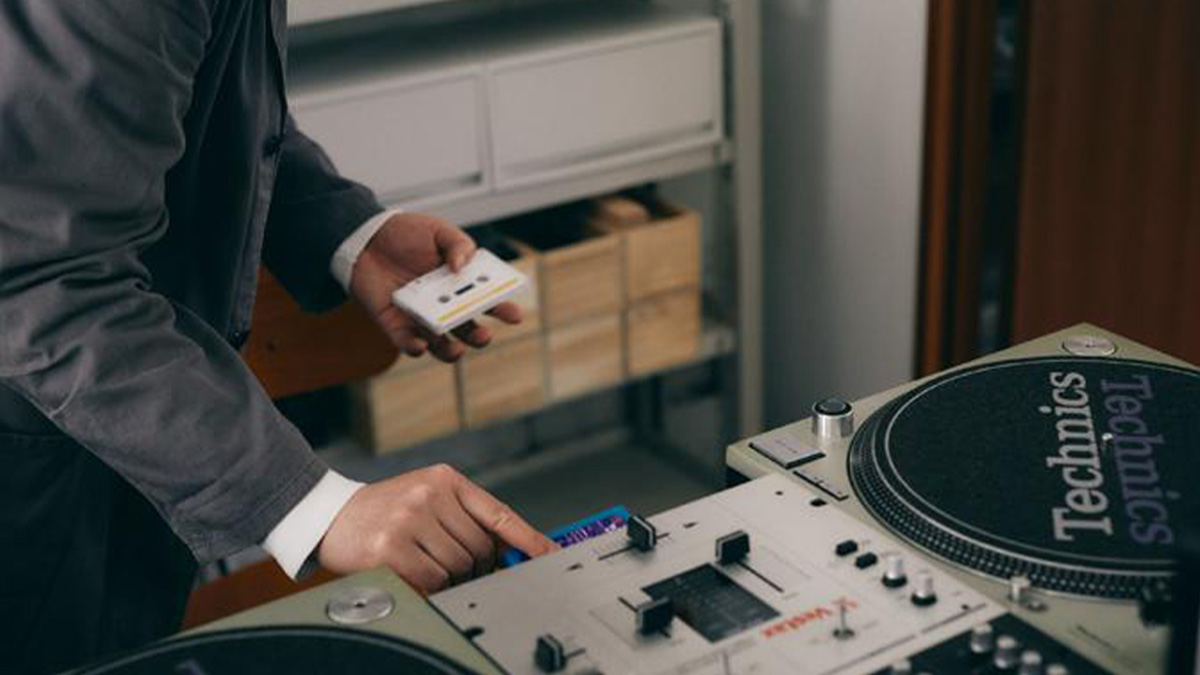
Dans cet article

Is an album still an album when it feels like a collection of fifteen singles? Conversely, why do some rappers who already have several projects and hundreds of millions of streams to their name still refuse to consider them proper albums? The question once seemed to belong to another era. Yet it is increasingly resurfacing in conversations across French rap.
Appearing on Mehdi Maïzi‘s show on France Inter in September 2026, Gazo reopened a debate almost as old as rap itself:
“We have a tendency to put projects out as albums when, really, they’re mixtapes. But because people are in a rush, they’ll call them albums.”
The rapper went on to explain that an album should involve more work, tell a story and have a genuine structure. The statement carries particular weight coming from an artist who spent years embracing the mixtape format, with DRILL FR and then KMT, before presenting Apocalypse as his first proper solo album. Generations reported his comments from the interview with Mehdi Maïzi.
But behind that statement lies a much broader question. Over the past thirty years, the mixtape has lost almost everything that once physically distinguished it from an album. At the same time, streaming has transformed the way albums themselves are conceived, marketed and, above all, listened to.
Back when a mixtape really was a mixtape
To understand why Gazo‘s comment matters, we need to go back to a time when the words album and mixtape did not simply describe two different levels of artistic ambition. They also referred to fundamentally different objects.

In the hip-hop culture of the 1980s and 1990s, the mixtape was first and foremost part of DJ culture. In France, Cut Killer adopted a practice already central to New York hip-hop in the early 1990s: compiling the latest American records, mixing and scratching them, while inviting emerging French rappers to contribute freestyles and exclusives.
These projects initially circulated on cassette before CDs gradually took over. Le Monde has revisited this period and Cut Killer’s role in spreading hip-hop culture across France. The DJ himself also recounts, on his official website, the transition from mixtapes to the commercially released Hip Hop Soul Party compilations.
A mixtape could therefore be a DJ cassette, a collection of existing tracks, borrowed instrumentals, freestyles, remixes, B-sides and exclusives. For a rapper, it could serve as a calling card or simply as a way of staying visible between two albums.
The album belonged to a different economy altogether: labels, pressing plants, nationwide distribution, FNAC and Virgin stores, record shops, promotional campaigns, music videos, singles, radio airplay and sample clearances.
The distinction was artistic, but it was also physical, economic and legal.
Booba: an Autopsie mixtape did not serve the same purpose as an album
Booba‘s career in the mid-2000s provides a particularly clear illustration of that distinction.
In 2005, he released Autopsie Vol. 1. The project combined tracks, freestyles, collaborations, remixes and various appearances connected to the rapper’s universe. A few months later came Ouest Side, with an entirely different commercial ambition: a studio album distributed by Barclay/Universal, promoted through singles and aimed squarely at the traditional record market.

Both projects could end up on a CD and both came from the same artist. Yet they did not tell the same story and did not serve the same purpose.
This was also the period when street albums and street CDs began to emerge, hybrid formats that were already starting to blur the boundaries. But the distinction remained clear enough for an artist to release a high-profile mixtape without anyone assuming that he had just delivered his new studio album.
Oxmo Puccino was already asking the question before Spotify
The debate, then, certainly did not begin with streaming platforms.
Asked by l’Abcdr du Son what separated an album from a mixtape, Oxmo Puccino initially offered a wonderfully pragmatic answer:
“Ten times the budget.”
Behind the joke, however, the rapper was already articulating a genuine artistic definition of the format. He spoke of “work and quality”, associating an album with a larger team, greater ambition and, above all, the intention to create something capable of lasting for years.
Oxmo Puccino’s full interview remains available in the Abcdr du Son archives.
What makes the exchange particularly revealing is when it took place: this was still the 2000s. Streaming had yet to take control of the French music industry.
Yet the boundary was already beginning to shift.
Streaming didn’t just change the format — it changed the song
Downloads had already begun to make the physical object disappear. Streaming completed the process.
A mixtape, an EP and an album can now be found in exactly the same place, on the same screen and presented in almost exactly the same way: cover art, a tracklist and a play button.
But the transformation goes much deeper than that.
In France, the SNEP began incorporating streaming into album certifications in 2016. Today, streams generated by individual tracks contribute to an album’s equivalent-sales total. The system does, however, reduce the disproportionate impact of a project’s biggest hit by removing half of the streams generated by its most-played track before conversion. The SNEP explains its certification methodology here.
This change did not, of course, force rappers to write differently. But it accompanied a radical shift in listening habits: every song can now have a commercial life of its own.
In the CD era, a single was partly designed to persuade listeners to buy the album. Today, someone can stream the same song 150 times without hearing a single second of the track that follows it.
The hit no longer necessarily has to sell the album. It can survive without it.
The album as a collection of potential singles
This new economy has coincided with a particularly visible evolution in rap and urban music.
Some contemporary albums can feel as though they have been designed as a succession of tracks capable of standing on their own: the melodic song, the blockbuster feature, the club record, the introspective cut, the international collaboration, the playlist-friendly track or the song with a section built to go viral.
The musical evolution of French rap has reinforced that tendency. Singing, R&B, drill, Jersey club, trap and pop can now coexist on the same project. Hellsinky recently explored this transformation, from French rap’s historical suspicion of R&B to the widespread adoption of melody and Auto-Tune.
That diversity can obviously produce great albums. Variety is not the problem.
The real question is what connects those songs: do fifteen good singles necessarily make a good album?
L’École du micro d’argent: when every track didn’t need to be a hit
The contrast becomes striking when we return to some of the classics of the physical era.

L’École du micro d’argent by IAM, released in 1997, obviously contains singles and tracks strong enough to exist outside the album. But the record was not built as though every song needed to become a standalone product.
Demain c’est loin is perhaps the most extreme example: almost nine minutes long, no conventional chorus, a slow progression and seemingly no attempt whatsoever to fit a traditional radio format.
The track can afford to exist because it also serves a purpose within the album.
IAM nevertheless stuck to their artistic direction.
This is not about claiming that albums made in 1997 were inherently better than albums made in 2026. Record companies were already chasing hits, and rappers already wanted to sell records.
But the economics of listening were different. When someone bought L’École du micro d’argent, Petit frère, Nés sous la même étoile and Demain c’est loin all belonged to the same physical object.
Today, listeners can extract the hit from that object and never return to the rest of it.
Josman: “I can’t call it an album because I didn’t work on it like an album”
Yet this hierarchy between different kinds of projects remains deeply rooted among some artists.
In 2017, Josman refused to describe 000$ as an album:
“I can’t call it an album because I didn’t work on it like an album.”
He explained that he regarded part of the project as freestyles and did not want listeners to assign it an artistic status he himself had never intended. The interview is available through Interlude.
The wording is revealing: for Josman, neither the length of a project nor the number of tracks on it is enough to turn a collection of songs into an album.
What matters is the work done to connect them.
Damso: when a mixtape becomes an album
Damso perfectly illustrates the opposite ambiguity.
He would later explain that Batterie Faible had not originally been conceived as his debut album:
“Originally, Batterie Faible was supposed to be more of a mixtape.”

According to his account, the people around him professionally then encouraged him to turn the project into an album. Generations revisited his account of how Batterie Faible was made.
The anecdote is a reminder of something essential: “album” is also a commercial category.
What an artist believes they have recorded and what the industry ultimately decides to market are not necessarily the same thing.
Kerchak searches for “a common soul”
Almost a decade later, Kerchak nevertheless returns to a remarkably traditional conception of the album.
Asked by Mehdi Maïzi about 34, presented as his first album after several previous projects, he summed up his approach in a few words:
“All the songs, even though they’re different, share the same soul.”
He explained that he had devoted considerably more time to the artistic direction, the choice of production and the themes explored throughout the record. His interview with Mehdi Maïzi develops this idea around 34.
What makes that definition interesting is that it does not require every song to sound alike.
An album can move from one style to another. It simply needs to create the feeling that all those songs belong to the same story.
La Fève and the return of the “first proper album”
Perhaps La Fève best embodies this renewed desire to establish a hierarchy between different kinds of releases.
His discography already includes ERRR, 24, BIGLAF and EMPTY THE BIN. 24 even approached 18,000 equivalent sales in its first week. Yet the rapper presents FINIS-LES as his first proper album.
The paradox is fascinating: he lacks neither the numbers, the songs nor the audience required to call his previous releases albums.
What they apparently lack is the artistic status he has reserved for FINIS-LES.
In an industry obsessed with constantly feeding the platforms, La Fève has also embraced the risk of scarcity: few interviews, tightly controlled communication and long stretches in which he allows the music to develop away from the surrounding media noise.
Streaming removed the obligation to listen to the album
Gazo‘s statement therefore goes far beyond an argument over terminology.
It raises an almost philosophical question for an industry now capable of measuring every track individually: what still compels fifteen songs to form a single body of work?
Does an album need to tell a story? Have its own sonic identity? An introduction and a conclusion? Do the songs need to share producers? Themes? Or is it enough for an artist to decide that fifteen tracks will appear together at midnight on a Friday?
There is, of course, no universal answer.
Some mixtapes have been more coherent and ambitious than some albums. Conversely, rap history is full of great albums whose strength lies precisely in their accumulation of immediately effective songs.
Nor is streaming simply the villain of the story. It has allowed thousands of independent artists to distribute their music without needing the infrastructure that once separated a homemade cassette from an album stocked in every major record store in France.
But it has removed one thing: the physical boundary.
When the format no longer draws the line, the artist has to redraw it
In the 1990s, a mixtape could be a Cut Killer cassette packed with new records, scratches, freestyles and exclusives.
In the 2000s, it could become one of Booba‘s Autopsie projects, an intermediary release clearly distinct from the studio album that would follow.
In 2026, a mixtape and an album can arrive on the same Friday, appear on the same streaming service, be played through the same subscription and look almost identical on a phone screen.
The format itself no longer draws the distinction for the artist.
Perhaps that is why Gazo now talks about narrative, Kerchak about a “common soul”, Josman about the work involved and La Fève about making his “first proper album.”
In their own ways, they are all attempting to rebuild an artistic boundary where the physical boundary has disappeared.
Streaming probably didn’t kill the album. It did something far more subtle: it removed the obligation to listen to it as an album.
And at a time when every track can become a single, a trend, a TikTok clip or a playlist entry independently of everything around it, perhaps the truly radical act is once again to make fifteen songs that only fully make sense because they belong together.