
How French Rap Learned to Embrace Melody: From the Rejection of R&B to the Auto-Tune Revolution
**How French Rap Once Looked at R&B with Suspicion** At the turn of the 2000s, one striking contrast emerged when comparing France with the United States. On both sides of the Atlantic, hip-hop was…
 Written byZEZ XXI — Mazdak Vafaei Shalmani
Dans cet article

**How French Rap Once Looked at R&B with Suspicion**
At the turn of the 2000s, one striking contrast emerged when comparing France with the United States. On both sides of the Atlantic, hip-hop was becoming the defining soundtrack of a new generation. Yet while American audiences embraced rap and R&B as two inseparable branches of the same culture, France never gave R&B the same cultural legitimacy.
In New York, Atlanta and Los Angeles, artists such as Beyoncé, Alicia Keys, Usher, Mary J. Blige, Destiny’s Child and Ashanti became global superstars. Their albums topped the charts, collaborations with Jay-Z, Ja Rule, Nelly or 50 Cent became industry standards, and no one seriously questioned whether they belonged within hip-hop culture.
France followed a very different path.
French R&B certainly existed. It produced talented artists including Wallen, K-Reen, Assia, Jalane, Leslie, Kayna Samet, Matt Houston, Singuila and Tribal Jam. Yet despite enjoying commercial success, none of them managed to establish R&B as a cultural force equal to rap. More than thirty years after its emergence, French R&B is still often perceived as an extension of hip-hop—or even French pop—rather than a fully independent musical movement.
A Genre That Struggled to Gain Respect
To understand this imbalance, it is necessary to go back to the beginning.
In Sensibles: Une histoire du R&B français, the first major historical study devoted to the genre, journalist and researcher Rhoda Tchokokam explains that French R&B emerged during the late 1980s and early 1990s through cultural exchanges between the United States, France, the Caribbean and Africa. While American rhythm and blues had existed since the 1940s—evolving through soul, funk and eventually contemporary R&B—France encountered the genre much later, largely through the explosion of New Jack Swing and contemporary American urban music.
This historical gap would prove decisive.
In the United States, R&B was already a well-established institution long before hip-hop entered the mainstream. In France, however, it developed in hip-hop’s shadow. Many of its earliest performers came directly from the rap scene, working as dancers, DJs or members of hip-hop collectives. As a result, French R&B inherited many of rap’s cultural codes before it had the opportunity to establish its own identity.
According to Rhoda Tchokokam, this created a lasting misunderstanding. French R&B was frequently reduced to little more than “music for choruses” and was rarely treated as a serious artistic movement worthy of critical attention or historical documentation. For years, it suffered from a lack of both media recognition and cultural legitimacy.
The Weight of Street Credibility
The music industry alone, however, does not explain everything.
During the same period, French rap was building its own mythology.
Groups and artists such as NTM, IAM, Lunatic, Ideal J, Mafia K’1 Fry, 113, Sniper, Rohff and Booba established a vision of rap deeply rooted in street culture. Authenticity became the genre’s highest value. Being credible meant telling your own story, mastering lyricism, embodying toughness and refusing to appear shaped by commercial expectations.
Within that environment, singing was often viewed with suspicion.
“We’re constantly caught between two positions: being emotional while still proving we’re from the streets.”
Rhoda Tchokokam’s observation perfectly captures the complicated relationship French rap maintained with melody during those years.
“The R&B Wave…”
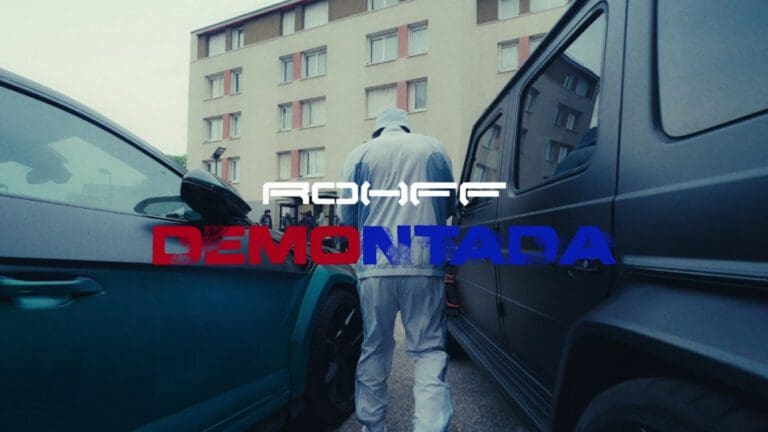
No rapper symbolized this mindset more clearly than Rohff.
On the track On fait les choses, he delivered what would become one of the most quoted punchlines of the era:
“That whole R&B wave? I’d rather have it singing in its bedroom.”
The line went far beyond a simple diss. It reflected an entire hierarchy of values. Street rap was portrayed as more authentic, more legitimate and somehow nobler than a melodic style increasingly associated with radio playlists and love songs.
The opposition was not purely musical—it was also symbolic. R&B quickly became associated with female audiences, romantic themes and commercial radio, while rap continued to define itself as a form of social commentary rooted in everyday reality.
The Queens of the Chorus
Ironically, French rap never stopped relying on R&B.
Quite the opposite.
Collaborations flourished. Rohff worked with Wallen. Ärsenik recorded with Assia. Passi teamed up with K-Reen. Disiz collaborated with Jalane. Matt Houston joined forces with Lord Kossity. Female singers became omnipresent—but almost always in the same role: delivering the chorus.
Rhoda Tchokokam’s research even reveals that between 2000 and 2004, nearly one-third of the hip-hop tracks she studied featured female vocalists who were sometimes not officially credited.
The conclusion is striking.
French rap embraced melody.
It embraced female voices.
Yet it often confined them to a supporting role rather than allowing them to become the main attraction.
R&B accompanied rap—it rarely challenged its cultural dominance.
A Cultural Imbalance
This is perhaps the fundamental difference between France and the United States.
Contrary to popular belief, French R&B never lacked talented artists. What it lacked was an industry and a cultural ecosystem willing to recognize it as a major genre in its own right.
Rhoda Tchokokam even argues that hip-hop itself contributed to this marginalization, although mainstream media bore an even greater share of the responsibility.
This distinction matters.
French rap did not “kill” R&B.
Instead, it imposed its own cultural imagination upon it.
To succeed, French R&B singers often felt compelled to demonstrate their own version of street credibility—to speak about life in the neighborhoods as much as romance, and to borrow the authenticity traditionally associated with rap. As a result, the genre struggled to free itself from hip-hop’s cultural shadow.
Ironically, this suspicion toward melody would not last forever. Within a decade, French rappers themselves would begin tearing down the barriers separating rap, singing, pop and R&B, transforming the country’s musical landscape in the process.
That revolution was only just beginning.
# **Why America Never Feared Melody**
While French rap spent years defining itself through street credibility, the United States followed a completely different trajectory. There, rap and R&B never competed for legitimacy—they evolved together.
The difference begins with history.
When hip-hop emerged in the Bronx during the mid-1970s, rhythm and blues had already been a cornerstone of African American music for more than three decades. Born from the blues, gospel and soul traditions, R&B wasn’t an outsider to hip-hop—it was one of its ancestors. Early hip-hop producers sampled Marvin Gaye, Curtis Mayfield, Isaac Hayes, Stevie Wonder and countless other soul legends. Rappers grew up listening to Michael Jackson, Luther Vandross and Anita Baker alongside Run-D.M.C. and Rakim. Melody was never seen as the opposite of rap; it was part of its DNA.
That cultural connection became impossible to ignore during the late 1990s and early 2000s.
By the turn of the millennium, hip-hop and R&B had become the dominant forces in American popular music. According to Pitchfork, the year 2004 marked a symbolic milestone: every song that reached No. 1 on the Billboard Hot 100 that year was performed by artists of color, illustrating how hip-hop and R&B had become the defining sound of American youth.
No artist embodied that dominance better than Usher.
In 2004 alone, he scored four Billboard Hot 100 No. 1 singles—Yeah!, Burn, Confessions Part II and My Boo with Alicia Keys—spending an extraordinary 28 weeks at the top of the chart. His album Confessions would go on to sell more than ten million copies in the United States, becoming one of the defining records of the decade.
But American success was never built on rappers and R&B singers working separately.
It was built on collaboration.
Ja Rule and Ashanti turned the rapper-singer formula into an almost unstoppable commercial machine with hits like Always on Time, Mesmerize and Wonderful. Nelly paired with Kelly Rowland on Dilemma. Jennifer Lopez invited Ja Rule onto I’m Real. Fat Joe dominated the charts with What’s Luv?, driven by Ashanti’s unmistakable hook. Jay-Z and Beyoncé became one of music’s most influential partnerships, while 50 Cent regularly relied on melodic choruses to broaden his appeal.
Rather than weakening rap’s credibility, these collaborations strengthened its commercial reach.
As Pitchfork notes, the rapper-plus-singer formula became one of the defining characteristics of early-2000s American radio. Labels such as Murder Inc. perfected the model, proving that emotional melodies and hard-edged verses could coexist naturally within the same record.
The result was a music industry where entertainment was never viewed as incompatible with authenticity.
Jay-Z could release records alongside Beyoncé without damaging his credibility.
Kanye West regularly blurred the line between rapping and singing years before melodic rap became fashionable.
50 Cent alternated between brutally street-oriented records and radio-friendly love songs.
Even Tupac—often regarded as one of rap’s greatest street poets—had no hesitation recording melodic songs such as How Do U Want It with K-Ci & JoJo or Run Tha Streetz featuring Michel’le.
For American audiences, melody was never considered a betrayal of hip-hop.
It was simply another way of expressing it.
Two Different Definitions of Authenticity
This is where the contrast with France becomes particularly revealing.
While Beyoncé, Alicia Keys and Mary J. Blige became cultural icons in their own right, French singers such as Wallen or K-Reen often had to fight against the perception that they were merely providing hooks for rappers.
The issue was never one of talent.
It reflected two fundamentally different understandings of hip-hop culture.
In the United States, melody, performance and entertainment were embraced as natural extensions of rap.
In France, authenticity remained closely tied to lyrical toughness and street credibility. Singing could still be interpreted as a sign of compromise rather than artistic evolution.
Ironically, that resistance would not survive the next decade.
A new generation of French artists would soon blur every boundary between rap, melody, pop and Auto-Tune—ultimately transforming French hip-hop forever.
# **The Melodic Revolution: When French Rap Rewrote Its Own Rules**
For nearly two decades, French rap maintained an uneasy relationship with melody. Sung choruses had always existed, and collaborations with R&B artists were common, yet the genre remained firmly anchored in lyricism, technical flow and street credibility. At the beginning of the 2010s, however, that balance began to collapse.
The first major turning point came with Sexion d’Assaut.
When the Paris collective broke into the mainstream with L’École des points vitaux in 2010, it introduced a formula that stood apart from traditional street rap. The group’s music retained hip-hop’s energy while embracing vocal harmonies, memorable hooks and more accessible songwriting. Tracks such as Désolé demonstrated that emotionally driven rap could become a mainstream phenomenon without abandoning its hip-hop identity.
Two years later, L’Apogée confirmed the transformation. Songs like Avant qu’elle parte and Ma direction became nationwide hits, bringing French rap into family homes and expanding its audience far beyond the genre’s traditional fanbase.
Sexion d’Assaut marked a cultural turning point.
French rap was no longer perceived solely as the soundtrack of working-class neighborhoods or a countercultural movement. It had become one of the country’s dominant forms of popular music.
The group’s split accelerated that evolution.
Gims launched a hugely successful solo career built around international pop, collaborating with artists such as Sia, Sting and Lil Wayne. Meanwhile, Dadju, Gims’ younger brother, developed a style blending R&B, Afro-pop and contemporary French pop. Both artists continued to embrace their hip-hop roots, proving that modern musicians no longer had to choose between being rappers or singers.
At almost the same moment, another artist would redefine the genre even more radically.
In 2014, Jul released Dans ma paranoïa. His heavy use of Auto-Tune, instantly recognizable melodies, instinctive songwriting and astonishing release schedule divided French rap almost overnight. Many veterans viewed his music as a break from hip-hop’s traditional values. Others immediately sensed that a new era had begun.
Looking back, Jul did far more than popularize Auto-Tune.
He fundamentally changed the way French rap songs were written.
Instead of treating melody as something reserved for the chorus, Jul made it the foundation of the entire composition. His voice became an instrument rather than simply a vehicle for lyrics.
According to several interviews surrounding his appearance on the French talk show Clique, Jul even recalled hearing artists in Sweden adopting elements of his musical style. Whether anecdotal or symbolic, the story reflected a broader reality: French rap, once heavily influenced by American trends, had begun exporting its own aesthetic language abroad.
PNL and the Emotional Power of Auto-Tune
Jul’s success was only the beginning.
From 2015 onward, PNL introduced an entirely new artistic vision.
The two brothers didn’t use Auto-Tune simply as a vocal effect. They transformed it into an emotional tool capable of expressing melancholy, nostalgia and isolation. Songs such as Le Monde ou rien, Naha and À l’ammoniaque demonstrated that deeply authentic rap could coexist with highly melodic production.
Their success permanently changed the conversation around Auto-Tune.
What many critics had dismissed as a technological shortcut gradually became recognized as a genuine artistic language.
Other artists continued pushing those boundaries.
Ninho moved effortlessly between intricate technical performances and melodic hooks.
SCH developed a cinematic universe where melodies became an essential storytelling device.
Hamza, equally influenced by American rap and contemporary R&B, erased the distinction between the two genres almost entirely.
Even Gazo, widely regarded as the leading figure of French drill, progressively incorporated more melodic passages into his music as his career evolved.
A New Generation, A New Definition of Rap
The transformation was not limited to artists alone.
Audiences changed as well.
Unlike listeners who had grown up during the golden era of NTM, IAM or Lunatic, younger generations no longer saw rap, singing and R&B as opposing worlds. Streaming platforms encouraged listeners to move freely between trap, cloud rap, Afro music, drill, pop and contemporary R&B. Musical genres became increasingly fluid.
The numbers reflected that cultural shift.
By the early 2020s, urban music had become the dominant force on French streaming platforms. According to figures published by the French Ministry of Culture, rap and urban music accounted for 37% of all streams in France and represented 61% of the country’s 200 most-played tracks.
The irony is impossible to ignore.
The very element that French rap had viewed with suspicion throughout the early 2000s—melody—ultimately became one of the main reasons for its unprecedented success.
Melody was no longer seen as a threat to authenticity.
It had become one of the driving forces behind French rap’s global expansion.
Rather than erasing the genre’s identity, it broadened its emotional range and artistic possibilities.
Yet this revolution did not end the debate.
As melody became fully accepted, another question emerged:
Can rap continue absorbing new influences without losing its essence?
That question would soon divide another generation of artists—from Akhenaton to Booba—and reignite one of hip-hop’s oldest discussions: what does “real rap” actually mean?
# **The End of a Taboo… or the Beginning of a New Cycle?**
Over the course of two decades, French rap has undergone one of the most profound transformations in its history.
In the early 2000s, many artists still viewed singing, R&B and outside musical influences as potential threats to hip-hop’s authenticity. At the time, street credibility was the genre’s most valuable currency. Being respected meant telling real stories from the streets, mastering lyricism and maintaining a certain musical austerity.
Twenty years later, those boundaries have all but disappeared.
Today’s biggest French rap stars move effortlessly between rap, singing, Afro music, pop, R&B, drill and even electronic music. A single album can feature an aggressive street anthem, an emotional ballad and a club-ready track without anyone questioning the artist’s legitimacy as a rapper.
This transformation reflects more than a change in musical tastes.
It also reflects the emergence of a new audience.
The generation that grew up with Jul, PNL, SCH, Ninho, Hamza and Gazo was shaped by streaming rather than record stores. Playlists replaced genre boundaries, international collaborations became commonplace and musical influences began circulating faster than ever before.
French rap also stopped being merely an importer of American trends.
It became an exporter.
The international popularity of Jul, Gims’ collaborations with artists such as Sia, Sting and Lil Wayne, SCH’s growing European audience and PNL’s unmistakable visual and musical identity have all contributed to giving French rap a distinctive voice on the global stage. Once viewed as a local adaptation of American hip-hop, it now influences artists and audiences far beyond France’s borders.
Yet the debates have not disappeared.
The criticisms once directed at R&B and Auto-Tune have simply shifted toward new subjects: TikTok-friendly songs, streaming strategies, artificial intelligence, algorithm-driven production and increasingly standardized songwriting.
History, it seems, keeps repeating itself.
Every generation identifies a new innovation that is supposedly destroying “real rap.”
And every generation eventually discovers that hip-hop is far more resilient than expected.
Throughout its history, rap has absorbed soul, funk, reggae, R&B, trap, Afro music, drill and electronic production without losing its identity.
Perhaps because its identity has never depended on a single instrument, production style or vocal technique.
Instead, it has always been defined by an attitude.
Hip-hop was born out of reinvention. From its earliest days, DJs sampled funk records, producers manipulated emerging technologies and MCs transformed the sounds of their era into something entirely new. Innovation has never been a betrayal of hip-hop—it has been one of its founding principles.
That may be the greatest irony of all.
For years, French rap believed it could preserve its authenticity by keeping melody at arm’s length. Yet it was precisely when the genre fully embraced singing, harmony and cross-genre experimentation that it reached an unprecedented level of commercial and cultural influence. Streaming data published by the French Ministry of Culture illustrates this transformation: rap and urban music now account for more than one-third of all music streamed in France and nearly two-thirds of the country’s 200 most-played tracks.
The debate between “pure rap” and “commercial rap” has never truly been settled.
It has accompanied every generation for more than forty years—and it will almost certainly accompany the next one as well.
Because if there is one constant throughout the history of hip-hop, it is this:
Every musical revolution is first rejected before eventually becoming accepted.
Yesterday, the controversy was R&B.
Then it became Auto-Tune.
Today, artificial intelligence has taken its place.
Tomorrow, another innovation will almost certainly become the next battlefield.
Perhaps that is the clearest sign that hip-hop has never stopped evolving.
Far from losing its soul, rap continues to do what it has always done best:
adapt, reinvent itself and reflect the world around it.