
[Interview]: Pascal Tessaud: Rap Videos as a School of Filmmaking
Pascal Tessaud, a filmmaker known for his hip-hop films Brooklyn and Beatbox, Boom Bap, has recently completed his second feature film, Dans la Peau, an exploration of the Krump scene that has received awards…
 Written byZEZ XXI — Mazdak Vafaei Shalmani
![[Interview]: Pascal Tessaud: Rap Videos as a School of Filmmaking](https://hellsinky.art/wp-content/uploads/2026/10/interview-pascal-tessaud-a-lecole-du-clip-video.jpg)
Dans cet article
Pascal Tessaud, a filmmaker known for his hip-hop films Brooklyn and Beatbox, Boom Bap, has recently completed his second feature film, Dans la Peau, an exploration of the Krump scene that has received awards in Brooklyn, Compton, Detroit, Chicago and New York. He sat down with us to talk about his experience directing rap videos in France and the United States. Deeply passionate about hip-hop culture, we wanted to take a closer look at his journey as an independent music video director.
You’re best known as a fiction filmmaker through your feature Brooklyn, as well as acclaimed documentaries such as Slam, ce qui nous brûle, Beatbox Boom Bap autour du monde and Paris 8, la fac Hip Hop. Your work as a music video director is much less familiar to the public. When did you start making music videos, and why?
Before making my feature film Brooklyn, I had directed four fiction shorts — Noctambules, L’été de Noura, Faciès and La Ville lumière — between 2003 and 2012. I never went to film school, so I had to learn on the job: how to work as part of a crew, how to direct actors. Short films are the best training ground. You make mistakes, you experiment, you improve. I hadn’t had any opportunities to direct music videos because, back then, I simply had no access to record labels. I grew up in a housing estate in the Yvelines, in Beauregard, La Celle-Saint-Cloud, where rapper Bam’s and Big Red from Raggasonic also came from. But I was younger than them, and at the time I could never have imagined myself behind a camera directing videos. I was miles away from all of that — far removed from the Paris connections.
And yet you clearly have a deep knowledge of rap and music videos?
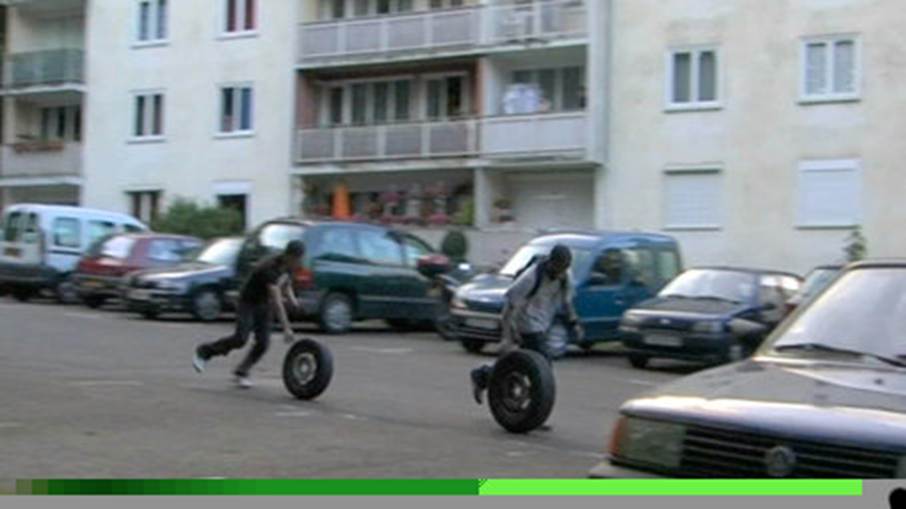
Yes. I discovered French rap right from the beginning with IAM, NTM, Assassin, the Rapattitude compilation, Radio Nova, and Radio Star with DJ LBR. In my neighbourhood, tapes were constantly circulating because we had the group Rapsonic, and later the rapper Bams, coming up in our town. Members of the Malka Family also came from our neighbourhood, so through them we had access to copies of copies of cassette tapes. We were plugged in! Run-DMC, Beastie Boys, Public Enemy, N.W.A, BDP. Then we discovered all those American rap videos on M6 through the legendary show Rapline. I loved that programme because it gave us access to the very best of 1990s rap, and above all the videos were subtitled in French. The meaning of the lyrics mattered. That’s also where I discovered some of the early videos by IAM, NTM, MC Solaar, Ministère A.M.E.R., Lionel D, Scred Connexion and Fabe. I loved New York cinema, but I was also raised on rap videos: Public Enemy working with Spike Lee, NTM with Mondino, IAM with Tous des K, Petit frère and Demain c’est loin by Kamel Saleh, and Je danse le Mia by Michel Gondry. In France, music-video culture and pop culture were looked down upon by much of the French film world. We were still living in the shadow of the Nouvelle Vague and the naturalism of Maurice Pialat. So when Spike Lee came along with She’s Gotta Have It, Do the Right Thing or Malcolm X, it was a huge shock for my generation. I also remember Martin Scorsese directing Michael Jackson’s Bad.
Saint-Denis Fonky Fresh
Your first music video was “Alien” in 2010, for Milk Coffee and Sugar with Gaël Faye. How did that collaboration come about?
Alongside my fiction work, I made my first documentary in 2007, Slam, ce qui nous brûle. I had spent three years working as a community media facilitator in Saint-Denis, and I used to have lunch at the Café Culturel, where they organised slam nights after the release of Marc Levin’s film Slam, which had helped launch the movement in bars. Around 2002, you had Nada, Dgiz and Da Gobleen. Then I discovered the second wave of slam poets with John Pucc Chocolat, Grand Corps Malade, Rouda, Lyor, Yo, Neobled, Souleymane Diamanka, Nëggus, Gaël Faye, Hocine Ben, Apkass, D’2 Kabal, Ami Karim and others. It completely blew me away because these people had grown up listening to the kind of lyrical rap I loved — intricate, vivid writing — and I became so fascinated with that underground scene that I wanted to be around it all the time. Saint-Denis was the epicentre, but there was also Ménilmontant, at the Lou Pascalou bar with the 129H collective. These were people like me: suburban kids totally disconnected from the music business and the film industry. I managed, mostly through sheer nerve, to convince producer Nadège Hasson, who regularly worked with our organisation in Saint-Denis, to support me in making a documentary about the slam movement. So in 2007, I got it produced for France 5 and directed Slam, ce qui nous brûle with the whole Paris-region slam community.

The Chant d’encre Collective
I became close to the Chant d’encre collective with Apkass, Gaël Faye, Nëggus, Säb and Edgar Sekloka. Their work tackled slavery, colonialism and undocumented migrants head-on. They were like the younger brothers of the Last Poets and Gil Scott-Heron — extremely political people. They used to tease me by saying I was basically part of their collective because we shared the same vision of art. After I chose Nëggus as one of the subjects of my documentary, Gaël Faye contacted me and asked me to direct Alien. We had listened to the track at Edgar’s place and the lyrics hit me like a punch in the face. So, with a tiny budget, we agreed on a storyline I had in mind and organised the shoot in Puteaux and La Défense with friends. It was my first music video, and I’ll never thank them enough for the trust they placed in me.
The video is incredibly powerful. It follows a young Black man applying for a trader position at La Défense, competing in a recruitment process that eventually comes down to two candidates. At the same time, you intercut documentary footage of social struggles. Why did you choose fiction, and why combine fiction and documentary?
What interested me about Milk Coffee & Sugar was that they gave me complete freedom. They were self-producing their first album, so artistically they were incredibly free. They chose me and trusted me because they liked my perspective, my sensitivity to their lyrics and my political engagement. What I liked was using the music video not as a “way to make a living,” but as a creative space that could be more radical than either short films or documentaries. I wanted to explore and experiment with a freer form of cinema. It was the early days of the Canon 5D, and I really pushed its cinematic look. We had almost no resources, but we were extremely proud of the result. In the end, the video reached close to 650,000 views. Not bad for a first attempt!
That video really made an impact. I imagine people started approaching you afterwards?
Yes, that’s true. Over the next two or three years I received around twenty requests. But I’m a musical purist. I grew up on demanding rap: Akhenaton, IAM, Assassin, NTM, KRS-One, Public Enemy, A Tribe Called Quest, Black Star, Scred Connexion, Casey, Fonky Family, Nas, Chiens de Paille, Mobb Deep, Gang Starr, Wu-Tang Clan and so on. So my criterion for directing a video was never about money. I made my living through documentary work. I needed to completely believe in a rapper or slam poet’s artistic approach. That meant turning down a lot of projects, even from friends, simply because I didn’t have a strong enough idea or concept for their tracks.
And that’s when you directed your second video, “Chant, sueurs et larmes”, for Nëggus and Kungobram in 2012. It feels like a genuine piece of cinema. It brings to mind 12 Years a Slave.

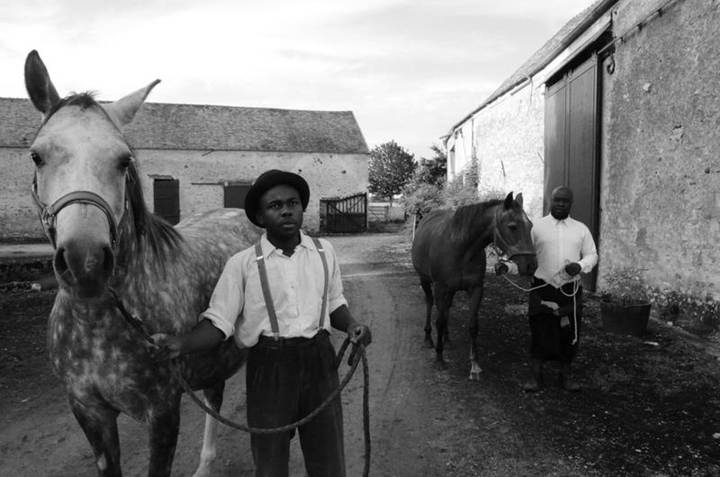
Yes. I was struck by Nëggus’s lyrics, the blues feel of the guitar and the power of what he was saying. We wrote the screenplay together. I came up with the idea of a hat being passed from one person to another, acting as a thread connecting the memory of enslaved people. It was a tribute to the roots of the blues. I had a crew who were completely committed to the project, as well as actors who were incredible on screen: Annabelle Lengronne, but also Nëggus, Catel, Aurélien Rondeau, Khulibaï and others. We found a beautiful natural location near Mantes-la-Jolie: a river, horses, fields, weapons, period costumes, rain and mud. Everything we needed to create a strong and singular story together in a magnificent setting. It was an unforgettable shoot.
It’s beautifully made and deeply moving. How did making videos like this change your relationship with cinema?
My first short films were heavily influenced by Italian neorealism and the naturalism of Ken Loach and Maurice Pialat. Through music videos, I developed something more graphic, more street-driven and more incisive. Making music videos is almost like returning to silent cinema, where bodies and the expressiveness of the actors are at the heart of the action. Because a video is much shorter than a film, it forces you to think differently about rhythm and editing. It helped me develop visually. Music videos became my third film school, after short films and documentaries. I’d recommend that path to anyone who wants to improve.
From Music Videos to Feature Films
Did that economy of means, along with discovering the cinematic potential of small cameras like the Canon 5D, encourage you to self-produce your first feature film, Brooklyn?
After making four produced short films that won awards and screened at hundreds of festivals, I really felt ready to move into features. Unfortunately, nobody wanted to sign me. But while making Alien and Chant, sueurs et larmes, I had so much fun working with a tiny crew, creating incredible images with virtually no budget and complete freedom, that I thought: that’s it. We’ll take the same crew and make a feature under the same conditions. And that became Brooklyn.
Brooklyn had a major impact: extensive press coverage, festivals around the world including ACID at Cannes, and a theatrical release across France. Had you incorporated the aesthetics of music videos into the film?
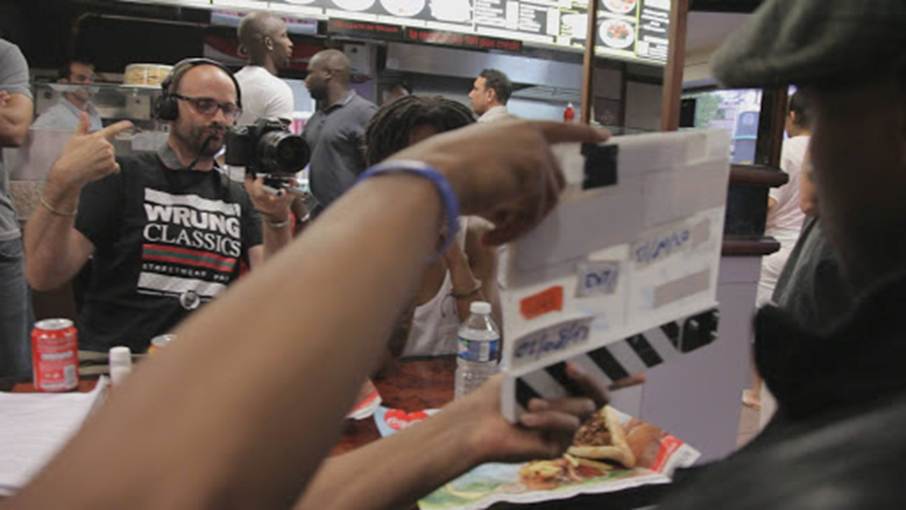
Absolutely. Brooklyn came out of that constant search for form. It is the result of weaving together fiction, documentary and music video. After Slam, ce qui nous brûle, I went on to make a series of music documentaries for France Ô — Mantes-la-Jolie sur le Mic’, Saint-Denis, Marseille — where, out of necessity, I also became my own cinematographer. We had a lot of formal freedom on that series. While filming in Val Fourré, Saint-Denis or the northern districts of Marseille with rappers, I kept thinking: “Damn, with my Sony camera or a 5D, you can create incredible images in amazing locations that French cinema barely films. We could make a feature in Saint-Denis with a tiny documentary-style crew but with the visual ambition of a music video.” I was getting tired of the constraints of television and of waiting forever to find a film producer. So I took inspiration from my friends Nëggus, Gaël Faye and Apkass, who were releasing their albums independently, and I said: action! I’m not waiting anymore. I’ll do what they do: we’ll shoot with no budget, but we’ll control the entire artistic process, the way you make a first independent album — for the love of art and from a visceral need to express yourself. Brooklyn is really the result of all that intense work in music videos and documentaries. By constantly shooting, I was able to find my own path and develop my own style.

In 2015, around the release of Brooklyn, you directed the very cool black-and-white video “Saint-Denis, Brooklyn Zoo”. That was your third music video.
With the film coming out, we felt we had to do something creative. It was also a way of thanking all the rappers who had appeared in the film. We shot it in a single afternoon on a street in central Saint-Denis. I really enjoyed making it with them — there’s a great energy to it. The idea was to highlight them and extend the collective adventure of Brooklyn.

You then followed it with a much more elaborate fourth video, “Gamberge” by rapper KT Gorique, shot in a studio with dancers.
That was another great experience. KT was releasing her first album, and I wanted to give her a visually sophisticated studio video, something I had never done before. I worked again with Fabien Rodesch, the cinematographer on Chant, sueurs et larmes and Brooklyn, and we paid particular attention to the lighting in a dark set to highlight the movements of the Krump, contemporary dance and capoeira performers. I had always wanted to film dance. It creates a powerful contrast with the imagery of confinement represented by the straitjacket. KT’s lyrics are about freeing the mind, while dance symbolises her creative power being unleashed.

You then directed a video against police violence, “Une bise et la Paix” for Blade MC, filmed both in the street and in a studio, while also incorporating some extremely harsh archive footage.
Beyond the pleasure of entering an artist’s musical world, what I love about music videos is the opportunity to explore things I’ve never done before. If you look closely at Alien, Chant, sueurs et larmes, Saint-Denis Brooklyn Zoo and now Une bise et la paix, I’m always moving in a new direction. I always start from a new concept. Blade’s lyrics spoke to me, and strong images came into my head almost like a dream — or a nightmare! (laughs)

For Une bise, I imagined Marianne wearing the Phrygian cap with a black eye — a metaphor for a France in pain at the time. Having Sofia embody Marianne was a powerful idea. I had never directed an action scene involving police officers before, so with Blade’s violent arrest in a car park, we were once again trying to have fun while still sending the audience a powerful message and creating a striking image. The story from the shoot is that we were actually stopped by a police patrol in the neighbourhood where I grew up.
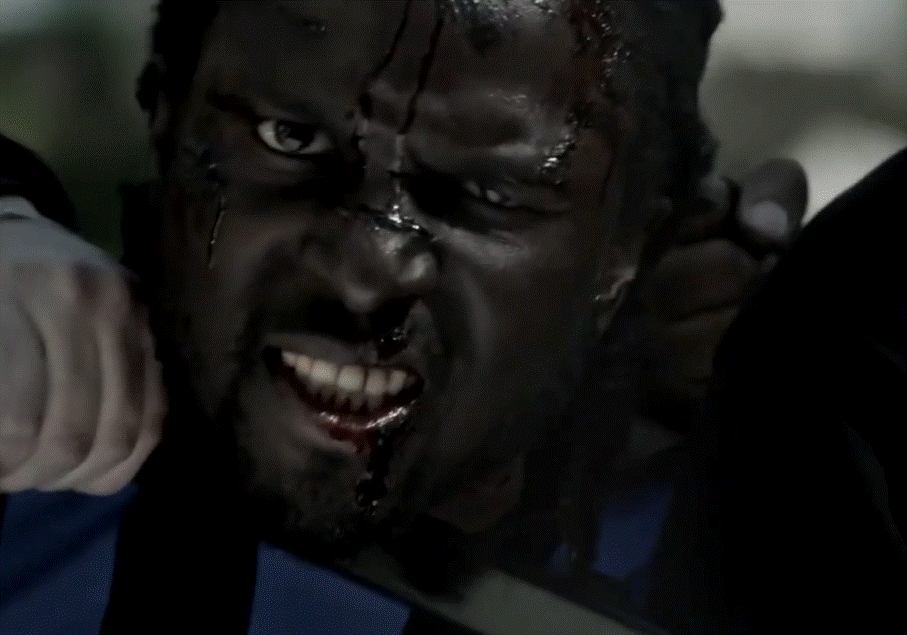
Things got tense. Blade looked badly injured because of the impressive make-up and prosthetic work done by the great film make-up artist Laurence Grosjean, who sadly passed away recently. May she rest in peace. I told the officers: “I’ve lived here for more than thirty years. Nobody is going to stop me shooting a music video. There are rules: we’re fewer than six people in the crew, we don’t have a tripod, and I’m operating within the law.” The cops were annoyed because my three actors were wearing police armbands. They clearly understood what we were doing, but I refused to back down. They threatened to arrest us if they came back within the hour. We just carried on filming peacefully until the evening because I knew they had no legal grounds to stop us. I was determined. And Blade looks incredibly powerful on screen.
The Music Video as a Space of Resistance
Your work as a music video director clearly isn’t commercially driven. It feels much more politically engaged. You consistently choose independent projects where writing and meaning matter.
Yes — maybe that’s a flaw, actually! (laughs) I suppose I’ve always defined myself in opposition to certain things. I want to make films and videos that don’t follow market trends or commercial shortcuts, and to create images that feel new, complex, rebellious and far removed from the centre. I’m sensitive to exclusion and to the margins. It’s in my DNA. For me, the music video is agit-pop. I also need to have fun, to be given complete freedom, to express things that are free, insolent, political and experimental. And I like supporting singular projects that stand out from the crowd. I have enormous respect for French music video directors who have managed to make a living from their art while still creating high-end work for major labels or independents. That’s impressive when you consider how dramatically music video budgets have collapsed since the arrival of streaming, YouTube and so on. Personally, I see myself more as an amateur when it comes to music videos. For me, it’s a playground where I can test a camera, a new setup, new lighting, a different editing style or a new kind of narrative.
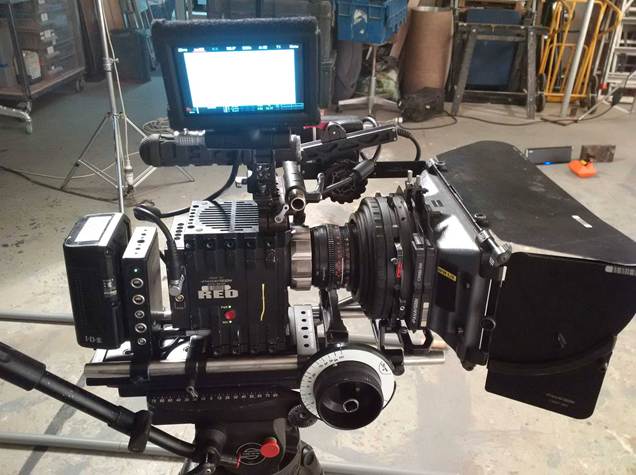
It’s my laboratory, really. I have no ambition to make huge videos for heavily marketed artists whose work I may not necessarily connect with artistically. That said, I’m open to encounters. I’m not closed off. But after short films and documentaries, music videos really are the ideal playground for me.
Can you tell us about your sixth video, “Amazone” by Huxlay?
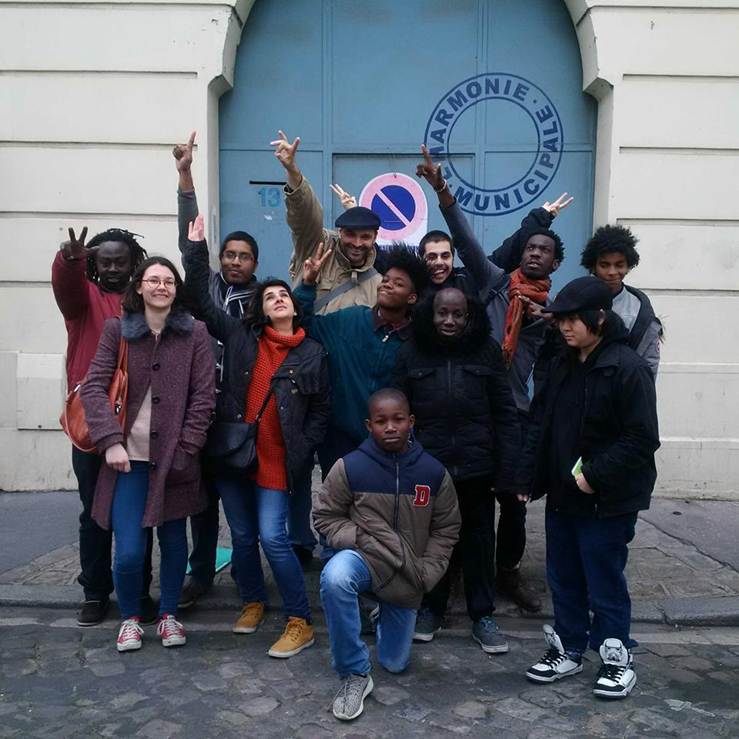
Yes. That video came out of a workshop I ran with Cristina Lopes from Fabrik du Macadam. I led a writing and filmmaking workshop with around fifteen young people in Saint-Denis.

I had suggested to my friend Huxlay that I direct one of her songs. We’re particularly proud of the result and of the message behind it. The young people wrote the basic storyline themselves, acted in the video and also took part in the technical side of the shoot. It remains a really joyful collective memory.
What do you make of the evolution of rap videos today? They’ve become a huge strategic issue for trap artists and major labels. And what are you listening to?
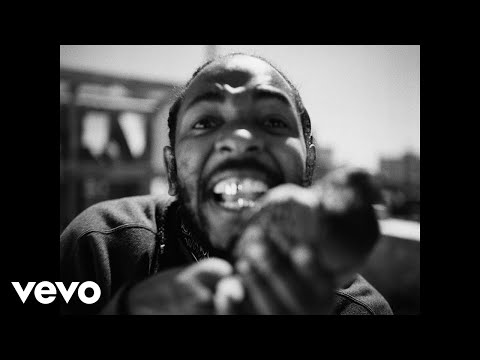
I got really into 13 Organisé. It’s festive, and Je suis Marseille is an absolute banger. That alliance between the old school and the new school is incredible. I’m obsessed with all of Kendrick Lamar’s videos. Every single one is visually overwhelming — genuine works of art. I also really love Childish Gambino’s This Is America, and Anderson .Paak’s videos are incredible too. In France, rap videos have become extremely polished visually, with serious technical resources in terms of lighting, cameras and so on. But what I love about rap is when it’s political, when it says something about the world we live in. That’s what Kendrick Lamar does so well. He’s a complete artist, both musically and politically engaged, always connected to the street. What a writer. What a vision.
You released two videos shot in New York in quick succession: “Where I’m From” for Get Open and “No Retreat No Surrender” for Kaot’f featuring Chip Fu. How did you end up directing rap videos in New York City?
Like I said, I’m mainly focused on my own projects, and they take a lot of energy. But when I got the opportunity to shoot a video for the New York group Get Open around the release of their album, I jumped at it. I grew up watching New York rap videos by Nas, Beastie Boys, Mobb Deep, Jay-Z, M.O.P., Wu-Tang Clan, Public Enemy, Talib Kweli and so on. When I first discovered rap at thirteen or fourteen in the late 1980s, if someone had told me, “One day you’re going to shoot a rap video in New York,” I never would have believed it. I come from a working-class background — factories, building sites, jackhammers, excavators (laughs) — very far removed from the Parisian entertainment world and the film industry. Nobody in my family even had the baccalauréat, let alone any kind of elite education, so becoming a filmmaker already seemed completely out of reach to me. Almost unimaginable. I watched all those videos from afar on M6 and MTV. I owe an enormous debt to American rap because it made me dream. So getting the chance to shoot in the South Bronx, Harlem and the Lower East Side was something incredibly powerful for me.

I’ll even tell you something I’ve never said before: shooting Where I’m From was probably one of the happiest moments of my life as a filmmaker. The young actors were incredible, the locations were amazing, there was the Cadillac, and meeting an exceptional cinematographer originally from Poissy in the 78, Lionel Djaowe, made the whole experience feel idyllic. It was like a dream. We shot in three neighbourhoods: the Lower East Side, Harlem Riverside and the South Bronx.
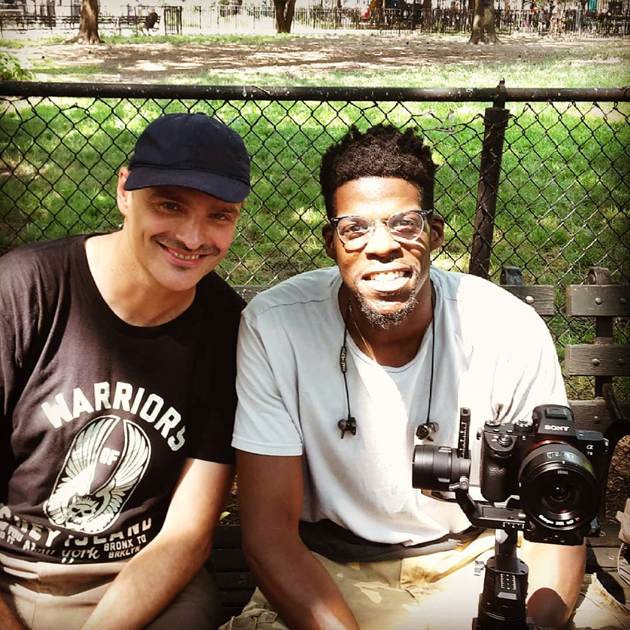
We laughed so much and had such a great time on that shoot. We were completely in sync. I have crazy memories of that Cadillac in the middle of the South Bronx, with me filming on foot in the middle of the road with my tiny camera on a Sunday. We had basically stopped traffic, and buses were honking like mad behind us. No permits, right in the middle of the Bronx! People in the neighbourhood were calling out to us and enthusiastically commenting on what we were doing. It was surreal. That’s also where the car-chase sequence in The French Connection was shot.
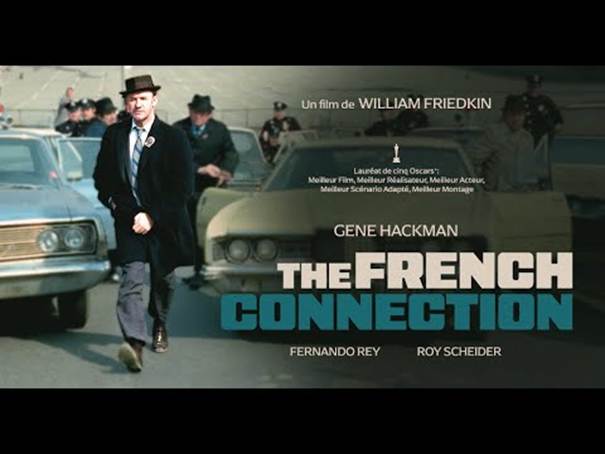
You can clearly see that the video pays tribute to New York cinema.
Yes. In Harlem, we pay tribute to Spike Lee and Kids; in the Bronx, to Martin Scorsese and The French Connection; and in the Lower East Side, I reference West Side Story. That video is essentially a combination of all the films that shaped me as a cinephile and as a filmmaker. I think the group were genuinely surprised when they saw it. I really managed to bring together all the influences that formed my cinematic language in that one video. New York feels like home.
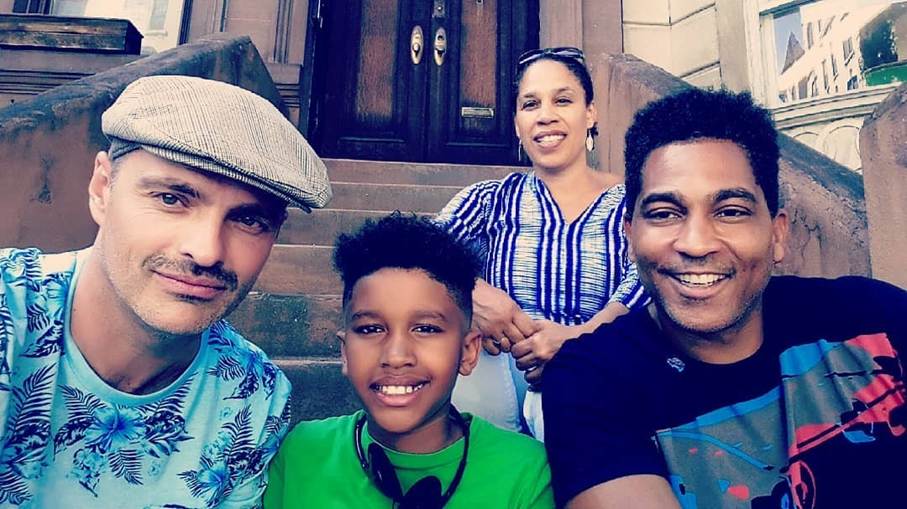
I love the energy of the people there. I’ve been coming regularly for about ten years now. It always restores me and gives me a kind of positive energy that I don’t find in Paris. I recharge my batteries there. I feel completely at home. I had already spent a month filming there for my documentary Beatbox Boom Bap autour du monde, notably with Kenny Muhammad and Rahzel, and I had also filmed several sequences there for the series Paris 8, la fac Hip Hop.

You also shot a second video in Brooklyn, “No Retreat, No Surrender”. How did the connection with Kaot’f come about?
It’s funny because I’ve known Kaot’f for more than fifteen years. I’d always appreciated the technical sophistication of his writing. He’s a good guy and he also liked my work. One evening, he pulls this track out of nowhere: No Retreat, No Surrender, with this insanely aggressive flow and a feature from the legend Chip Fu of the Fu-Schnickens! It was such a wild track that I completely lost it when I heard it. It had everything I love: the vibe, the fun, that heavyweight MC energy. I told him: “How do you expect me to turn down something like this? I’ll be in New York from this date to that date. Find a way to get yourself there before I leave, and we’ll shoot the whole thing in one day!” The whole approach was pure hip-hop. The track itself is a tribute to a certain kind of rap and to that challenger mentality. So I felt I had to make him a cool video and do the track justice. He’s genuinely passionate about what he does. He quickly convinced Chip Fu from the legendary Fu-Schnickens, and we were good to go.

When you watch the video, the editing is almost hypnotic.
We shot it with Chip Fu, who is a genuinely great guy — a legend, and incredibly classy. We filmed in Flatbush, Brooklyn, where Kaot’f and I were staying. At first, Chip had absolutely no idea what I was trying to do (laughs). He was worried people in Flatbush might bother him. Then he saw the ridiculously small camera I had, no technical crew, no security — and he panicked! (laughs) But my whole idea was about interacting with the street and immersing myself in the environment in a documentary style. I didn’t want to make a narrative video like I had done before. There was no possible storytelling, no screenplay — the flow is completely insane. So editor Amandine Normand and I decided to let loose. We had to match their energy and go into a kind of trance, creating this almost epileptic editing style that perfectly follows their flows and gives the video a really funny, explosive energy. There’s an incredible amount of energy coming out of the video, and you can really feel the atmosphere of Brooklyn in every shot. I added lots of rapid flashes of footage I had filmed around the neighbourhood. For the colour grading, I wanted something reminiscent of Clockers by Spike Lee: very bright, flashy 1990s imagery with grain. The idea was to create two completely different kinds of music videos with Where I’m From and No Retreat, No Surrender. The first is more staged, more cinematic, with a screenplay, characters and the Cadillac. With No Retreat, No Surrender, the concept was all about speed: matching the flow to the editing. A genuinely street-driven video. I got really strong feedback on both of those videos, so if people enjoy them, that’s great. That’s what they were made for.
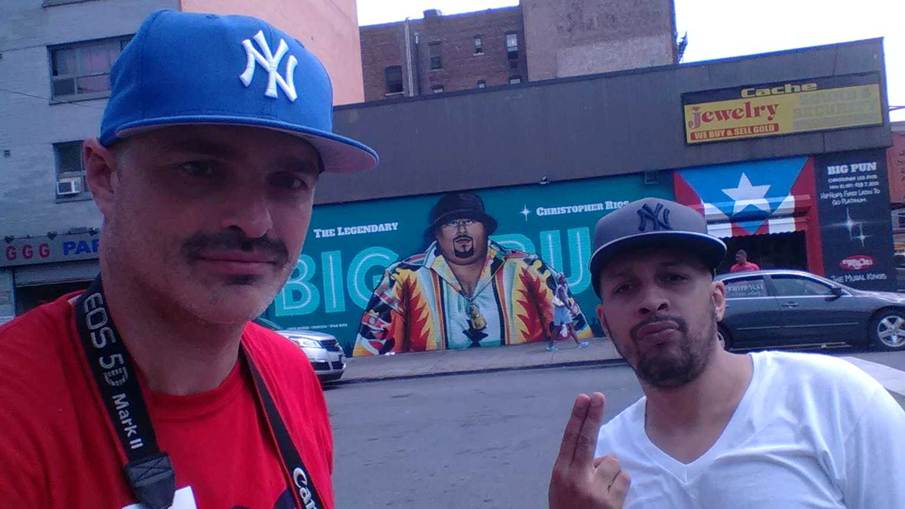
More recently, you directed “Mec du dehors” for Marseille rapper Relo. It brings to mind videos such as IAM’s “Petit frère”. How did that project come together?
I first discovered Relo on stage when he opened for IAM on ARTE’s Le Cercle, and later saw him perform live at Marseille’s Hip Hop Non Stop festival. I proposed a collective writing concept involving around ten young people as part of a workshop run by the association Ph’art et Balises. We chose the track “Mec du dehors” because the writing is highly visual, cinematic and deeply nostalgic about childhood. It gave us a lot of possibilities when it came to writing a screenplay. We took our time developing it through Moovida workshops. The young participants were actively involved in writing, location scouting and acting. Relo approved the artistic direction. And yes, “Petit frère” was definitely in the back of my mind. We shot in Relo’s childhood neighbourhood, La Marie Haute, in Marseille’s northern districts.

There’s clearly a real cinematic atmosphere to it.
Yes, we really enjoyed ourselves. The idea was to enter the artist’s poetic universe and emotional roots. I wanted the images to reflect not the usual fantasies projected onto these places and characters, but everyday life, neighbourhood life and a sense of authenticity. Relo was very happy with the result. He felt it was very faithful to his intentions and his memories.
Is there one artist you’d like to recommend to us?
Earthsignchels — “Daddy Die”. This woman from Chicago is seriously impressive. I’m a huge fan. She’s going to blow up in the future!
