
From Get Out to Kraken: When Horror Cinema Becomes Political
With Kraken, which turns police violence into the raw material of a slasher movie, French genre cinema is following a path that American filmmakers have been exploring for decades. Since the 2010s in particular,…
 Written byZEZ XXI — Mazdak Vafaei Shalmani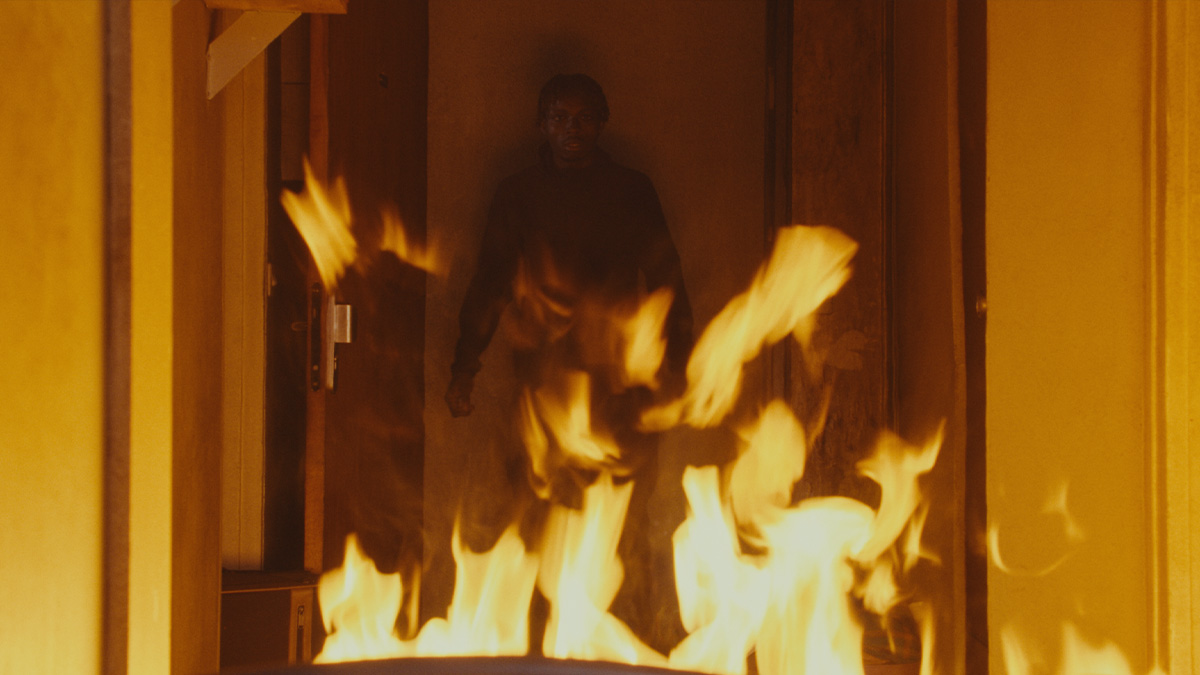
With Kraken, which turns police violence into the raw material of a slasher movie, French genre cinema is following a path that American filmmakers have been exploring for decades. Since the 2010s in particular, American horror has emerged as one of popular cinema’s most fertile spaces for confronting racism, police violence, inequality and the abuse of power.
From The Purge and Candyman to Jordan Peele’s cultural phenomenon Get Out, the monster is rarely just a monster. Horror displaces reality, makes it spectacular, and can bring political ideas to millions of viewers who might never have gone looking for them in an overtly political film.
Yet the method is anything but new. Long before cinema, satire, the philosophical tale and later science fiction had already understood the power of this detour: invent another world in order to speak more freely about our own.
From philosophical tales to horror movies: escaping reality to attack it more effectively
Satire was obviously not invented by the Enlightenment. But in eighteenth-century Europe, it became one of the most effective weapons of political, religious and social criticism. When direct expression ran up against authority, censorship or prohibition, fiction offered another territory from which to speak.
Voltaire did not need to write a frontal treatise against every institution he wanted to challenge. Candide allowed him to displace situations, push contradictions to the point of absurdity and, through fiction, ultimately bring the reader back to the real world.
The principle would survive the Enlightenment by centuries.
Science fiction would make it one of its defining mechanisms. Inventing a future, another planet, a dystopian society or a different species makes it possible to explore power, surveillance, class, racism, gender and authoritarianism while shifting the terms of the debate.
Fantasy and horror cinema gradually inherited the same function.
George A. Romero was never simply filming the dead coming back to life. John Carpenter was not merely telling a story about an alien invasion in They Live. Behind zombies, aliens and psychopaths lies another function of the monster: to give a physical body to otherwise abstract forms of social and political violence.
That detour has a particular power.
An overtly political work immediately announces what it is and invites the audience to take a position. Genre cinema can work in reverse: it attracts audiences through entertainment first. Fear, suspense, gore and fantasy then open the door to a second reading.
The viewer can engage with the message. Or they can simply watch the movie.
That duality is precisely what has given contemporary American horror such unusual political reach.

The Purge, Candyman, Get Out: when American horror becomes popular protest cinema
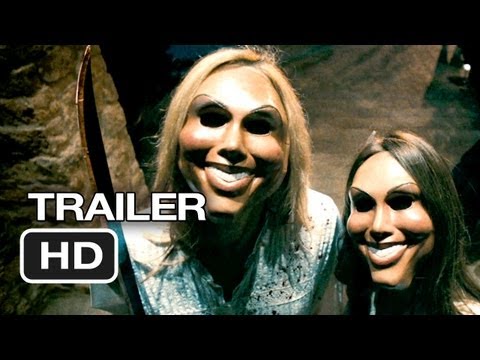
The premise of The Purge is almost childishly simple: for one night, the American state suspends most laws and allows its citizens to kill.
Behind the horror-movie hook, however, lies a political experiment.
What happens when a profoundly unequal society claims to grant everyone the same freedom to commit violence? Those who own fortified homes, weapons and sophisticated security systems obviously do not experience that “freedom” in the same way as the poor.
As the franchise develops, its central concept becomes a vehicle for examining class, power, minorities and institutional violence. Genre allows the films to push a political logic to its most grotesque conclusion: the state no longer protects its citizens from violence; for a few hours, it actively creates the conditions for that violence to erupt.
Candyman uses a different mechanism.
Urban legend, ghosts and slasher mythology allow a buried history of racial violence to resurface in a city that might prefer to forget it. In Nia DaCosta’s 2021 reimagining, the gentrification of Cabrini-Green, lynching, police violence and the exploitation of Black art all become part of the monster’s mythology. DaCosta herself has discussed horror as an especially effective framework for folding real-world trauma into supernatural conventions.
Source: WIRED — Nia DaCosta on the Real-World Horrors in Candyman
But it is perhaps Jordan Peele who achieved the most spectacular synthesis of popular entertainment and political commentary with Get Out.
The film does not confront its protagonist with cartoonish white supremacists. Chris enters the home of an affluent, educated, liberal white family that is particularly eager to demonstrate just how unracist it is.
That is where Peele shifts the argument.
The danger no longer comes only from openly declared racism. It also comes from a fascination with Black bodies, from appropriation disguised as admiration, and from an environment in which white characters can speak the language of progressivism while literally reducing Black people to bodies they want to possess.
Horror makes physical what might otherwise remain abstract in a political essay.
Get Out: when political cinema becomes a mass phenomenon
Audiences responded on a massive scale.
Made for roughly $4.5 million, Get Out grossed close to $260 million worldwide, including more than $176 million in North America.
Source: Box Office Mojo — Get Out
Comparing those figures with some of Spike Lee’s most explicitly political films is necessarily imperfect. The films belong to different eras, with different budgets, distribution models and international markets. But the comparison still says something about genre cinema’s ability to carry political ideas to an exceptionally broad audience.

Do the Right Thing, Spike Lee’s landmark exploration of racial tension and erupting violence in Brooklyn, has accumulated roughly $37 million worldwide according to current Box Office Mojo data.
Malcolm X, Lee’s monumental political epic starring Denzel Washington, stands at around $48 million.
BlacKkKlansman, released in 2018 in a commercial environment much closer to that of Get Out, grossed more than $90 million worldwide.
Get Out reached nearly $260 million.
Those numbers obviously tell us nothing about the artistic value or political influence of the films themselves. They reveal something else: a film deeply concerned with racism can reach an enormous audience without having to present itself as a political movie.
Genre cinema did not replace activist cinema. It found a way to carry some of its ideas into mainstream popular culture.
Why this detour takes on new significance in Trump’s America
This function of genre cinema has acquired particular resonance in the United States of 2026.
The United States is not a dictatorship. It still has elections, courts, a First Amendment, independent media and institutions capable of challenging executive power.
But relations between the second Trump administration and parts of the American press have become particularly confrontational.
On September 18, 2026, Donald Trump announced that CNN, MS NOW and Politico would be barred from the White House, accusing the outlets of spreading false information. The following day, press credentials belonging to journalists from the three organizations were deactivated and their reporters were prevented from entering. The outlets said they intended to defend rights protected by the First Amendment.
Source: Reuters — Trump bans CNN, MS NOW and Politico from White House
It would be an overstatement to describe this as a general system of censorship over American cultural production. But the confrontation surrounding the press is a reminder of why fiction has historically acquired particular importance whenever the relationship between political power, information and freedom of expression becomes strained.
Because fiction always has an escape route.
The Purge does not claim that the United States actually legalizes murder for twelve hours.
Get Out does not claim that white families are literally transplanting brains in order to take possession of Black bodies.
Candyman does not claim that a supernatural figure murders people who repeat his name into a mirror.
Yet all of them speak about the societies in which they were made.
That is the ancient power of satire: exaggeration and allegory move reality sideways in order to expose its underlying mechanisms.
The more polarized a society becomes, the more valuable that detour can be. Art does not always need to confront political power head-on. It can invent another world in which the contradictions of the real one suddenly become impossible to ignore.

From Vermines to Kraken: France begins turning its own fractures into monsters
France, of course, has a long tradition of political filmmaking.
But when it comes to working-class neighborhoods and the banlieues, that tradition has largely favored realism.
From La Haine and Ma 6-T va crack-er to Ladj Ly’s Les Misérables, the banlieue has generally been filmed as a real social and political territory. Policing, marginalization, discrimination, the underground economy and the relationship between residents and the state are shown directly.
American cinema has often done something different: it has turned political problems into monsters.
Part of French cinema now appears to be moving in the same direction.
Vermines: when the banlieue escapes the confines of social realism
Sébastien Vaniček’s Vermines — released internationally as Infested — represents an especially interesting turning point.
A French housing estate becomes the setting for a terrifying spider infestation. But the choice of animal is far from accidental.

In an interview with Le Monde, Vaniček himself drew a parallel between the way the insects are confined and the way people dismissed as the “vermin” of the banlieues are treated. He also discussed the breakdown of dialogue and the inability of police and young people to communicate with one another.
Source: Le Monde — Interview with Sébastien Vaniček
The housing estate is no longer simply the territory of the social drama. It becomes the setting for survival horror.
The mechanism is remarkably close to the one American genre cinema has developed over decades: begin with an identifiable social reality, displace it slightly, then give it a fantastical incarnation.
Kraken: when the police officer becomes the slasher monster
With Kraken, Mohamed Chabane and Théo Jourdain Rhodes appear to push that logic even further.
UrbanTrackz recently explored the film, which notably brings French rap stars Gazo and La Mano 1.9 to the screen in their first movie roles.
Distributed by PAN Distribution and scheduled for release in French theaters on September 30, 2026, the film traps five young people inside an abandoned tower block where they find themselves hunted by a killer.
Source: PAN Distribution — Kraken
But the crucial element is the killer’s identity.
After considering several possibilities, the filmmakers decided to make the murderer a police officer who has descended into violence.
“A cop who has snapped… who kills guys, and we take all these cases of police violence and turn them into a horror movie.”
That statement by Théo Jourdain Rhodes, reported by AlloCiné, almost perfectly summarizes the mechanism at work.
Source: AlloCiné — Behind the scenes of Kraken
The police officer literally becomes a slasher figure. Tasers and stun grenades become the weapons of a horror movie.
The relationship between young people from the banlieues and the police is therefore no longer conveyed solely through dialogue, social drama or realist reconstruction: it is transformed into physical fear.
It is a change of cinematic grammar.
For decades, French cinema has asked audiences to look at the fractures running through the banlieues.
Genre cinema is beginning to ask them to feel those fractures.
And that may be where Kraken moves beyond the novelty of simply bringing French rap and horror cinema together.
Following Vermines, it contributes to the emergence of another imaginary space — one in which working-class neighborhoods can become territories for fantasy, survival horror and slashers without surrendering their political dimension.
This intersection of rap, cinema and popular culture is also central to the editorial DNA of UrbanTrackz and its English-language counterpart Hellsinky, which document the connections between music, visual culture and emerging urban cultures.
France is obviously not discovering political horror or protest through fiction. Rather, it is reclaiming an old mechanism — one that runs through satire, philosophical tales, science fiction and decades of American genre filmmaking.
When representing violence directly risks allowing political debate to swallow the story whole, genre offers another possibility: give that violence a body.
Romero had his zombies.
Carpenter had his aliens.
The Purge had its lawless night.
Jordan Peele had the Sunken Place.
Vermines had its spiders.
And with Kraken, fear now wears the face of the person who is supposed to protect you.
Main sources: Box Office Mojo, Reuters, Le Monde, WIRED, AlloCiné, PAN Distribution, UrbanTrackz.
