
Rapman: The Rise of Black British Cinema
British cinema has long been celebrated for its tradition of social realism, chronicling the struggles and crises of the white working class since the 1970s. From Ken Loach, Alan Clarke and Mike Leigh to…
 Written byShylock
British cinema has long been celebrated for its tradition of social realism, chronicling the struggles and crises of the white working class since the 1970s. From Ken Loach, Alan Clarke and Mike Leigh to Andrea Arnold and Shane Meadows, its filmmakers have earned international acclaim. Yet British cinema has long kept minority communities largely out of the frame. A new Black British wave is now challenging that legacy and bringing new stories to the screen. Among its leading figures is rapper Rapman, who emerged from YouTube to establish himself as the leader of a new generation no longer waiting for permission to make films.
A Street Cinema Tradition Made in the UK
Black British characters and stories have historically had limited visibility in British cinema, with only a handful of notable exceptions: Alan Clarke’s Made in Britain (1982), Ken Loach’s Riff-Raff (1991), Mike Leigh’s Palme d’Or-winning Secrets & Lies (1996), starring Marianne Jean-Baptiste, who became the first Black British actress to receive an Academy Award nomination for Best Supporting Actress, and Shane Meadows’ This Is England.
Many Black British actors have had to cross the Atlantic to find opportunities in Hollywood: Idris Elba (The Wire), John Boyega (Star Wars), Letitia Wright (Black Panther), Chiwetel Ejiofor (12 Years a Slave), Gugu Mbatha-Raw (Belle) and Daniel Kaluuya (Get Out), among others, all went on to achieve major international success.
Long before Steve McQueen gained mainstream recognition with 12 Years a Slave and his anthology Small Axe, or before the phenomenal success of the acclaimed series Top Boy, created by Irish writer Ronan Bennett and later revived with Drake and LeBron James as executive producers, British hip-hop culture had already produced successful independent films that rarely travelled beyond the UK.

In 2012, rapper Plan B made the guerrilla-style feature Ill Manors on a budget of £100,000, starring rapper Riz Ahmed, who would later become an Oscar-winning actor.
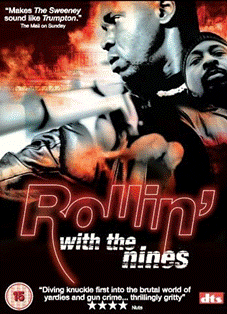
The cult film, nominated at the British Independent Film Awards, went on to secure distribution in Britain and across Europe. Inspired by the success of African-American films such as Boyz n the Hood, Do the Right Thing and Set It Off, Britain’s own brand of street cinema was already flourishing in the 2000s through films such as Saul Dibb’s Bullet Boy (2004), Julian Gilbey’s Rollin’ with the Nines, Menhaj Huda’s Kidulthood, Noel Clarke’s Brotherhood (2016) and Adulthood.
The British film industry continued to tap into the commercial potential of the gangster genre until the worldwide breakthrough of cult series Top Boy, which brought major figures from the UK rap and grime scene to the screen, including Ashley Walters, Kano, Little Simz and Dave.
For years, rap was dismissed by Britain’s cultural establishment, pushing artists and producers towards independence and pirate radio, while live shows faced restrictions and venue bans in an often hostile policing environment. British hip-hop developed underground before eventually breaking into the mainstream, much as it did in France and the United States.
The emergence of these feature films and television series reflects the rise of an urban culture gradually moving out of the underground and into mainstream visibility. To bypass traditional gatekeepers, rappers circulated their music through homemade videos passed from hand to hand and sold through underground networks. First came VHS tapes, then DVDs, before YouTube radically transformed access to urban content and opened a path to mass audiences in an austere political climate.


‘Shiro’s Story’: Made for €3,000, It Explodes on YouTube
Rapman has become a legend. The explosion of British guerrilla filmmaking found one of its most remarkable figures in London rapper of Nigerian heritage Andrew Onwubolu MBE, better known as Rapman. His 2018 mini-series Shiro’s Story, made for a budget of just €3,000, blew up on YouTube with 34 million views.
What made this self-produced mini-series particularly distinctive was Rapman’s own presence on screen. Appearing throughout key sequences, the rapper becomes both narrator and witness to a drama involving two best friends in the Black communities of South East London.
His diegetic rap creates a bridge between the world of the rap video and urban cinema, immersing us in the microcosm of working-class neighbourhoods shaped by immigration. British grime and drill, drawing heavily on drum & bass, jungle and electronic music, have developed an identity increasingly distinct from the American model.
Shiro’s Story is a portrait of people largely invisible in mainstream British society, living on the margins and developing their own cultural codes and outlooks. The series’ dramatic storytelling takes us into a dark, uncompromising everyday reality and resonates as a contemporary reflection on the violence tearing through racialised families and communities in Britain.
Following this extraordinary grassroots success — whether Rapman used a few tricks from the rap industry to boost those viewing figures, we may never know! — he caught the attention of both the music business and British film executives. Independent producers soon gave him the opportunity to make his first properly financed feature film for the big screen: Blue Story.

From ‘Blue Story’ to ‘Supacell’: Rapman Moves to Another Level
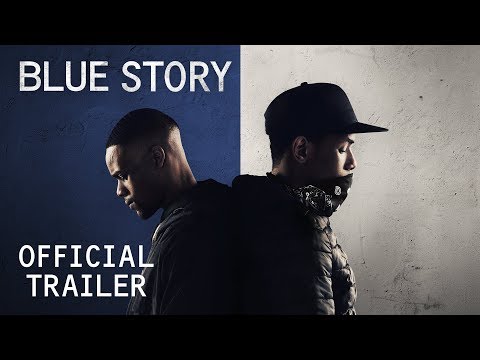
The film tells a story of violent rivalries between Black gangs in Peckham, South East London. Several faces associated with the cult series Top Boy joined the project, including Micheal Ward and Kadeem Ramsay.
The series’ leading actor, rapper Ashley Walters, who plays Dushane, had already made a friendly appearance at the end of episode three of Shiro’s Story. The cameo hinted at Rapman’s determination to quickly build bridges with the music, film and television industries.
The film was backed by the BBC and released theatrically through Paramount in 2020 before reaching Netflix. Following these two successes, Rapman was soon approached to write his science-fiction series for Netflix, Supacell.
‘Supacell’: The Netflix Breakthrough
Black British guerrilla filmmaking has evolved into a genuine success story, encouraging other Black filmmakers to make their own films and self-produced series inspired by their own worlds, following the path opened by Rapman.
Britain has found a symbol of success: an example of determination, creativity and audacity for a young generation without industry connections, willing to create despite the country’s economic and social crisis and growing tensions between communities.

In 2025, Rapman signed an exclusive representation deal with Jay-Z’s company for his film and television projects, alongside a deal with Virgin Records for his music projects. A second season of Supacell is currently being written.
While preparing his series, Rapman also secured $1 million in funding from Akunna Cook’s Next Narrative Africa Fund (NNAF), which finances nine projects a year from across the African diaspora, for a thriller project set in Sierra Leone. He is developing the project as co-writer, director and producer.
From Guerrilla Filmmaking to a New Black British Film Industry
Rapman is opening the door in Britain for a new generation of filmmakers from immigrant backgrounds who are increasingly willing to tell their own stories and offer young audiences characters and worlds that reflect their own experiences.
British cinema, once seemingly closed to certain stories, is gradually setting an example for a Europe that remains clearly behind when it comes to inclusion: producing different kinds of films and bringing lives that exist outside dominant narratives to the screen.
