
The Guerrilla Years of Robert Guédiguian
Before achieving widespread success with “Marius et Jeannette”, Robert Guédiguian went through far more difficult years. The general public knows relatively little about the long struggle that allowed this working-class filmmaker to force his…
 Written byTonio Writer — Urban Cultures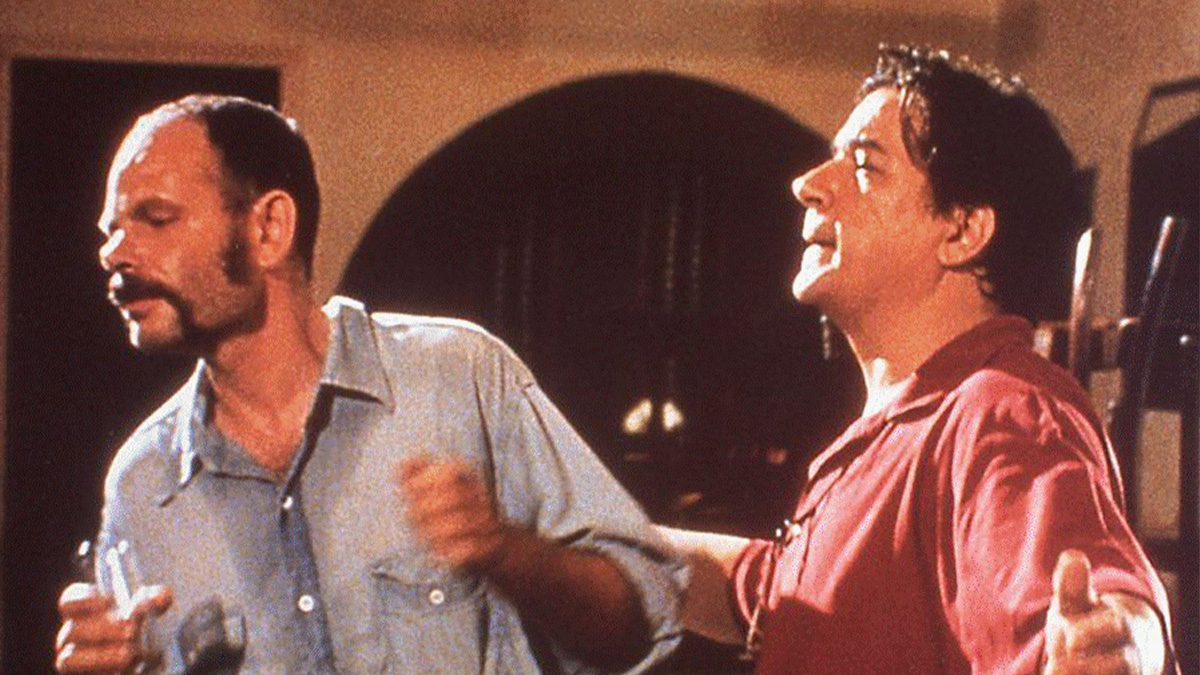
Before achieving widespread success with “Marius et Jeannette”, Robert Guédiguian went through far more difficult years. The general public knows relatively little about the long struggle that allowed this working-class filmmaker to force his way into the film industry and establish himself through sheer determination.
Very few sons of working-class families became film directors in France before the 1980s — and that remains relatively rare even today. Tony Gatlif, Mehdi Charef, Abdelkrim Bahloul, Brahim Tsaki and Rachid Bouchareb emerged as outsiders at roughly the same time as Guédiguian. They were working-class UFOs in a French film industry constantly looking for the next — often bourgeois — heirs to the New Wave. Out of step with this microcosm, he co-directed his first low-budget feature with Frank Le Witta in 1980, “Dernier été”, inspired by his youth in L’Estaque, in the northern districts of Marseille. The film was selected at the Cannes Film Festival in the Perspectives du cinéma français section. With an advance-on-receipts grant from the CNC — although not necessarily much private money — he was able to take his first steps as a director, supported by filmmaker René Féret, who produced the film through his production company.

In 1984, Robert Guédiguian followed it with “Rouge Midi”, a historical film tracing the story of a communist Calabrian family in Marseille across several generations. A more ambitious neo-realist film, it explored his activist roots and his family’s political heritage.

The film was also selected at Cannes in the same section. But while “Dernier été” had generated curiosity and enthusiasm, the response to his second feature was ice-cold.

He was even booed. People walked out of the theatre and the press tore the film apart. It would take another two years before it was finally released in cinemas. The film attracted only 3,220 admissions in a single Parisian theatre — a complete flop. These were the filmmaker’s wilderness years.
“The film was strongly rejected on ideological grounds. It was 1984, and it was like a picture book of what the labour movement had been for three generations. For the Cannes audience, a red film praising trade unions and left-wing political parties was intolerable. People were shouting in the theatre. It was horrible.” Robert Guédiguian
Guédiguian fell into a deep depression. It was a devastating failure. Effectively blacklisted, he could not secure financing for his third project, “Notre-Dame-De-La-Garde”, which was rejected everywhere he submitted it. On the verge of abandoning his emerging career, he turned to the people who had accompanied him from the beginning. Before Mitterrand’s victory in the 1981 presidential election, Guédiguian had broken with the Communist Party after it accepted the collapse of the Union of the Left. He distanced himself from the party and relied instead on his close circle of friends while going through an extremely difficult period.
“These experiences went far beyond cinema. At one point or another, I had all these boys crying at my home. At the time, Robert was in a state of profound despair, and his friends carried him through it. It was a vital reaction. No, you won’t get us. You won’t bring us down. We will not die.” Ariane Ascaride
Cinema gave him a way to express himself and reflect on his world and political history. The massive rejection of “Rouge Midi” left a deep wound. Backed into a corner, despised and painfully aware that he did not come from the “right” social background, this son of a docker and a cleaner decided to fight back by returning to guerrilla filmmaking with his friends and closest collaborators. He freed himself from the financial barriers surrounding conventional filmmaking and reclaimed his freedom. In doing so, he followed in the footsteps of Marseille filmmaker Paul Carpita, who had made a guerrilla feature about the working class in 1953, “Le Rendez-vous des quais”, a worthy heir to post-war Italian neo-realism.

That same year, Guédiguian kept Gilberto Azevedo, the cinematographer from his first two films, along with his loyal actors Gérard Meylan and Ariane Ascaride. Supported by those closest to him, he wrote the screenplay for “Ki Lo Sa ?” in just fifteen days, using the film to express his profound existential crisis.
“Failure and the lack of money never stopped us. Robert had a project called Notre-Dame-de-la-Garde that he couldn’t make because there wasn’t enough money. We all came together and immediately made something else: Ki Lo Sa, his darkest film, almost like an autopsy. We made it in just a few days. We even brought food and drinks for the crew ourselves.” Gérard Meylan.

Nobody was paid to work on the film. Ascaride was joined by friends from the Conservatoire, including Alain Lenglet, Jean-Pierre Darroussin and Pierre Banderet. This tight-knit group, raised on revolutionary ideas and trade-union culture, chose not to disappear. Together they made a dark, nostalgic film about the disillusionment of the left and the desperate thoughts of a generation that suddenly found itself politically orphaned from the Communist Party.

The portrait of friendship at the heart of “Ki Lo Sa ?” is bleak, evoking the collective collapse of a generation that once believed in a brighter political future. Yet the film also saved Guédiguian’s life as a filmmaker, allowing him to express, against the prevailing mood, what mattered most to him: friendship and his deep roots in Marseille. Cinema became a combat sport, and the need to make films became a matter of survival.
Despite its extreme darkness, reflecting Guédiguian’s state of mind at the time, he continued down his path and eventually began to see some light at the end of the tunnel. The film was nevertheless rejected by festivals and failed to find a distributor willing to release it theatrically.
“The shooting of Ki Lo Sa ? lasted eighteen days, in the garden of a house in Marseille. And the rejection was total. People walked out of the theatre, even though today it is regarded as a cult film. But at the time, it simply didn’t work. I told them they were all cowards, assholes who didn’t want to see the world as it really was. So I fought back. But I genuinely felt completely alone.”
Robert Guédiguian
This was his long walk through the desert. Perhaps dismissed as too provincial for the respectable circles of the French film establishment, Guédiguian responded by asserting his difference, his working-class roots and his attachment to Marseille and the creative family gradually forming around him. Whether success came or not, he continued experimenting and discovering the craft of filmmaking as a self-taught director. In 1989, he made a fourth guerrilla feature, “Dieu vomit les tièdes”, once again surrounded by the small filmmaking family willing to follow him into battle.

In the film, corpses mysteriously float to the surface during celebrations marking the bicentenary of the Revolution: a bitter autopsy of the French left under Mitterrand.
K Films eventually distributed the film, which attracted nearly 11,000 admissions and drew some attention from a left-wing press disappointed by the Socialist years.

Many filmmakers would have given up in his position. The first part of Guédiguian’s career was difficult to say the least. After two films had secured financing and distribution following their Cannes selections, failure pushed the Marseille director into the radical margins of guerrilla filmmaking. The positive side was that he never gave up, moving into production at the same time and working with Agat Films, which produced audiovisual projects.

Guédiguian survived financially as a producer while continuing his apprenticeship as a filmmaker. Over ten years, he made four deeply personal feature films: “Dernier été”, “Rouge Midi”, “Ki Lo Sa ?” and “Dieu vomit les tièdes”.
He was one of the very few — perhaps even the only — sons of working-class parents in France at the time to carve out a career as an independent filmmaker while continuing to make cinema in the South. But doubt eventually crept in. He could not continue making guerrilla films forever without recognition or support from the film industry. He therefore came up with the idea of bringing his four feature films together for a retrospective on Rue Champollion in Paris. His work began to make an impression and gradually attracted a small group of devoted followers.
“Yes, I had spent ten years making just four films that hadn’t worked, but I thought: why not? And quietly, things started going reasonably well. I was beginning to have some followers. The press even started referring to my films as ‘a body of work’. Things were beginning to stir. Then I was offered the opportunity to make something for television. I wrote ‘L’Argent fait le bonheur’, a genuinely moral farce, and it was a huge success. Almost immediately afterwards, I followed it with ‘À la vie, à la mort !’.” Guédiguian
A decisive meeting with screenwriter Jean-Louis Milesi brought a warmer, more joyful and more popular dimension to his cinema, and the two would go on to work closely together on several subsequent screenplays. The rest is better known, beginning with the success of “À la vie, à la mort !”. He would then make “Marius et Jeannette”, which attracted more than 2.5 million admissions. His stubborn determination to portray people largely invisible on French screens — the poor, the excluded and the working-class inhabitants of Marseille’s northern districts — had hardly been fashionable. For ten years, he struggled to find his path with little enthusiasm or encouragement from the profession, supported mainly by the hard core of people around him.
His guerrilla films may not have found a mass audience, but they helped him discover his voice and his tone while strengthening the bonds with his team — his tribe — through a constant apprenticeship in cinematic language. Without those guerrilla films, many of which have since become cult works, he might never have been able to make films with greater resources or eventually reach a mainstream audience. It remains striking that such a distinctive and talented filmmaker, already selected twice at Cannes, was not given greater support at the time to develop his work.

How many promising careers have been shattered throughout the history of French cinema because of a lack of commercial success, critical recognition or financial resources? Like many others, he could have waited years before finding the money to finance another screenplay. Instead, he displayed the same rebellious energy as a then little-known young Spanish filmmaker, Pedro Almodóvar, who was also making a film every couple of years with almost no money and would not be selected at the Cannes Film Festival until his 14th feature. Guédiguian embraced the lean years of the underground. Whatever the cost, and often with virtually no money, he kept making free and creative feature films that allowed him to grow and gradually define a deeply personal and unique body of work — the work of an obsessively determined filmmaker.

In the years that followed, Robert Guédiguian went on to direct 24 feature films that found a wide audience. He fought his way through the industry, taking enormous risks and making guerrilla films simply to exist as a filmmaker and break through walls — some of the very same walls that a new generation of filmmakers from Marseille was once again confronting in 2023. But the Marseille spirit survives. Working-class sons and daughters no longer necessarily wait for the paternalistic approval of the system. With digital tools, they can now experiment freely and tell their own stories, far from the dictates and fashionable trends imposed by the capital.
Long live guerrilla cinema!