
From the Streets to the Network: Forty Years of New York Rap and Its Language
From the Streets to the Network: Forty Years of New York Rap and Its Language New York, Mirror of the World — How Rap Chronicles the City’s Transformation New York rap isn’t just a…
 Written byZEZ XXI — Mazdak Vafaei Shalmani
From the Streets to the Network: Forty Years of New York Rap and Its Language
New York, Mirror of the World — How Rap Chronicles the City’s Transformation
New York rap isn’t just a genre — it’s a living language, a collective journal, and a social barometer.
Born from the ashes of the Bronx in the late 1970s, it has mirrored every major shift in the city — economic collapse, rising crime, gentrification, 9/11, the digital revolution, and now, the era of drill.
Through its words, its silences, and its slogans, New York rap has narrated the world like no other form of popular art since the Harlem Renaissance.
This study explores its lexical and social evolution decade by decade, connecting language to urban history.
1980–1989: The Birth of the Word — Music in the Rubble
New York rap was born in a Bronx reduced to ashes.
After the riots of the 1970s and the city’s economic collapse, New York was on the brink of bankruptcy.
Blackouts, abandoned buildings, and the crack epidemic forged a generation growing up in chaos.
That’s where DJ Kool Herc, Afrika Bambaataa, and Grandmaster Flash invented a new language: hip-hop.
“Don’t push me ’cause I’m close to the edge / I’m trying not to lose my head.” — Grandmaster Flash, 1982
The lexicon of the 1980s revolved around survival and resilience.
Dominant words — “break,” “fight,” “block,” “party,” “DJ” — revealed a collective world where celebration itself was an act of resistance.
MCs became the griots of a marginalized Black youth.
The street (lexical field: “corner,” “crew,” “city”) was both a setting and a destiny.
“Money” and “power” weren’t part of the vocabulary yet — this was the era of the we, not the I.
Socially, rap rose in defiance of segregation and deindustrialization.
The ghettos of the Bronx and Brooklyn became new linguistic laboratories.
Hip-hop spread through subways, parks, and underground clubs.
Meanwhile, the city was enforcing tougher policing policies — marking the first fracture between the street and the institution.
Through its words, rap positioned itself as a symbolic counter-power.

1990–1999: Boom-Bap and Urban Tragedy
The 1990s represent the golden age of New York rap.
Boom-bap ruled the decade: productions by DJ Premier, Pete Rock, and RZA carried the words of Nas, Wu-Tang Clan, Mobb Deep, The Notorious B.I.G., and Jay-Z.
It was a time of lyrical mastery — but also of social despair.
The most frequent words across lyrics — “life,” “real,” “niggas,” “back,” “street,” “mind” — captured the tension between consciousness and survival.
“I never sleep, ’cause sleep is the cousin of death.” — Nas, “N.Y. State of Mind” (1994)
Lexical analysis reveals that violence dominated the semantic field (over 1,500 occurrences).
Terms like “gun,” “blood,” “fight,” and “cop” repeated like refrains.
Yet faith (643 mentions: “God,” “pray,” “devil”) softened this brutality.
This was the rap of a people at war with their environment — art as collective catharsis.
The social context mattered: the rise of crack, Rudy Giuliani’s zero-tolerance policies, and mass incarceration.
Rap became a counter-history of New York.
Albums like Illmatic (Nas, 1994) and Ready to Die (Biggie, 1994) were as literary and raw as any 19th-century novel.
New York rappers became chroniclers of poverty and poets of resistance.
By the end of the decade, the deaths of 2Pac and Biggie symbolized the end of an era.
What began as a voice of the streets had become a global industry.

2000–2009: Cultural Capitalism and the “Self-Made” Identity
The 2000s marked a turning point: New York rap became a global product.
The language grew standardized; the focus shifted toward success and wealth.
Dominant words — “money,” “get,” “yeah,” “fly,” “bitch,” “car,” “chain” — revealed a new grammar of power.
Bling became a worldview.
“I’m not a businessman, I’m a business, man.” — Jay-Z (2003)
Artists from the streets rose to global fame: 50 Cent, Ja Rule, Cam’ron, Fat Joe.
The money field exploded (605 mentions), while the street field declined (255).
Music videos flaunted penthouses, Maybachs, and champagne.
The lexicon became one of ostentatious capitalism.
Yet beneath the surface, pain remained: “hustle,” “struggle,” “grind” persisted as mantras of survival.
Socially, the Twin Towers fell, fear rose, and the world changed.
After 9/11, Manhattan was rebuilt, Brooklyn gentrified, and rap followed the same path.
Faith and rebellion gave way to performance and personal success.
The “I” became the story’s central figure — individual triumph replaced collective memory.

2010–2019: Hybrid Identities and the Digital Age
The 2010s saw New York reborn in a new form.
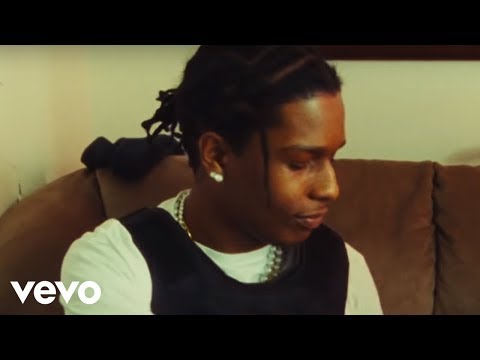
Pioneers of alternative rap like Joey Bada$$, A$AP Rocky, Nicki Minaj, and Action Bronson blended past and future.
Dominant words — “love,” “vibe,” “world,” “dream,” “fly,” “new” — reflected creativity and experimentation.
“Harlem’s what I’m reppin’.” — A$AP Rocky, “Peso” (2011)
The vocabulary went digital: “post,” “click,” “follow,” “trend.”
Faith declined (185 mentions), replaced by fashion and internet culture.
Concepts like “swag” and “drip” represented a new secular spirituality — to be seen was to exist.
Socially, this was the age of Occupy Wall Street, the housing crisis, and Black Lives Matter.
Rap became less overtly political but remained deeply tied to identity and self-expression.
Aesthetic hybridity defined the decade: jazz, trap, reggaeton, and soul blended into one.
Flatbush Zombies explored Black consciousness, Cardi B embodied female empowerment from the Bronx, and Young M.A broke gender boundaries.
Language grew more inclusive, fluid, and universal.
The artist became a global, connected, self-aware citizen.
2020–2025: Drill, Post-Truth, and Digital Urgency
In 2020, New York entered a new era: the rise of drill.
Borrowed from Chicago and London, this sound exploded with Pop Smoke, Fivio Foreign, Kay Flock, and Ice Spice.
The language shrank but intensified — percussive, coded, almost ritualistic.
Dominant words — “woo,” “baow,” “op,” “gang,” “shot,” “block” — functioned less as speech and more as sound symbols.
“Christian Dior, Dior / I’m up in all the stores.” — Pop Smoke (2020)
The violence field exploded (1,293 mentions) while faith faded (337).
Beneath the aggression lies the despair of a hyperconnected, isolated generation.
New York rap became the mirror of global chaos — pandemic fear, inequality, digital burnout, the hunger for attention.
Drill turned fear into energy and pain into rhythm — the soundtrack of a post-hope world, though not a post-human one.
Cross-Analysis: When Vocabulary Follows Society
The evolution of New York rap mirrors the city’s social heartbeat like a seismograph:
- 1980s: Response to marginalization; community expression; street education.
- 1990s: Reflection of urban violence; Black consciousness; critique of policing.
- 2000s: Triumph of capitalism; individual success; post-9/11 disillusionment.
- 2010s: Cultural rebirth; the Internet age; fluid identities; inclusion and aesthetics.
- 2020s: Hyperconnection; codified slang; nihilism; virality and survival.
Behind every statistic and rhyme lies one constant: the need to speak.
From “The Message” to “Dior”, each generation has reinvented its voice to express reality.
New York rap remains the chronicle of a city in motion — from the burning Bronx of the 1980s to today’s digital skyline.
“New York rap began in the ruins — now it speaks through the networks. But its message remains the same: to exist, no matter the cost.”
