Booba Drops “Nemesis” as the Visual Companion to “Blanco Nemesis”
It’s the moment of truth. Booba has finally unveiled "Blanco Nemesis", his twelfth solo album. While "Nero Nemesis", released unexpectedly in 2015, felt like a transitional project deeply rooted in pure rap, this new…
 Written byZEZ XXI — Mazdak Vafaei Shalmani
Dans cet article
It’s the moment of truth. Booba has finally unveiled “Blanco Nemesis”, his twelfth solo album. While “Nero Nemesis”, released unexpectedly in 2015, felt like a transitional project deeply rooted in pure rap, this new record aims much higher. Conceived as a fully realized career statement, “Blanco Nemesis” moves across a wide range of sonic territories, once again proving the Duke’s ability to reinvent himself without ever abandoning his artistic identity.
Announced months in advance and supported by a carefully orchestrated promotional campaign, the project also stands apart through a less oppressive atmosphere than its predecessor. True to his appetite for experimentation, Booba alternates between hard-hitting rap, melodic passages, and more contemporary sounds, while welcoming four guest appearances from Huntrill, Matra, Chaax, and Aïshé.
Booba embraces artificial intelligence as a new creative tool
During an appearance on “Carré D’As”, alongside French rap icons Lino and Oxmo Puccino, Booba surprised many listeners by openly discussing his use of artificial intelligence during the creative process behind “Seychelles”, one of the standout tracks from “Blanco Nemesis”.
While many artists remain discreet about the subject, the rapper has chosen a far more direct approach. In his view, AI is neither a threat nor a replacement for human creativity. Instead, it is another tool capable of sparking ideas and opening new creative possibilities.
“AI doesn’t do everything for you. It can give you a foundation, just like a human can come up with a topline.”
As is often the case with Booba, this pragmatic vision comes with a touch of provocation. Addressing those who remain skeptical of the technology, he added:
“You’re like the people who refused to use Pro Tools and ended up unemployed.”
Beyond the punchline, the comparison reveals how Booba sees the issue. For him, artificial intelligence is simply the latest step in a long series of technological innovations that have transformed the music industry over the past two decades.
From Auto-Tune to AI: history repeating itself
The comparison is far from accidental. When “0.9” was released in 2008, Booba became one of the most visible advocates of Auto-Tune in French rap. At the time, many artists and fans criticized what they saw as a commercialized distortion of the genre. A few years later, however, the effect had become a staple throughout the French-speaking music scene.
The rapper himself summed up that evolution on “Trône”:
“Since 0.9, they criticized it, but they all ended up abusing Auto-Tune.”
Today, those words resonate more strongly than ever. Like Auto-Tune before it, artificial intelligence inspires both fascination and resistance. Yet many observers believe it could gradually establish itself as an essential production tool, just as digital audio workstations, advanced recording software, and streaming platforms once did.
Only a few weeks after Skyrock broadcast its first AI-generated artist—an initiative that sparked intense debate throughout the French music industry—Booba continues to explore this new creative frontier.
“Nemesis”: a futuristic vision entirely generated by AI
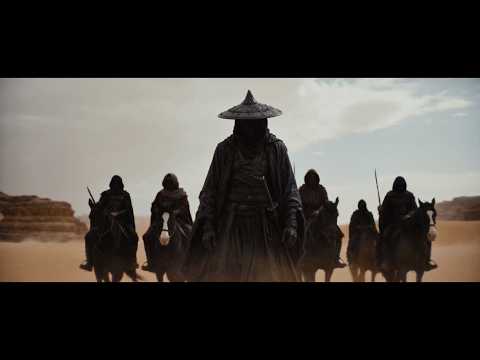
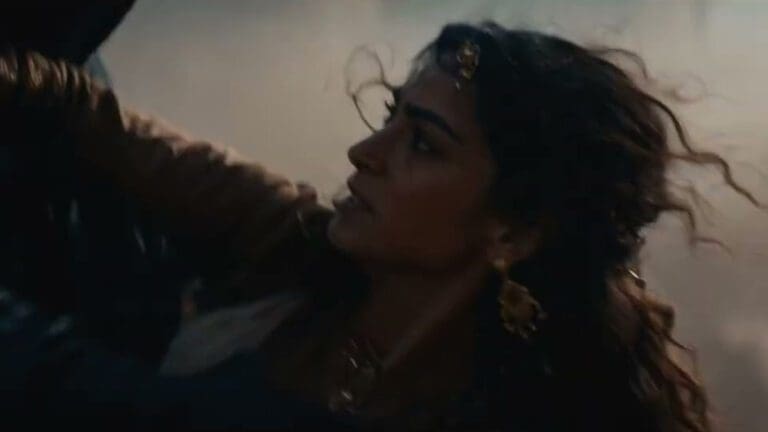
To support the release of “Blanco Nemesis”, Booba unveiled the music video for “Nemesis”, a visual production created entirely with artificial intelligence. The decision perfectly aligns with the broader artistic vision surrounding the album.
The track is built around a production by Baille Broliker, a Tunisian composer whose résumé includes collaborations with some of the biggest names in French-speaking rap. His credits include “Zer” for Booba, “Mira” for PNL, “GoodKat” for Niro, and “Weed” by Maes.
Musically, “Nemesis” stands out as one of the darkest tracks on the album. Driven by a cinematic and menacing instrumental, the song immerses listeners in a world shaped by conflict, revenge, and personal feuds. More than ever, Booba turns his rivalries—both personal and public—into artistic material.
Visually, the video occasionally recalls the grand scale of contemporary science-fiction epics, with imagery reminiscent of the world of “Dune”. Directed by Zoel Aeschbacher, the clip is particularly striking for how effectively it conceals the usual visual markers associated with AI-generated content.
Unlike many AI-produced videos that are instantly recognizable, “Nemesis” benefits from an impressive level of polish. The visuals display remarkable consistency and come surprisingly close to the standards of traditional high-end audiovisual productions.
It is yet another demonstration of the talent of Zoel Aeschbacher, who has already drawn attention for directing “Mauvais Esprit” by Skow, as well as several international advertising campaigns, including work for luxury fashion house Zegna.