
UK Drill, NY Drill, French Drill: Three Schools, Three Truths
You only need to listen to two Drill tracks from two different countries to feel the shift. The BPM, the bass, and the darkness may remain the same, but the atmosphere changes instantly. To…
 Written byZEZ XXI — Mazdak Vafaei Shalmani
You only need to listen to two Drill tracks from two different countries to feel the shift. The BPM, the bass, and the darkness may remain the same, but the atmosphere changes instantly. To understand why, we analyzed thousands of lines from key artists across the three major scenes, from Pop Smoke to Gazo and Headie One. What emerges is clear: Drill isn’t a monolithic genre. It’s a shared language that each country reshapes through its own culture, daily reality, and anger.
1. UK Drill – The Social and Defiant Foundation
In the UK, Drill goes far beyond a simple depiction of the streets. With artists like Headie One, Digga D, and K-Trap, the storytelling often feels like firsthand testimony. Their tracks unfold like near-cinematic scenes. In “Ain’t It Different”, Headie One reflects on repeated police stop-and-search encounters, the codes of his block, and the social tension that shapes North London’s neighborhoods. The tone is calm but icy, loaded with a quiet tension.
There’s a constant sense of stepping back to observe society, of saying: this is what we live through, this is why we’re angry. UK Drill was born from friction—between youths and the state, communities and institutions. It’s a genre that watches as much as it threatens, where violence coexists with social criticism.

2. NY Drill – Raw Energy and Immediate Impact
In New York, the story takes a different turn. When Pop Smoke dropped “Dior” and “Welcome to the Party”, he introduced a style where energy dominates everything. The writing is shorter, instinctive, and built for confrontation. Ad-libs hit like gunshots: “Woo”, “Baow”, “Huh”. The violence feels direct, almost mechanical.
Fivio Foreign, Sheff G, and 22Gz pushed this aesthetic even further. They don’t analyze the streets—they embody them. They make the city explode through the speakers. This form of Drill isn’t concerned with the “why,” only the “how.” In many tracks, weapons become characters in their own right, extensions of the rapper’s identity. NY Drill is an uppercut: few words, maximum impact.
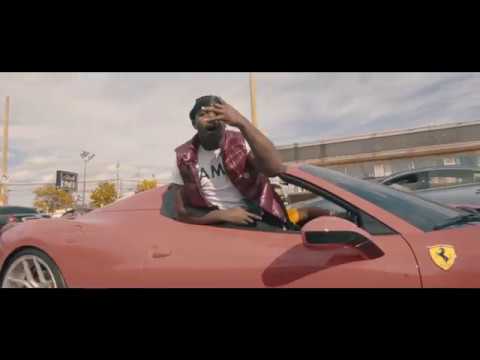
3. French Drill – Style, Language, and Atmosphere
France embraced Drill in its own way. Gazo, Freeze Corleone, Ziak, and Rimkus have developed a denser, more varied, and sometimes more cryptic writing style. In “Haine&Sex”, Gazo blends cultural references, Congolese expressions, English phrases, and rhythmic gimmicks.
Freeze Corleone relies on an opaque, reference-heavy style built with near-mathematical precision. Ziak turns his masked voice into an instrument, repeating sound motifs like incantations. French Drill is less obsessed with the street as it is and more fascinated by the aesthetic it inspires. It speaks of zones, deals, and violence, but always through a layer of style, sonic identity, and theatrical tension.
Ultimately, this comparison reveals that Drill reflects each country’s relationship to its own reality. In the UK, it draws from a legacy of political rap shaped by heavy police surveillance and community tensions. In New York, it mirrors a culture where performance, attitude, and rivalry drive the narrative. In France, it becomes a linguistic laboratory—a space to experiment, twist, and stylize a darkness inherited from abroad.
Three countries, three truths, one shared language. Drill turns hardship into aesthetics and urgency into music. It doesn’t just cross borders—it absorbs them, rewrites them, and sends them back amplified, echoing through speakers, cities, and streets around the world.
