
Ziak Reinvents French Drill on “MONSIEUR LOYAL”
With MONSIEUR LOYAL, Ziak takes an obsession that has run through his entire discography one step further: keeping drill’s foundations intact while constantly changing the materials used to build around them. Where earlier records…
 Written byZEZ XXI — Mazdak Vafaei Shalmani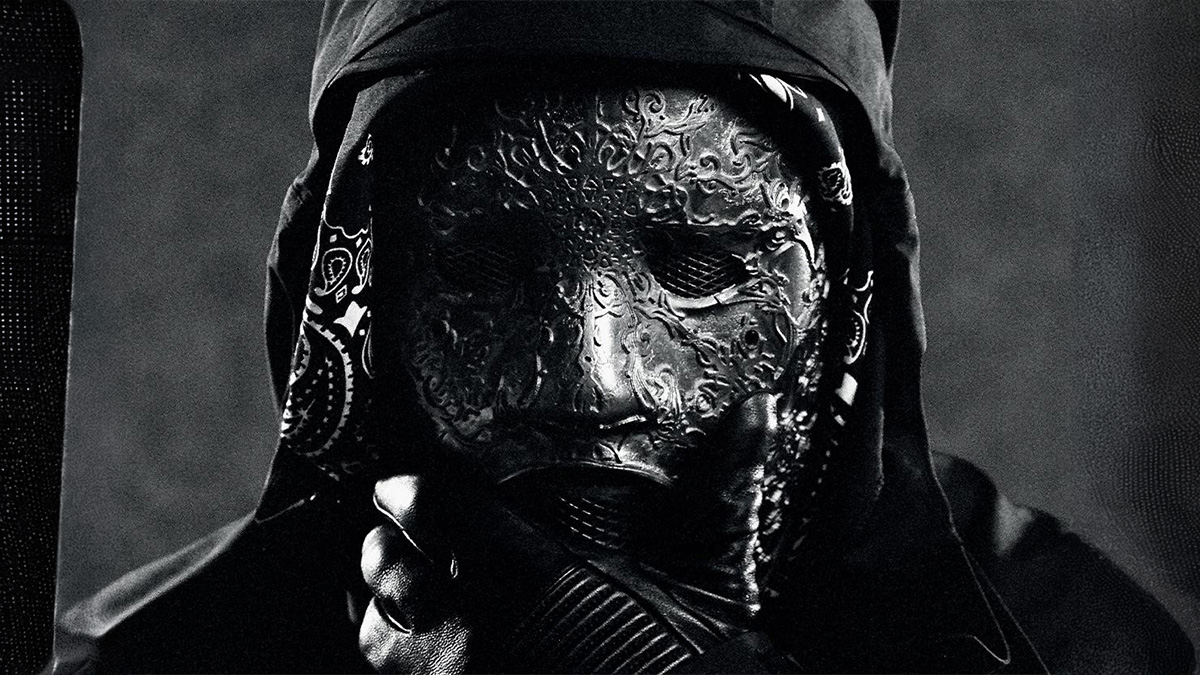
Dans cet article


With MONSIEUR LOYAL, Ziak takes an obsession that has run through his entire discography one step further: keeping drill’s foundations intact while constantly changing the materials used to build around them. Where earlier records drew on Middle Eastern sounds, Essonne History X ventured further into electronic and experimental territory, and MONSIEUR LOYAL now introduces motifs reminiscent of Asian music alongside rhythms borrowing from baile funk. While parts of the French scene have gradually moved away from drill, Ziak seems determined to transform it from within.
There is something strange about the opening minutes of MONSIEUR LOYAL. Everything is instantly recognisable: the deep voice, the bass, the darkness, the constant sense of tension that has become almost inseparable from Ziak. And yet, something has shifted.
Across several of the project’s opening tracks, subtle timbres and melodic motifs emerge that evoke certain Asian musical traditions. They are never prominent enough to turn the songs into outright exercises in fusion, but they are noticeable enough to bring a new colour to Ziak’s sound.
There is an important distinction to make here between what can be heard and what can actually be identified as a sample. At this stage, with no Asian works clearly credited as samples on these tracks, it is more accurate to speak of sounds, timbres and motifs reminiscent of certain Asian musical traditions.
From Akimbo to Chrome: Changing the Fabric of Drill
This approach is nothing new.
When Akimbo arrived in 2021, Ziak was establishing himself just as French drill was exploding into the mainstream. Yet even then, his music was never simply an attempt to reproduce the British formula.
Across his discography, and particularly around Akimbo and Chrome, his sound began incorporating Middle Eastern influences and Arabic-inspired instrumentation. The UrbanTrackz Knowledge profile on Ziak notably documents the use of the ney, darbuka and other related timbres within his musical universe.
By Chrome, that search had become even more apparent. In an earlier article looking at Ziak’s evolution leading up to Essonne History X, UrbanTrackz had already highlighted the way Arabic-inspired instrumentation was being introduced into an architecture that remained fundamentally rooted in drill.
The skeleton, then, remained familiar. What Ziak built around it was beginning to change.
That would become one of the defining threads running through his discography: maintaining an exceptionally stable identity while refusing to make the same record twice.
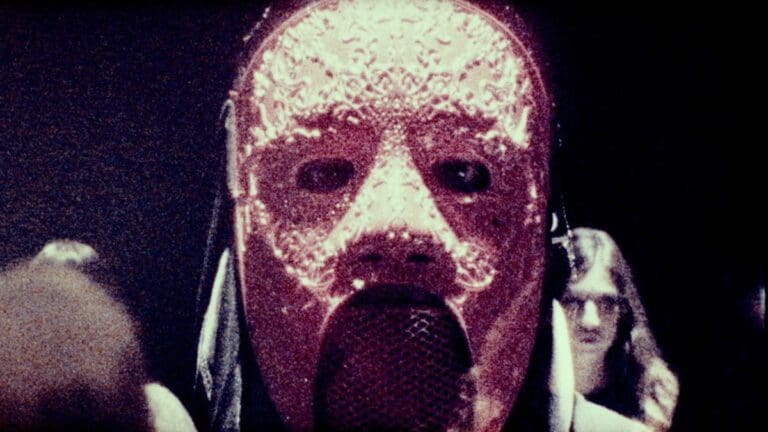
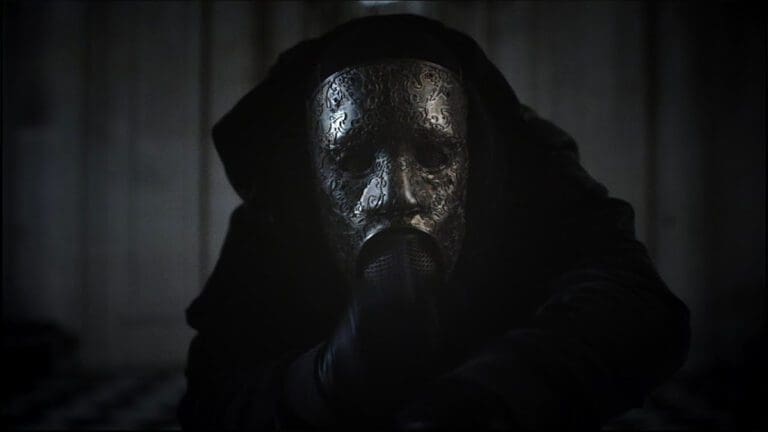
His flow remains instantly recognisable. So does the character. His voice, the mask and the way he constructs his imagery form an almost immutable signature.
The movement therefore happens elsewhere: in the production.
Essonne History X: The Laboratory
Essonne History X is probably the best place to start when trying to understand what is happening on MONSIEUR LOYAL.
Released in 2025, the project significantly broke open Ziak’s established formula. Lowonstage remained at the heart of the record, but the rapper multiplied his collaborations: Neophron and Rosaliedu38 appeared on “Room”, Meysi on “La nuit”, Ameen Beats and Banger MelodyZ on “Le peuple de la recharge”, while Sam Tiba worked notably on “Chassé-croisé” and “Garçon de café”.
That broader circle of producers translated directly into the music.
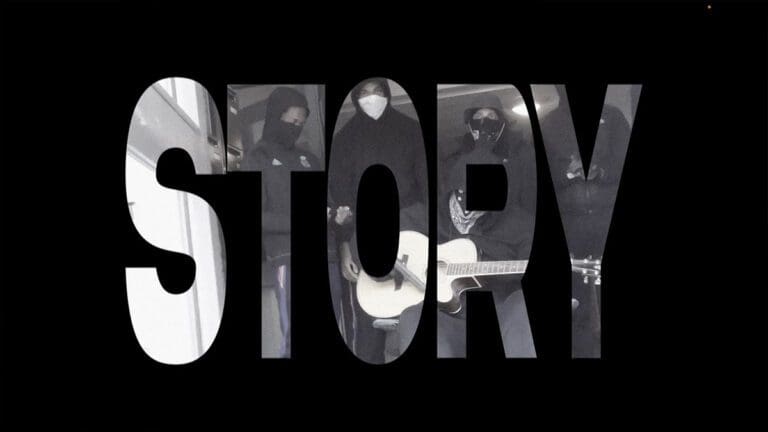
Hits Actus described “Chassé-croisé” as one of the album’s most experimental tracks and noted the use of Morcheeba’s “Fear and Love” on “Story”. The publication also highlighted the role of synthesizers on “Grain de riz”, the distinctive atmosphere of “La nuit”, and the almost Japanese feel surrounding the project’s closing moments.
UrbanTrackz had already picked up on the same evolution. In our analysis of “Grabba / Chassé Croisé”, Lowonstage and Sam Tiba’s productions appeared as two different ways of distorting Ziak’s established codes: “Chassé Croisé” was far more mobile, while “Grabba” was built around deliberately irregular rhythms.
The English-language piece published by Hellsinky had already highlighted that contrast between a more rhythm-driven production and a far more unpredictable one.
On “Story”, Ziak allows himself to be carried even further by Lowonstage’s production. UrbanTrackz had already observed that, unlike on his first two albums, Essonne History X occasionally saw the rapper allowing the beat to dictate the direction of a track rather than simply dominating it.
So MONSIEUR LOYAL is not the record on which Ziak suddenly becomes experimental. It is the record on which he continues an experiment that has already been unfolding for years.
MONSIEUR LOYAL: Changing the Ingredients Without Breaking the Formula
The production credits on the new project offer another way of understanding his method.
Ziak does not discard the people who helped shape his identity and start again from scratch. Instead, he keeps several of his long-standing collaborators and places them alongside a new set of names.
Lowonstage, arguably one of the most important producers in the construction of Ziak’s sound, remains omnipresent. Their history stretches back through tracks such as “Chrome”, “Tomb Raider”, “Seinen” and “Pistol & Zamal”. UrbanTrackz has documented that relationship in its beatmaker database.
On MONSIEUR LOYAL, Lowonstage appears notably around “FOMO”, “MAL NECESSAIRE”, “KRUEGER”, “CAMO” and “GGWP”.
Focus Beatz, another long-standing architect of Ziak’s sound dating back to Akimbo, is also still present, notably around “FENG SHUI”, “L.O.V.E” and “MONSIEUR LOYAL”.
Sam Tiba, already associated with Ziak on Essonne History X, returns on “ENFANT DU BLOCK”. GRKS, who had previously contributed to “Seinen”, reappears on “FOMO”.
But this established core is now surrounded by Rosaliedu38, Koboi, Aston Kain, Jy Prod, Mayeul Giraud, Madenka and Yves Nord.
This is probably one of the keys to understanding the record.
Ziak is not replacing his old production team with a new generation: he is bringing the two together.
Lowonstage joins forces with GRKS and Aston Kain on “FOMO”. Focus Beatz links up with Jy Prod on “FENG SHUI”. Lowonstage works with Mayeul Giraud on “MAL NECESSAIRE”. Focus appears around the title track alongside Madenka and Yves Nord. Rosaliedu38 and Koboi become part of this new constellation too.
The sense of renewal therefore comes less from a clean break than from new combinations built around an established core.
“FENG SHUI”: When Ziak Starts Reworking the Rhythmic Engine
“FENG SHUI” is perhaps the clearest example of this evolution.
This time, Ziak is no longer merely experimenting with textures laid over a drill framework. The pulse itself borrows from baile funk, without turning the track into Brazilian funk.
That distinction matters.
On his earlier projects, Ziak could alter the colour of drill through instrumentation, samples or melody. On Essonne History X, he began reshaping its structures far more radically. With “FENG SHUI”, the rhythmic engine itself becomes part of the experiment.
The track notably brings Ziak, Focus Beatz and Jy Prod together in its composition.
His musical evolution could almost be reduced to three stages:
Akimbo / Chrome: changing the timbres.
Essonne History X: changing the structures.
MONSIEUR LOYAL: changing the rhythms as well.
Ziak is no longer simply looking for new sounds to place around drill. He is looking for new ways to build drill itself.
Experimentation Can Also Alienate an Audience
There is, however, another side to that constant experimentation.
It is still too early to turn the first reactions to MONSIEUR LOYAL into any definitive verdict. What can already be seen, however, is a project capable of dividing listeners rather than producing immediate consensus.
That is not entirely new either.
UrbanTrackz previously noted in relation to Essonne History X that the album delivered the weakest opening week of Ziak’s career, with 8,411 units across all formats, even as its streaming figures showed that he still commanded a substantial audience.
The same article recalled an especially revealing statement from Ziak following Chrome: the artist said he wanted to “close the chapter opened with Akimbo”.
In other words, reinvention is not accidental. It is part of the plan.
And that creates an interesting tension: the very thing that makes Ziak distinctive may also be what frustrates part of his audience.
Whenever a formula starts working, he seems almost immediately interested in finding a way to destabilise it.
After the Explosion: Three Paths for French Drill
MONSIEUR LOYAL therefore says something about more than Ziak’s career alone.
Several years after drill exploded in France, the artists who came to embody the movement have not all followed the same path.
Without pretending that radically different scenes can be locked into definitive categories, three broad trajectories can be identified.
Gazo: Expanding the Territory
The first is Gazo’s.
In the early 2020s, he became one of the defining faces of French drill. His trajectory, however, gradually opened up to other forms.
That evolution became particularly visible through his work with Tiakola and their joint project La Mélo est Gangx. Drill, melody and different forms of mainstream rap could now coexist within the same artistic space.
That does not mean Gazo has abandoned his roots. He can move away from them and then return.
His trajectory could therefore be summarised as starting from drill and gradually expanding the territory around it.
A More Radical Branch: Flem, 667 and Lyonzon
A second trajectory can be found within a more underground constellation of producers, artists and collectives such as Flem, 667 and Lyonzon.
It would be artificial to pretend that they all make exactly the same kind of music. Their histories also extend well beyond drill itself.
But they represent another possibility: dark, experimental music that is often less concerned with moving towards the most mainstream forms of French rap.
It is a branch of the scene more interested in pushing certain forms of radicalism further than in systematically seeking crossover.
Ziak: Transforming Drill From Within
And then there is Ziak.
His trajectory is different.
He does not appear particularly interested in becoming a pop artist who happened to begin with drill. Instead, he seems intent on discovering how many mutations the music can withstand before it stops being itself.
Gazo can step outside drill, explore melody or other territories, and then return to it. Ziak seems more inclined to take the laboratory with him wherever he goes.
Middle Eastern sounds. Samples. Synthesizers. Electronic music. New combinations of producers. Motifs reminiscent of Asian musical traditions. Rhythms borrowing from baile funk.
He changes the components, but keeps the machine.
A Visual Architecture as Much as a Sonic One
And this obsession with transformation does not begin with the music.
From the start of his career, Ziak has built one of the most instantly recognisable visual identities of his generation.
The mask is only its most obvious element.
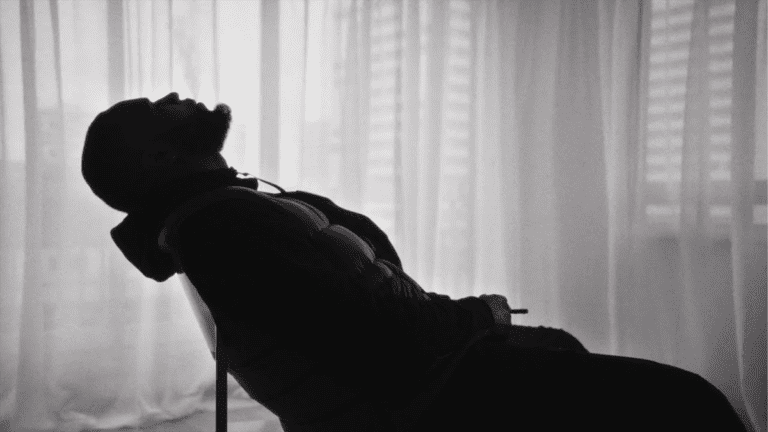
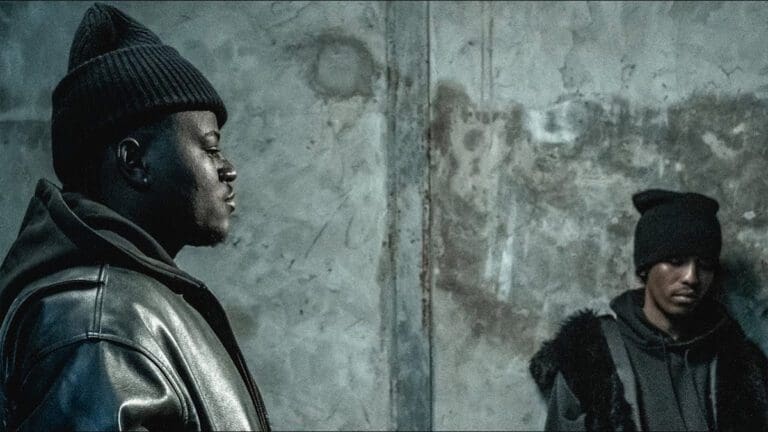
Deep blacks, concealed figures, industrial settings, implied violence, unsettling objects, cold framing and deliberately uncomfortable situations: in Ziak’s world, the image functions as an extension of the production.
UrbanTrackz had already highlighted this visual evolution around Essonne History X, as some of his videos became increasingly minimalist, abstract and almost subversive, at times constructed around little more than a single object or static shot.
Some images can evoke the dark precision of David Fincher; others recall the sense of unease and displaced reality associated with David Lynch. That is not to suggest that either filmmaker is a confirmed influence on Ziak — there is nothing to establish that — but rather to point to an aesthetic parallel.
As in their cinema, an image does not necessarily need to explain what it is showing. Its first purpose is to create a sensation.
Ultimately, that is exactly what Ziak seems to be pursuing with sound as well.
Drill as Raw Material
Placed within the broader arc of Ziak’s career, MONSIEUR LOYAL feels less like a detour than the latest stage in an ongoing method. Since Akimbo, he has continually shifted the boundaries of his music without disturbing the elements that make it instantly recognisable. The Middle Eastern colours of his earlier work, the experimentation of Essonne History X, and now the new textures and rhythms of MONSIEUR LOYAL do not tell a story of successive breaks. They are part of the same search, pursued with almost obsessive determination.
This may be where Ziak takes a particularly distinctive path in the post-drill landscape of French rap. Where Gazo has expanded his territory by embracing melody and other forms of mainstream rap, Ziak seems less interested in what exists outside drill than in everything that might still be possible within it. Even if that means twisting its rhythms, shifting its references, introducing sounds that once seemed foreign to its vocabulary and occasionally unsettling listeners who came looking for the more immediate brutality of his earlier work.
MONSIEUR LOYAL, then, may not be the record on which Ziak moves away from drill. It may be the record that makes it clearest that he never regarded drill as a fixed set of rules in the first place.
For Ziak, drill has become raw material: something to cut apart, contaminate, distort and rebuild until the result sometimes barely resembles drill at all — yet remains unmistakably Ziak.

References
- UrbanTrackz — Ziak: artist profile, discography, producers and documented connections
- UrbanTrackz — Lowonstage: productions and collaborations with Ziak
- UrbanTrackz — Ziak Pushes the Boundaries with “Grabba” and “Chassé Croisé”
- UrbanTrackz — Ziak Unveils Essonne History X
- UrbanTrackz — Ziak Tells His “Story”
- UrbanTrackz — Ziak Explores New Territory with “Maudit Land”
- UrbanTrackz — “Catwalk”, Hard and Ziak’s Artistic Evolution
- Hellsinky — Ziak Pushes Boundaries with “Grabba” and “Chassé Croisé”
- Hellsinky — Ziak Tells His “Story”
- Hits Actus — Essonne History X: The Album of Maturity?