
From Sexion d’Assaut to Kaaris: When Homophobia in French Rap Reaches the Courts
From the controversies surrounding Sexion d’Assaut to Kaaris’s upcoming trial, homophobia in French rap has gradually shifted from being primarily a cultural and media debate to becoming a judicial issue. For years, the artists…
 Written byZEZ XXI — Mazdak Vafaei Shalmani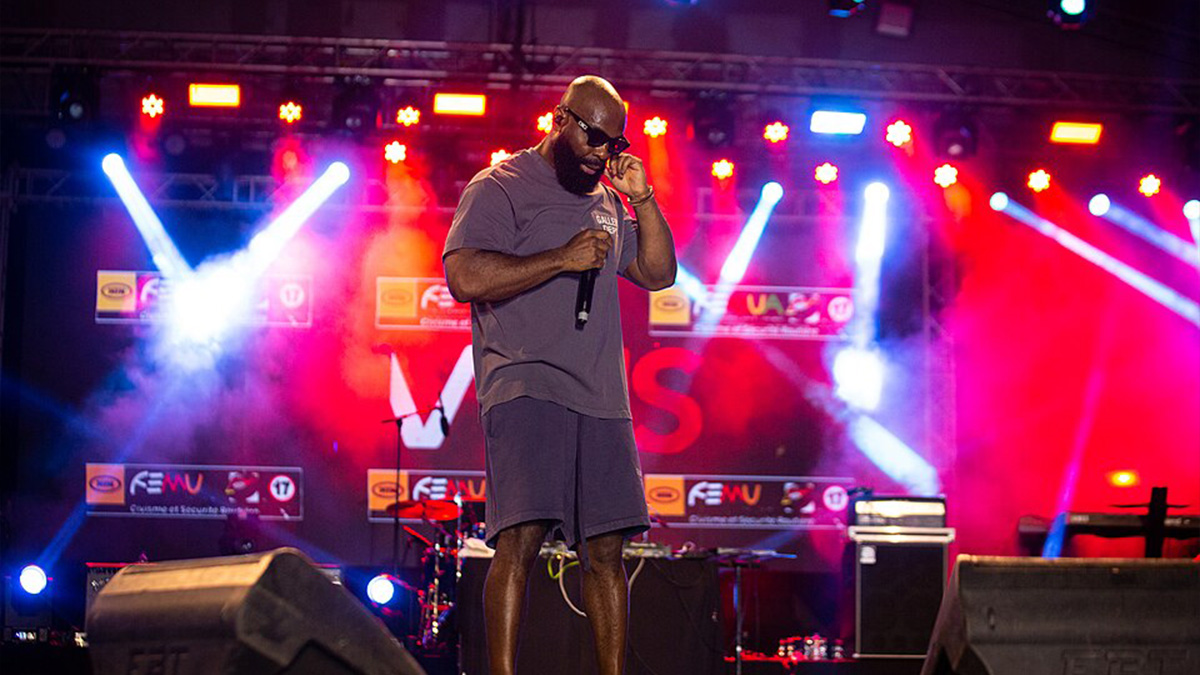
Dans cet article

From the controversies surrounding Sexion d’Assaut to Kaaris’s upcoming trial, homophobia in French rap has gradually shifted from being primarily a cultural and media debate to becoming a judicial issue. For years, the artists involved mainly faced cancellations, boycott calls and sanctions from within the music industry. Since the early 2020s, LGBT rights organisations have increasingly turned to press law and criminal proceedings to challenge certain lyrics, social media posts and public performances.
This evolution raises a more complex question than simply asking whether French rap contains homophobic lyrics: at what point does the verbal violence associated with an artistic work become an insult or incitement to hatred punishable by law? And what happens when an artist performs today a song written ten or fifteen years ago?
2009: Morsay, one of the first legal cases
In 2009, rapper Morsay, a member of Truand 2 la Galère, triggered a major controversy with the video for J’ai 40 meufs. The video included attacks on the police, misogynistic language and a passage targeting gay people, accompanied by a gesture mimicking a throat-slitting motion.
On October 28, 2009, the association Révolution LGBT filed a complaint before the Alès criminal court. The organisation argued that the track targeted gay people as a group and could amount to incitement to hatred or violence. The video also drew reactions from police unions and then-Culture Minister Frédéric Mitterrand.
The complaint was one of the first widely publicised attempts by an LGBT organisation to use criminal law directly against lyrics from French rap. However, none of the judicial sources consulted by UrbanTrackz establish that Morsay was ultimately convicted of homophobia in this case. It is therefore important to distinguish the filing of a complaint from an actual conviction.
Sources: Arrêt sur images – “Plainte gay contre le rappeur Morsay”; Le Parisien.
2010: Sexion d’Assaut and the first major scandal
A year later, the Sexion d’Assaut controversy reached an entirely different level. The group was then at the height of its popularity following the success of L’École des points vitaux. In an interview with International Hip-Hop, Lefa stated that the group had been “100% homophobic.” Several older songs and mixtape tracks containing extremely violent lyrics targeting gay people were subsequently resurfaced and widely circulated online.
The controversy became a national issue. LGBT organisations, politicians and concert promoters called for shows to be cancelled. According to Le Monde, 17 of the 22 concerts scheduled for the autumn of 2010 were eventually cancelled. NRJ stopped playing the group, partnerships were suspended and Sexion d’Assaut was removed from several major events.
The group later apologised, with Lefa notably explaining that he had misunderstood the meaning of the word “homophobic.” The controversy nevertheless had a lasting impact on Sexion d’Assaut’s public image.
It is important, however, to note that Sexion d’Assaut was not criminally convicted of homophobia over these lyrics. The consequences were mainly professional, commercial and cultural. One later court case linked to the controversy concerned a dispute with the journalist who conducted the interview, rather than a criminal trial over the group’s songs.
Sources: Le Monde – “Sexion d’Assaut à guichets fermés”; Le Monde – “Sexion d’Assaut s’est racheté mais reste puni”.
2011: Cortex 91 targets Bertrand Delanoë
In 2011, Cortex 91 in turn drew condemnation from LGBT organisations with the track Débrouillard, taken from the album Instinct meurtrier. The rapper directly targeted Bertrand Delanoë, then Mayor of Paris, using his homosexuality as a form of insult.
SOS Homophobie and the Collectif contre l’homophobie publicly condemned the lyrics and called, among other things, for the song to be withdrawn. Cortex later released an apology video in which he said he was not homophobic, although some of his explanations sparked a fresh controversy.
Cortex was involved in several other legal disputes over statements and videos targeting police officers and political figures. But in the sources we were able to consult, there is no established criminal conviction for homophobia specifically linked to Débrouillard.
Source: Le Parisien – “Le dérapage homophobe d’un rappeur des Pyramides”.
Orelsan: a crucial precedent for artistic freedom
Orelsan belongs in a different category. Several of his older songs were criticised for the use of homophobic insults, but the most significant legal proceedings against him mainly concerned lyrics described as sexist or as encouraging violence against women.
His case nevertheless remains crucial for understanding later trials involving rappers. On February 18, 2016, the Versailles Court of Appeal acquitted Orelsan and developed an important line of reasoning regarding artistic expression.
The court held that rap had to be considered within its artistic context, including its deliberately provocative language and the use of fictional characters. It stated that judges must determine whether the artist personally endorses the disputed words or whether they are spoken by characters from whom the artist creates some distance.
The ruling does not mean that every lyric in a song is automatically protected. It does, however, establish that artistic freedom benefits from strong legal protection and that lines cannot always be judged separately from the work, its staging and the character delivering them.
Legal source: Versailles Court of Appeal, February 18, 2016 – Légifrance.
2020: Koba LaD, social media also becomes a legal battleground
The Koba LaD case marked another important shift: legal proceedings were no longer limited to lyrics recorded in songs.
In February 2020, the rapper shared on Snapchat an article about a gay young man who had been killed by his father, adding a short comment that was widely interpreted as approving of the killing. The organisations Mousse and STOP Homophobie then announced that they were filing a complaint for incitement to hatred or violence on the grounds of sexual orientation.
The music industry reacted quickly: several festivals, including We Love Green, Art Rock and Dour, removed Koba LaD from their line-ups. The rapper later released a video condemning homophobia.
Again, precision is necessary: the filing of the complaint is documented, but we found no published final judgment establishing that Koba LaD was convicted in this case.
Source: STOP Homophobie – complaint against Koba LaD.
2021: Denis Albash and an explicit threat
In December 2021, Lyon-based rapper Denis Albash posted a TikTok video in which he spoke in extremely violent terms about the possibility of having a gay son.
STOP Homophobie filed a complaint and the Rhône prefecture also referred the matter to the public prosecutor. Unlike some earlier cases, this did not involve a fictional character or a line embedded within the narrative of a song: the remarks were made directly in a video posted on social media.
This distinction is legally significant, because one of the recurring arguments in cases involving rap concerns the separation between the artist, the narrator and the characters within a work.
Source: Le Progrès – complaint against Denis Albash.
2022-2025: Tovaritch, from controversy to criminal court
With Tovaritch, the relationship between rap, homophobia and the justice system entered a new phase.
On September 7, 2022, he released the track 2CB, in which he explicitly expresses his rejection of sexual relationships between men. The song quickly triggered controversy, and the organisations Mousse, STOP Homophobie and ADHEOS initiated proceedings for public insults on the grounds of sexual orientation and sex.
Tovaritch later visited the LGBTQI+ Centre in Paris and Île-de-France and posted a sequence on social media that several organisations and political figures described as a provocation directed at the centre’s volunteers.
Unlike many earlier cases that ended at the stage of controversy or a complaint, this procedure did lead to an actual court hearing: Tovaritch was due to appear before the 17th Chamber of the Paris Criminal Court on October 14, 2025 for public insults based on sexual orientation and sex.
However, the public sources we found document the hearing but do not allow us to establish with certainty the content of any final judgment that may have followed. It would therefore be premature to describe the case as having resulted in a conviction without the court decision itself.
Sources: ADHEOS – hearing of October 14, 2025; STOP Homophobie – proceedings against Tovaritch.
2024-2027: Kaaris and the problem of replaying old classics
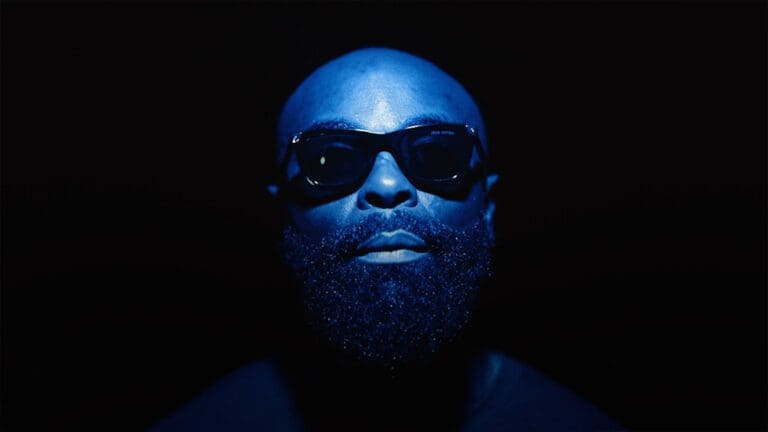
The Kaaris case raises a different question again — and perhaps the most interesting one of all.
Zoo is not a new song. The track appeared on Or Noir, released in 2013 and now regarded as one of the most important albums in the history of French trap.
But on February 29, 2024, during an Accor Arena concert celebrating the legacy of Or Noir, Kaaris performed the song again and delivered on stage the passage that is now being challenged by several LGBT organisations. The performance was filmed and widely shared on social media.
On March 13, 2024, Mousse and STOP Homophobie filed a complaint. The organisations cited public insult and public incitement to hatred or violence against people because of their sexual orientation.
The case reached the Paris Criminal Court on October 1, 2026. According to Le Parisien, Kaaris is facing proceedings for homophobic public insult. The hearing was ultimately postponed until May 2027.
Kaaris has therefore not been convicted in this case at this stage. The court will have to determine whether the public performance of those lyrics falls within the protection of artistic freedom or whether they legally constitute an insult directed at a group of people because of their sexual orientation.
Sources: STOP Homophobie – complaint filed in 2024; Le Parisien – October 1, 2026 hearing.
The Kaaris case changes the question: can a 2013 song still be performed unchanged?
This is precisely what separates the Kaaris case from those involving Koba LaD or Denis Albash. Kaaris is not being prosecuted over a new publication expressing a personal opinion in 2024. He was performing on stage a work that had been written and recorded more than a decade earlier.
The issue is therefore no longer only about the creation of a work, but about its reactivation. When an album becomes a classic, its songs continue to be performed years later. Yet legally and socially, the words are being spoken again in the present.
This is where the Orelsan precedent becomes particularly relevant. French courts have already recognised that rap frequently relies on narrators, characters, exaggeration and provocation, and that lyrics must be assessed within their artistic context. But that protection is not absolute.
Kaaris’s trial could therefore help clarify a question that has rarely been tested: does the protection granted to a work at the time of its creation apply in exactly the same way when that work is performed publicly more than a decade later?
What French law says today
Under French law, a public insult directed against a person or group because of, among other things, their sexual orientation or gender identity falls under Article 33 of the Law of July 29, 1881 on freedom of the press.
The law currently provides for a maximum penalty of one year in prison and a €45,000 fine. These are the statutory maximum penalties and do not, of course, indicate what sentence might be imposed in any particular case.
Article 24 of the same law also criminalises incitement to hatred, violence or certain forms of discrimination against a person or group on the grounds of, among other things, sexual orientation or gender identity.
Legal sources: Article 33 of the Law of July 29, 1881 – Légifrance; Article 24 – Légifrance.
From boycott to the courtroom
Over the space of roughly fifteen years, the response to lyrics and behaviour described as homophobic in French rap has therefore changed considerably.
Around the beginning of the 2010s, the consequences were mainly cultural and economic. Sexion d’Assaut lost concerts and radio exposure. Cortex was publicly condemned. Morsay faced complaints and calls for bans, but the courts remained relatively peripheral to the way the wider public understood these controversies.
From 2020 onward, LGBT organisations increasingly turned to the courts: Koba LaD, Denis Albash, Tovaritch and now Kaaris. At the same time, social media blurred the boundary between artistic character and personal speech. A rapper can now face proceedings not only over song lyrics, but also over an Instagram story, a TikTok video, a live performance or a direct public statement.
The debate now goes beyond the simple question, “Is rap homophobic?” It concerns the boundary between fiction, persona, provocation, individual responsibility and artistic freedom.
A rap canon forced to confront its own archives
The Kaaris case also shows that French rap has entered a new phase in its history. Albums from the 2000s and 2010s are gradually becoming part of a recognised cultural canon. They are being reissued, celebrated through anniversary tours and passed down to a new generation of listeners.
But that process of canonisation also forces rap to confront its own archives. Certain expressions that were once extremely common in rap language are now received very differently. That does not mean that an old song must be rewritten or erased, but performing it publicly today can raise new legal and cultural questions.
From Morsay to Sexion d’Assaut, from Koba LaD to Tovaritch and now Kaaris, the history of homophobia in French rap has therefore also become a history of how society, the music industry and the courts have gradually defined the limits of artistic speech.
Read more on UrbanTrackz for our coverage of French rap, its artists and its history, and on Hellsinky for international coverage of music, cinema and contemporary culture.