
Why Ben PLG Is Not the “Orelsan of Northern France”
There is something almost obvious about Ben PLG and Orelsan finally meeting on a track. When StreetPress dedicated a documentary to Ben PLG in 2022, he was already citing Orelsan, alongside Lomepal, as an…
 Written byZEZ XXI — Mazdak Vafaei Shalmani
Dans cet article
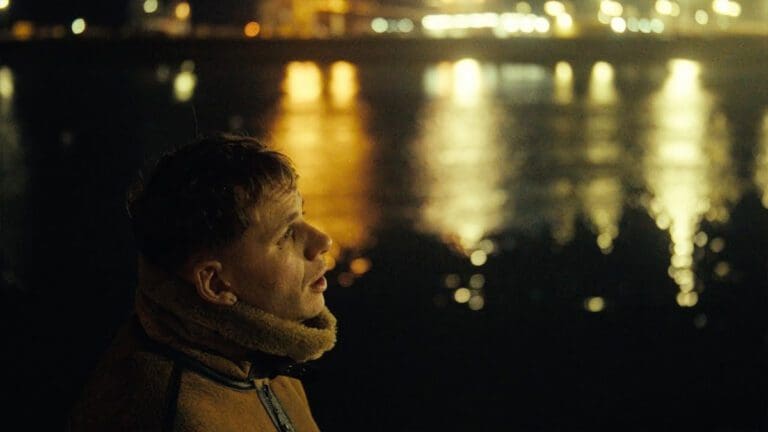
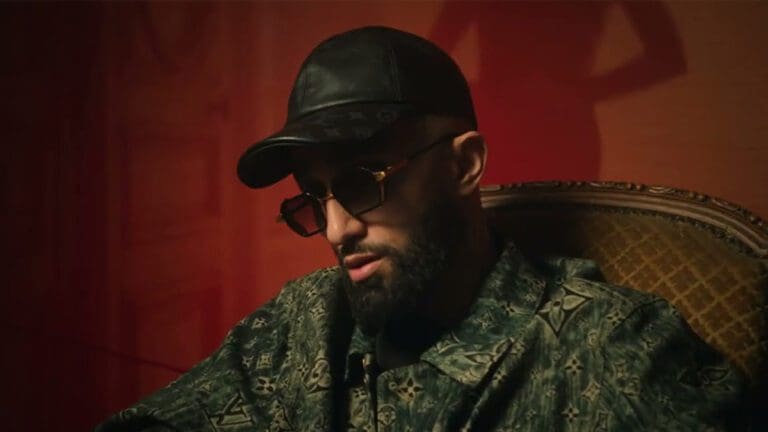
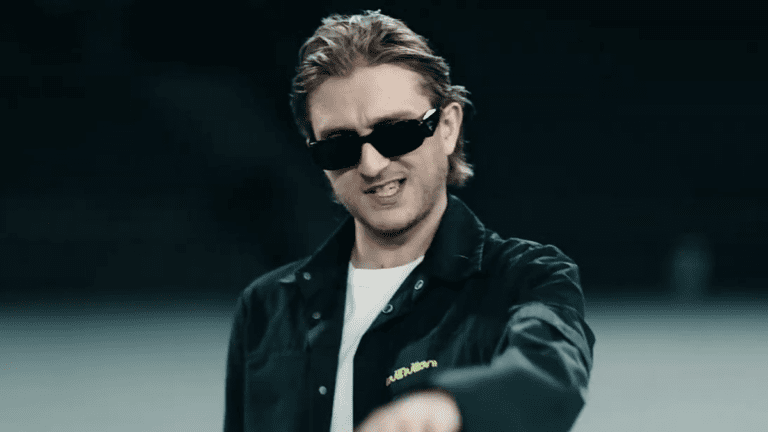
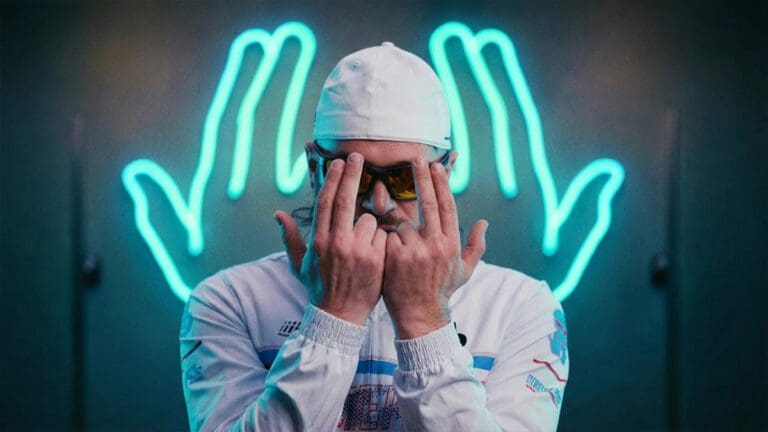
There is something almost obvious about Ben PLG and Orelsan finally meeting on a track. When StreetPress dedicated a documentary to Ben PLG in 2022, he was already citing Orelsan, alongside Lomepal, as an example of the kind of career he hoped to build. Four years later, the two rappers appear together on “Mentir au psy”, produced by Neophron and Lucci Prod and taken from Ben PLG’s new album L’Histoire sans fin.
On paper, the comparison is an easy one to make. Two white rappers from outside Paris, far removed from traditional gangster imagery, both capable of turning their weaknesses, embarrassing memories and everyday mishaps into raw material. They also share a relatively rare ability in rap: looking at themselves without constantly trying to make themselves look good.
But reducing Ben PLG to some kind of “Orelsan of Northern France” means missing what actually makes his work distinctive.
For Orelsan, the individual has always been the main field of experimentation. From Perdu d’avance to Civilisation, his albums have documented the evolution of one man and, by extension, part of his generation. The loser of the early records grows older, becomes successful, watches his relationships change, sees nights out gradually lose their appeal and encounters a new set of adult anxieties. His “I” eventually becomes generational.
Ben PLG starts somewhere else. His “I” regularly opens a door onto other people.
Before Ben PLG, There Was the Social Worker
To understand that difference, you have to go back long before Nouvelle École, millions of streams and Orelsan. Born in Villeneuve-d’Ascq and raised in Tourcoing, Thomas Léger grew up with a difficult family history, marked in particular by the absence of his biological father and the illness of his younger brother Martin, two elements explored at length in StreetPress’ documentary.
But another part of his biography helps explain the position from which he writes.
For nearly ten years, starting when he was 18, Ben PLG worked with adults with intellectual disabilities. He travelled with them to Vietnam, Cuba and Brittany. He has never described the experience as merely a day job that paid the bills. Speaking to Le Rap en France, he went as far as describing disability as probably his “second passion after rap.”
For almost three years, he also ran rap workshops in a juvenile prison. That experience notably led to “Nabil”, from Dans nos yeux, a song dedicated to a young man he met there.
In a later interview with Red Bull, he summed it up simply: “I’ve had a rich life. I’ve worked in prison, I’ve accompanied people with intellectual disabilities around the world, I have plenty of things to talk about…”
This past is not some convenient anecdote retroactively added to a promotional biography. It predates the construction of the Ben PLG character and eventually became central to the way he understood what he could actually write about.
He Was Trying to Become a Rapper When He Simply Had to Become Ben PLG
Like many artists, Ben PLG initially searched for his identity in the rappers who came before him. Salif, Niro, Nakk and Despo Rutti, but also Vald, Jul and SCH, are among the artists he has cited when discussing his musical education.
The real breakthrough, however, did not come from a record. It came from a conversation with his manager. Ben PLG recalled the exchange himself: “He told me that, at that point, the human being I was had more to offer than the rapper I was trying to become.”
That sentence changed almost everything.
Ben PLG gradually realised that he already had his material: disability, prison, his family, failure, Northern France, the people he met and his own difficulty fitting perfectly into the conventions of the rap music he admired.
He later summed up that shift with another image: “Rapping meant opening your bag, your personal bag. Before that, I just wasn’t opening the right bags.” By finally opening his own, he found what he would eventually call “réalité rap music” — reality rap music.
Telling the Story of France’s “Middle”
That reality, however, is not built on some fantasy of extreme poverty. This is precisely where Ben PLG becomes interesting.
He does not attempt to manufacture a more spectacular social background than the one he actually experienced. He does not pretend to have been a drug dealer, nor does he retrospectively transform Tourcoing into the setting of a crime series to earn a few additional points of street credibility.
In his music, struggling to make ends meet is more likely to smell like “salted butter on pasta.” Childhood memories can revolve around a letterbox he still hesitates to open because of old France Télécom payment notices. And when success finally begins to arrive, his mother is not asking for a villa by the sea: “My mum doesn’t want a villa by the sea, she wants me to be free during her lunch break.” These are some of the images highlighted by Télérama in its profile of the rapper.
It is less spectacular than a criminal narrative. That is precisely the point.
Ben PLG describes an in-between France: people who may not necessarily consider themselves poor but who know the price of things, overdue bills, betting cafés, families that count every expense and the permanent proximity of downward mobility. A France ordinary enough to disappear from most narratives.
“I talk about subjects where I feel I have something relevant to say,” he told Télérama, before offering a sentence that could almost define his entire body of work: “Becoming an adult means understanding what you experienced as a child.”
Northern France Is Not Just a Backdrop
This is also why Northern France occupies such a particular place in his music. It is not simply there to give Ben PLG a geographical identity.
In a previous article about Ben PLG, UrbanTrackz had already examined the way deindustrialisation, social fractures and the grey landscapes of the North enter his writing. At times, his universe feels closer to British social-realist cinema than to the traditional visual language of French rap.
And it is not only a matter of lyrics. With Ben PLG, the social dimension also comes through the images.
His videos rarely stage spectacular displays of success. There are few gold chains, impossible cars or designer clothes being used as financial statements. With Bien Vu Productions, he has instead developed a visual language made of family tables, Northern landscapes, ordinary faces and metaphors.
In “On tombe, on réessaie”, he revisits a succession of failures: school, factory work, university, his first shows and the studio. The fall becomes almost physical in the video, culminating in an image where the character appears to shrink around a family table.
Then came “Paraît que les miracles n’existent pas”. The video travels through Calais and its inhabitants. UrbanTrackz described the people appearing in it as “gueules cassées” — battered faces — within a social-realist visual language that presents the city through both its beauty and its wounds. The project notably thanked Secours Catholique, Caritas and local organisations.
This still is not political rap in the traditional sense. Ben PLG does not turn every chorus into a manifesto or constantly tell his audience what they are supposed to think.
He observes.
And that may be precisely where his social rap begins.
A Social Rapper Wary of Labels
The expression itself should nevertheless be used carefully. Ben PLG has never presented himself as the official new spokesperson for the working classes, nor does he seem particularly interested in wearing the now slightly dated costume of the “conscious rapper.”
His relationship with social issues is first and foremost a question of perspective. Addiction, family, disability, incarcerated teenagers, workers, financial hardship and people falling through the cracks appear throughout his music because they exist throughout the world he knows.
And when politics becomes more explicit, it is rarely disconnected from that territory. Ben PLG has publicly spoken against the far right and the rise of France’s Rassemblement National. The Northern France he has described since his earliest projects is also a territory where deindustrialisation, social decline and major electoral changes have intersected for decades.
In his work, the landscape can therefore become political without having to be artificially transformed into a political speech.
“Nouvelle École”: Losing in the First Round to Win What Came Next
In 2022, his appearance on Nouvelle École, the French version of Netflix’s Rhythm + Flow, could have slowed that progression. Shay eliminated him in the first round.
Ben PLG immediately turned failure into a narrative. Speaking to StreetPress, he compared himself to “the guy who missed the penalty in his first final but is going to score a hat-trick in the next game.”
A few years later, he would even describe that elimination as a blessing. Speaking to Télérama, he admitted: “That elimination was the best thing that could have happened to me. It allowed me to reach a wider audience.”
The StreetPress documentary nevertheless captures an artist still wrestling with a question of legitimacy: can you really find your place in rap when you do not come from a housing project?
His ambition was already clear. He wanted to build the kind of career achieved by Lomepal or Orelsan.
The following years would considerably reduce the distance between them.
From “Reality Rap Music” to the Olympia
Dire je t’aime, released in 2024, marked a first major shift in scale. The project entered the French albums chart directly at number eleven. Ben PLG was beginning to move beyond the relatively small circle of rap listeners who had followed him through his earlier projects.
Yet success did not immediately change the subject matter. On Paraît que les miracles n’existent pas, he continued to write about family, failure, Northern France, human relationships and the people generally left outside the frame of rap’s economic success.
In March 2025, his first show at the Olympia sold out. Even that symbol of success prompted a characteristically Ben PLG reaction. He told Télérama that he thought “€45 for a ticket is far too much,” remembering the shows he attended for less than ten euros when he was younger in Dunkirk.
His relationship with money also helps explain why he is not entirely comfortable with the word “sincerity.” Ben PLG prefers to talk about “transparency”, something which, in his words, “cannot be calculated.”
One of his lines perhaps says it better: “We keep saying we want diamonds and a Porsche / All we ever wanted was a house, a kiss.”
And Eventually, Orelsan Enters the Story
This is where Orelsan becomes genuinely interesting again.
Not because the two men make the same kind of rap, but because his presence on L’Histoire sans fin materialises part of the distance Ben PLG has travelled.
In 2022, Ben PLG was talking about wanting a career comparable to those of Lomepal or Orelsan. In September 2026, Orelsan appears alongside him on “Mentir au psy”, their first collaboration, released only days before L’Histoire sans fin.
The circle is complete enough without having to overinterpret it.
On the track, the two artists meet precisely where they have the most in common: self-deprecation and a certain honesty in the way they look back without turning their youth into mythology. They explore memories, personal flaws, childhood and mental health.
But the collaboration also makes it easier to understand where the comparison stops.
Orelsan has largely built his body of work by documenting the successive transformations of his own life. The lost young man of Perdu d’avance could obviously not remain the same person through La fête est finie and Civilisation. By documenting his contradictions, fears and ageing, he ended up documenting part of his generation.
Ben PLG more often uses his personal experience as a window. Behind him appear his mother, his brother, the teenagers he met in prison, the people with disabilities he worked alongside, the inhabitants of Northern France, the friends who fall, those who get back up and those who never really had the opportunity to leave.
It is a difference in perspective more than a difference in sincerity.
“L’Histoire sans fin”: What Happens to Reality When Life Changes?
Released on October 2, 2026, L’Histoire sans fin therefore arrives at a particular moment in Ben PLG’s career. The album contains fourteen tracks and three collaborations, with Orelsan, Camille Yembé and Mathilde. After La Cigale and the Olympia, two Zénith shows have now been announced for Paris and Lille in 2027.
The man who only a few years ago was wondering whether he was even legitimate enough to belong in rap is unquestionably beginning to operate on a different scale.
It would nevertheless be far too early to describe this as embourgeoisement — a move into comfortable middle-class detachment. At this stage, there is little to suggest that Ben PLG has abandoned the world he has spent years documenting or embraced the outward displays of wealth he has so often kept at a distance.
Perhaps that question will become relevant one day. It is even one of the natural risks for music so deeply rooted in proximity to a particular social environment: what happens to “reality rap music” when the reality of the person making it changes?
But we are not there yet.
For now, L’Histoire sans fin is primarily the story of an artist beginning to reach the goals he was talking about at a time when he knew far more about closed doors than sold-out Zéniths.
And perhaps this is where Ben PLG and Orelsan genuinely meet. Not because Ben PLG has become the “Orelsan of Northern France”, and certainly not because their work is interchangeable, but because both have understood something relatively simple: when you build an artistic persona around honesty, you have to allow that persona to evolve as your life evolves.
For Ben PLG, there is an additional challenge.
He does not only have to keep telling his own story.
He has to keep listening to everyone else’s.