
Rap and the Law: From N.W.A to Freeze Corleone and BORO700
On October 21, 2026, French rapper BORO700 is scheduled to appear before a Paris court over lyrics referencing Mohammed Merah, the Bataclan attacks, and Salah Abdeslam. Three decades after the legal battles involving NTM…
 Written byZEZ XXI — Mazdak Vafaei Shalmani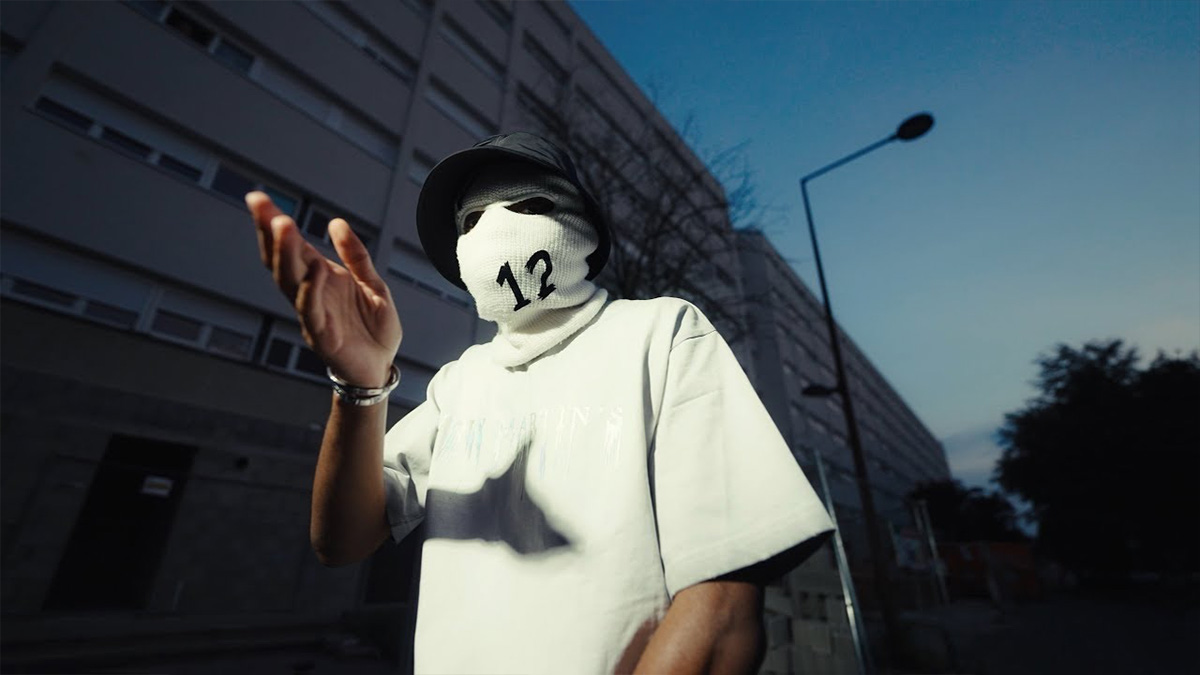
Dans cet article
On October 21, 2026, French rapper BORO700 is scheduled to appear before a Paris court over lyrics referencing Mohammed Merah, the Bataclan attacks, and Salah Abdeslam. Three decades after the legal battles involving NTM and Ministère A.M.E.R., French rap is once again confronting a familiar question: where does artistic provocation end? Yet the nature of that provocation has changed. From open hostility toward the police to references to Nazism and terrorism, the history of rap’s relationship with the law is far more complex than it might seem.
BORO700: When a Rap Hook Lands in Court
In his music videos, BORO700 keeps his face concealed, often hidden behind a white balaclava. According to RTL, the rapper comes from La Passerelle, a neighborhood in Paris’s 12th arrondissement. But his musical career extends well beyond the track that brought him into the national spotlight. He released Aucun remords in February 2025 before building momentum through his NDDB freestyle series.
Released on July 7, 2026, his track M*R*H explicitly references Mohammed Merah, the gunman responsible for the 2012 killings in Toulouse and Montauban, as well as the November 13, 2015 terrorist attacks in Paris and Salah Abdeslam. The song also contains a reference to Adolf Hitler. On August 3, French politician Éric Ciotti referred the track to prosecutors. However, it was the circulation of videos showing teenagers performing the song in early October, particularly in Beaugency and Soullans, that propelled the controversy into the wider national conversation.
On October 9, the Paris prosecutor’s office confirmed that the rapper would stand trial on October 21 before the 17th Criminal Chamber of the Paris Judicial Court, facing charges of glorifying terrorism, glorifying crimes against humanity, and making conditional death threats. Separate investigations have been opened into videos filmed and circulated in several locations. The charges were reported by AFP.
In a statement reported on October 9, BORO700’s manager condemned any glorification of terrorism and stressed that allegations should not be treated as established facts. As of this article’s publication, BORO700 has not been tried in this case and remains presumed innocent.
The controversy raises a question that extends far beyond one artist: how did rap, a genre historically shaped by distrust of the police, reach a point where some performers invoke the names of terrorists and mass murderers?

In America, Confrontation with the Police Was Already Part of Rap’s DNA
Distrust of law enforcement is neither new nor uniquely French. In the United States, it became one of the defining themes of politically charged rap emerging from Black communities, against a backdrop of discrimination, racial profiling, and documented police violence.
In 1988, N.W.A released Fuck tha Police on their landmark album Straight Outta Compton. The group symbolically reversed the balance of power, putting the police themselves on trial. In 1989, the FBI sent a letter to Priority Records, the group’s label, bringing the confrontation between hip-hop and law enforcement to the attention of federal authorities. The episode was documented in an archived Washington Post article.
In 1992, the controversy escalated with Cop Killer, a song by Ice-T’s metal band Body Count. Its lyrics adopt the violent perspective of a character targeting police officers. Facing pressure from politicians and police organizations, Ice-T requested that the track be removed from the album. The Los Angeles Times covered the decision at the time.
These precedents challenge a common misconception: American rap was already provoking political and moral outrage long before similar controversies emerged in France. The main differences lie in historical circumstances and, as we will see, the legal framework. At its core, however, the conflict was familiar: a generation of young people describing its troubled relationship with an institution that embodied authority.

Ministère A.M.E.R. and NTM: When Distrust of the Police Became a Defining Feature of French Rap
In France, this confrontation took on a distinctly local character during the 1990s. Anger in working-class neighborhoods, strained relationships with the police, and the denunciation of discrimination became central themes in several songs that would go on to define an era.
With Brigitte, femme de flic and later Sacrifice de poulets, associated with Mathieu Kassovitz’s film La Haine, Ministère A.M.E.R. turned confrontation with the police into both an artistic identity and a political stance. The group, from Sarcelles in the northern Paris suburbs, shocked audiences, divided public opinion, and eventually found itself in court. In 1997, several of its public statements became the subject of legal proceedings involving allegations of insults, incitement, and even glorification of terrorism. One important historical detail is worth emphasizing: the songs themselves were not directly examined in those proceedings, as the complaint targeting them had been ruled inadmissible because the legal deadline had expired. The archives of Le Monde document the case.

That same year, JoeyStarr and Kool Shen of NTM were each sentenced on appeal to two months in prison, suspended, and fined 25,000 French francs for insulting remarks directed at police officers during a 1995 concert. Once again, the line between stage performance, provocation, and criminal liability became the central issue. The European Audiovisual Observatory provides a summary of the ruling.
Yet reducing this conflict to an irrational hatred of the police would miss the broader context. For the artists involved, their lyrics formed part of a wider critique of institutional violence, social exclusion, and the treatment of residents in working-class neighborhoods. That perspective does not automatically make every statement acceptable, but it helps explain the social and political framework in which those words were written.
La Rumeur: When the Courts Defended the Right to Criticize
It would be misleading to present three decades of rap’s encounters with the French justice system as an uninterrupted series of convictions. The case of La Rumeur demonstrates that the courts can also uphold the right to criticize public institutions.
In 2002, Hamé, a member of La Rumeur, published an article in a fanzine addressing police violence. Prosecuted for defaming the French national police, he became embroiled in legal proceedings that lasted eight years. On June 25, 2010, France’s Court of Cassation, the country’s highest court for civil and criminal appeals, brought the case to an end, making his acquittal final. Read Le Monde’s coverage of the ruling.
The case illustrates a crucial distinction between attacking an institution through words and committing a criminal offense through words. The difference may seem subtle, but it lies at the heart of rap’s legal history.

Freeze Corleone: When Provocation Found a Different Target
With Freeze Corleone, a different language of transgression became increasingly visible. Criticism of the police and public institutions never disappeared from rap, but certain lyrics began drawing on references to Hitler, Nazism, the SS, antisemitic stereotypes, and terrorism. The distinction goes beyond the harshness of the language itself: the very subject of the provocation had changed.
Rather than focusing solely on a contemporary institution perceived as oppressive, this imagery invokes figures and symbols associated with the persecution of Jewish people, mass atrocities, and terrorist attacks targeting civilians. Such references do not, in themselves, prove ideological allegiance. Their meaning also depends on context and how they are used. Their repeated appearance, however, makes critical examination both legitimate and necessary.
UrbanTrackz Raised the Alarm as Early as October 2019
This is a crucial part of the timeline, and one documented in our own editorial archives. On October 10, 2019, UrbanTrackz had already published “The Antisemitic Drift of Freeze Corleone 667”, an investigation written by Big Bob Carter — Sauveur Eloheem. That was nearly a year before the controversy erupted across the French national media in September 2020.
The investigation examined 36 tracks. Of those, its author identified 18 songs containing what he interpreted as antisemitic, neo-Nazi, or pro-jihadist references, associations, or allusions. The article highlighted mentions of Hitler, the SS, and Goebbels, alongside stereotypes targeting Jewish people. It was a critical analysis of the lyrics and their context, not a judicial finding.
In September 2020, following the release of La Menace Fantôme, the controversy became a nationwide story. The Paris prosecutor’s office opened an investigation into alleged incitement to racial hatred and racially motivated insults involving several of the rapper’s songs and music videos, as Le Monde reported on September 17, 2020.
A few months later, UrbanTrackz continued examining the phenomenon with “Freeze Corleone, Alpha Wann, Django: The Rise of ‘Subversive’ Rap”, published on December 22, 2020. The piece explored the emergence of a darker aesthetic, influenced in part by drill, in which lyrical extremity had also become a powerful marker of artistic identity.
The timeline matters. It demonstrates that these troubling lyrics were not suddenly discovered when mainstream outlets picked up the controversy. A specialist music publication had already taken the time to document and examine them.
From Freeze Corleone to BORO700: A Different Scale of Provocation
In April 2026, a criminal court in Nice sentenced Freeze Corleone to 15 months in prison, suspended, a €50,000 fine, and a three-year ban from entering the Alpes-Maritimes department for glorifying terrorism in his track Haaland. The case centered on an allusion to the July 14, 2016 terrorist attack on the Promenade des Anglais in Nice. His lawyer announced plans to challenge the ruling. AFP reported the details of the conviction.
In October, BORO700 faced prosecution over a track referencing Mohammed Merah, the Bataclan attacks, Salah Abdeslam, and Hitler. The two cases are not legally equivalent: Freeze Corleone has been convicted by a court, while BORO700 has yet to stand trial. Treating their situations as identical would disregard the presumption of innocence.
Nevertheless, examining the cases side by side reveals a broader shift within certain strands of provocative rap. In earlier decades, confrontation largely revolved around the police officer, the government minister, or the state itself. Today, some artists draw their shock value from major historical and contemporary traumas: Nazism, the Holocaust, and jihadist terrorist attacks. The figure of the mass murderer can become a cultural reference deployed to provoke outrage, cultivate an aura of danger, or construct an image of artistic transgression.
Two pitfalls must be avoided. The first is suggesting that French rap as a whole has followed this trajectory. That would be plainly inaccurate given the diversity of the scene. The second is claiming that references to terrorism did not exist before Freeze Corleone: the 1997 proceedings involving Ministère A.M.E.R. demonstrate otherwise. What stands out today is the visibility of these references, their association with Nazism and terrorist attacks deeply embedded in collective memory, and the way they spread beyond music through social media.
France vs. the United States: Two Approaches to the Limits of Free Speech
Comparing French and American rap also reveals an important distinction between cultural controversy and criminal liability. In the United States, the First Amendment provides extensive protection for freedom of expression. In its landmark 1969 ruling in Brandenburg v. Ohio, the Supreme Court established a demanding standard for restricting speech that incites unlawful conduct: the speech must be intended to produce imminent lawless action and be likely to do so. Other exceptions still apply, including true threats. Read the Supreme Court’s decision.
France operates under a different legal framework. Article 421-2-5 of the French Criminal Code criminalizes direct public incitement to commit terrorist acts and the public glorification of terrorism. According to the French government’s official public information service, glorification involves presenting terrorist acts in a favorable light. When committed online, the offense can carry penalties of up to seven years in prison and a €100,000 fine.
In other words, referring to a terrorist attack, depicting its violence, and praising it are three different things. Courts must assess the precise wording, its context, and whether the legal elements of an offense have been established. Neither an artist’s stated intention to provoke nor the shock experienced by an audience is, on its own, enough to settle the legal question.
In the United States, meanwhile, the controversies surrounding N.W.A and Body Count demonstrate that even legally protected expression can face pressure from politicians, police organizations, record labels, distributors, and digital platforms. Legal freedom does not eliminate public controversy.
Has Rap Changed Its Target, or Just Its Language?
Since the early controversies involving N.W.A, Ministère A.M.E.R., and NTM, rap has repeatedly forced society to confront words it might otherwise prefer not to hear. In its more confrontational forms, the genre continues to document a deeply strained relationship with public institutions, particularly the police. That distrust is rooted in history and cannot simply be dismissed as an artistic pose.
But it would be equally misleading to treat every form of provocation as interchangeable. Challenging an institution, mocking a police officer, invoking Hitler, or referencing those responsible for terrorist attacks against civilians does not carry the same meaning. Such expressions do not necessarily reflect the same intentions, nor do they fall under the same legal categories.
The BORO700 case brings that distinction back into focus. His October 21 hearing will concern specific allegations and legal charges, not the legitimacy of rap as a genre. For listeners, journalists, and artists, however, the debate goes further: does transgression retain its critical power when its symbols no longer point solely to an authority being challenged, but also to those responsible for mass murder?
Asking that question is neither a demand for censorship nor an attempt to excuse controversial lyrics by automatically labeling them fiction. It means refusing to confuse creative freedom, responsibility for published expression, and the application of criminal law. It also serves as a reminder of why independent music journalism matters: lyrics deserve to be examined critically before public controversies reduce them to slogans.
Sources and Archives
- UrbanTrackz (October 10, 2019) — The Antisemitic Drift of Freeze Corleone 667, by Big Bob Carter — Sauveur Eloheem.
- UrbanTrackz (December 22, 2020) — Freeze Corleone, Alpha Wann, Django: The Rise of “Subversive” Rap.
- RTL (October 7–9, 2026) — BORO700, videos involving teenagers, and the October 21 hearing.
- AFP / Le Progrès (October 9, 2026) — Criminal charges in the BORO700 case.
- AFP (April 27, 2026) — Freeze Corleone’s conviction in Nice.
- Le Monde (1997) — Ministère A.M.E.R. on trial.
- European Audiovisual Observatory (1997) — NTM’s conviction on appeal.
- Le Monde (2010) — Hamé of La Rumeur: Final acquittal after an eight-year legal battle.
- The Washington Post (1989) — The FBI letter concerning N.W.A.
- Los Angeles Times (1992) — The removal of “Cop Killer”.
- Legal references — French Criminal Code, Article 421-2-5; U.S. Supreme Court, Brandenburg v. Ohio.
Editor’s note: This article reflects information available as of October 13, 2026. Ongoing legal proceedings and rulings subject to appeal may develop further.