
Mehsah: The Invisible Backbone of French Boom Bap
From La Chronik to Demi Portion, via Furax Barbarossa, Scylla, Pilon and Will LCK, Mehsah has quietly built one of the most consistent discographies in French rap. While trap, drill and melodic rap have…
 Written byZEZ XXI — Mazdak Vafaei Shalmani
Dans cet article
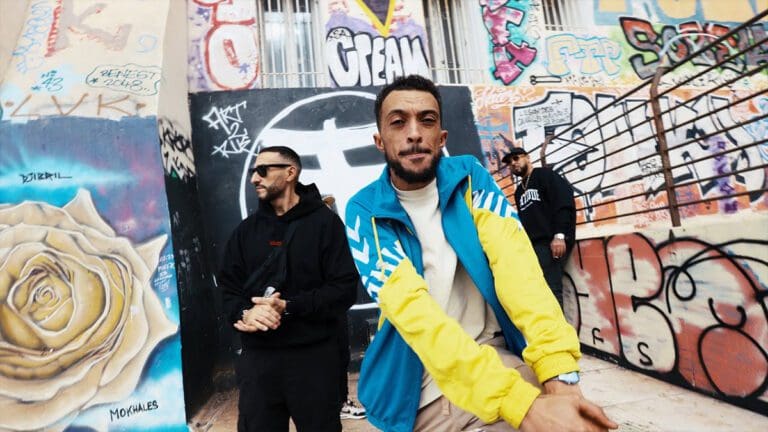







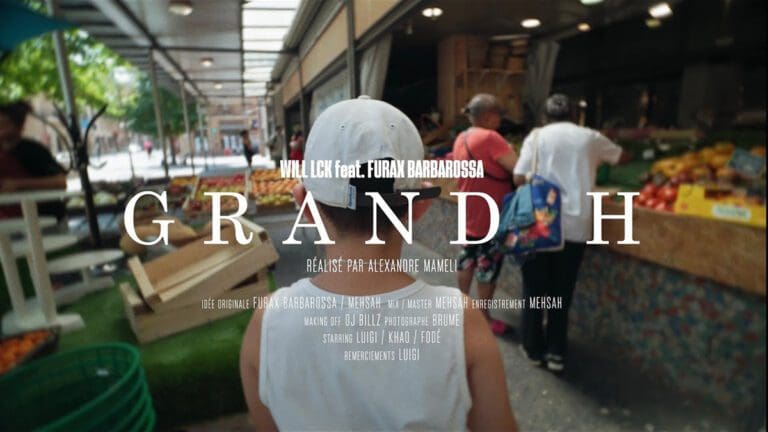
From La Chronik to Demi Portion, via Furax Barbarossa, Scylla, Pilon and Will LCK, Mehsah has quietly built one of the most consistent discographies in French rap. While trap, drill and melodic rap have successively moved to the centre of the scene, the producer has become one of the connecting threads of another language: boom bap. Not as an exercise in nostalgia, but as a sound that remains very much alive.
On 25 September 2026, Demi Portion released On s’en souvient. Ten tracks, with one name accompanying the Sète rapper throughout the project: Mehsah.
The partnership is hardly coincidental. Demi Portion has long represented a particular continuity within French rap, built around lyricism, loops, samples and a relationship with hip-hop that has never needed to abandon its foundations in order to survive changing trends. UrbanTrackz was already exploring this side of Demi Portion back in 2020.
But behind this collaboration lies another story: Mehsah’s role in keeping French boom bap alive.
From Music 2000 to “Mehsah à la prod”
The story begins far from major recording studios.
In an extensive 2020 interview with French music publication Le Bon Son, Mehsah recalled first making music as a child with Music 2000 on the original PlayStation. Even before that, he would record songs from the radio onto cassette tapes to play them to his father, who in turn introduced him to his vinyl collection.
That musical inheritance would have a profound influence on the way he approached production.
Mehsah was largely self-taught. Vinyl records, a computer and then his first productions. He eventually joined La Chronik, the Lille-based rap group for which he became the main beatmaker.
His sound gradually developed around what only appears to be a contradiction: making contemporary rap with a musical vocabulary deeply rooted in the 1990s.
Speaking to Le Bon Son, he openly acknowledged the influence of DJ Premier, while Shurik’n’s Où je vis was among the records he cited as formative.
But Mehsah has never been interested in artificially recreating 1995.
Boom bap without the museum treatment
Throughout the 2010s and 2020s, the centre of gravity in French rap shifted dramatically. Trap, drill, melodic rap, Afro-influenced sounds and electronic music successively transformed its vocabulary.
In that landscape, boom bap could easily have become heritage music: respected for its history, but increasingly removed from the centre of contemporary creation.
Mehsah took a different path.
He retained the loop, the sample, the drums and, crucially, the space afforded to the MC, while bringing a contemporary sensibility to his textures.
In his interview with Le Bon Son, the producer explained that he looks for elements with a certain “soul”. He also mentioned Klaus Schulze and Lisa Gerrard when discussing his recurring use of female vocals, which he manipulates and pitch-shifts until they become fully integrated into his productions.
For Mehsah, then, sampling is not simply a reference to hip-hop’s golden age.
It is raw material.
La Chronik, Furax and Scylla: a boom-bap ecosystem
This is where Mehsah’s career becomes particularly interesting.
Rather than building it solely around a succession of high-profile placements, he gradually developed a genuine artistic network.
La Chronik formed its foundation. Around it came artists including Youssef Swatt’s, Pilon, Zikxo, Furax Barbarossa and Scylla.
Furax also played an important role in Mehsah’s career, introducing his work to Guilty of Katrina Squad. Mehsah subsequently signed a publishing deal with Jardins Noirs. When he warned Guilty that he made a great deal of boom bap, the response was telling: that was precisely the sound he was interested in.
His connection with Furax helped establish Mehsah within a network of lyricists spanning several generations of French-language rap.
Will LCK: the connecting thread
To understand that continuity, Will LCK is perhaps the best example.
Their relationship dates back to La Chronik. Years later, Mehsah remains central to the Lille rapper’s musical world.
In 2026, Mehsah shaped the sonic landscape of 7/7. UrbanTrackz had already described the producer as a “key pillar” of Will LCK’s sound when covering “Tours bétonnées”.
Read: Will LCK, “Tours bétonnées” and his rap heritage
The trajectory is revealing: La Chronik → Will LCK → Furax Barbarossa → Demi Portion. The collaborations change, but the same understanding of rap continues to circulate between them.
When PLK and Jul come looking for that sound
It would nevertheless be reductive to confine Mehsah to a scene of hip-hop purists.
That is precisely one of the most interesting aspects of his career.
PLK discovered his work through an instrumental called If Only and contacted him directly. Jul, whom Mehsah had approached himself several years earlier, eventually worked with him too.
Speaking to Le Bon Son, Mehsah recalled his surprise at hearing Jul rap over one of his boom-bap productions.
And this may be where his importance becomes clearest: these artists were not approaching him to reproduce their usual formula. They were coming to him for his sound.
Mehsah did not help keep boom bap alive by building walls around the genre.
He kept it moving.
From Will LCK to Lacrim: a discography that reaches beyond boom bap
That ability to move between different scenes can also be seen in the more recent credits documented by UrbanTrackz.
Between 2024 and 2026, Mehsah appeared alongside artists including Lesram, Bekar, HMZ, Lacrim, Seth Gueko and Djadja & Dinaz.
His production credits include “Riposter” by Seth Gueko and Lacrim, “On s’est trompé de rêve” by Lacrim and Oli, as well as several tracks connected to Will LCK.
Explore Mehsah’s profile and connections on the UrbanTrackz Knowledge Graph
More than anything, this catalogue demonstrates that maintaining a strong musical identity does not mean endlessly reproducing the same beat.
Demi Portion and Mehsah: the logical next step
Which brings us to Demi Portion.
Not as a change of direction, but almost as the logical consequence of everything that came before it.
For years, the Sète rapper has maintained his own strong connection to this tradition. UrbanTrackz highlighted it again when he revisited the legacy of Marseille rap on “Ça parle de”, built around a reworking of Fonky Family’s “Filles, Flics, Descentes”.
Read: Demi Portion pays tribute to Marseille rap with “Ça parle de”
The partnership with Mehsah therefore goes beyond the conventional relationship between a rapper and his producer.
It brings together two careers that have each, in their own way, helped preserve a particular conception of French rap.
Mehsah: the invisible backbone of French boom bap?
Calling Mehsah the backbone of French boom bap would inevitably be reductive. That history belongs to countless producers, rappers and scenes that have continued to keep the sound alive.
But he has unquestionably become one of its most fascinating connecting threads.
His discography links different worlds and different generations:
La Chronik.
Furax Barbarossa.
Scylla.
Zikxo.
Pilon.
Will LCK.
Demi Portion.
At the same time, his path has crossed those of PLK, Jul, Lacrim, Seth Gueko, Lesram and Bekar.
While the centre of gravity in French rap continued to shift, boom bap never truly disappeared. It moved away from the commercial heart of the market, evolved and continued to circulate between different scenes and generations.
Producers such as Mehsah ensured that transmission without necessarily feeling the need to theorise it.
French boom bap did not survive because it remained frozen in time. It survived because producers such as Mehsah continued to treat it not as a legacy to be protected, but as music to be made.
And after years of hearing “Mehsah à la prod” behind some of the most demanding lyricists in French-language rap, On s’en souvient feels less like a return to the roots than the natural continuation of a story that never really stopped.
Sources and further reading
- Le Bon Son — “Mehsah: héritage et autoformation” (interview, 2020)
- UrbanTrackz — Mehsah profile and Knowledge Graph
- UrbanTrackz — Will LCK: discography and collaborations with Mehsah
- UrbanTrackz — Will LCK, “Tours bétonnées” and Mehsah
- UrbanTrackz — Demi Portion and the legacy of Marseille rap
- UrbanTrackz — Demi Portion: les versets humanistes
- Hellsinky — music, culture and creative projects