
Scylla & Furax Barbarossa: How the Stage Gave Birth to Jungle Noire
Jungle Noire might never have been an album at all. After waiting nearly twenty years to make Portes du désert, Scylla and Furax Barbarossa could easily have brought their shared adventure to a close…
 Written byZEZ XXI — Mazdak Vafaei Shalmani
Dans cet article

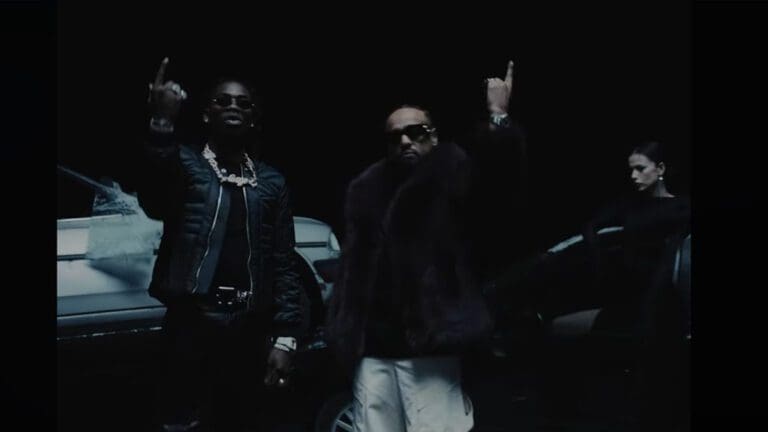
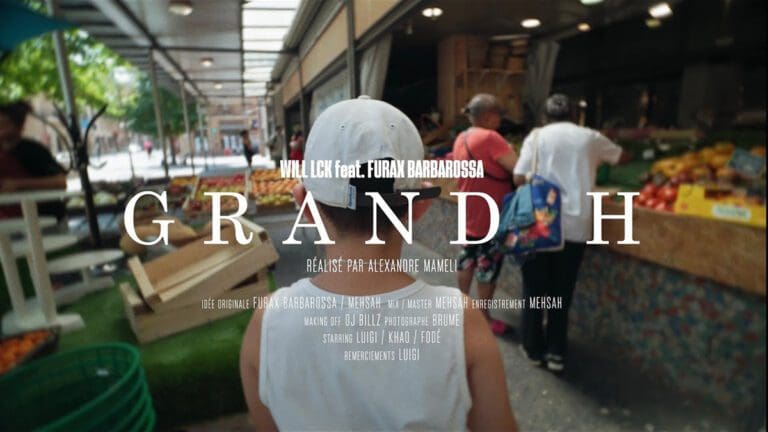
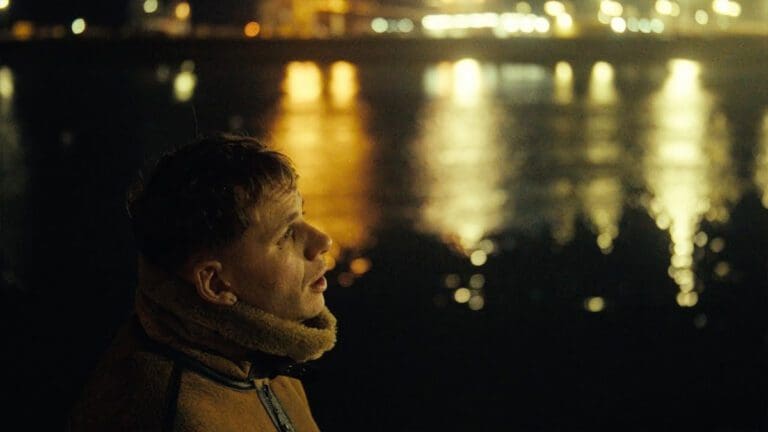
Jungle Noire might never have been an album at all. After waiting nearly twenty years to make Portes du désert, Scylla and Furax Barbarossa could easily have brought their shared adventure to a close with that Moroccan chapter. Instead, a track written for the tour, Hayawan, gradually turned what was initially conceived as a simple reissue into a second album. From the silence of the desert to the chaos of the city, Jungle Noire ultimately tells two stories at once: that of two rappers, and that of a record born on stage.
When it comes to Scylla and Furax Barbarossa, joint albums have been a long time coming. By the time the two rappers finally began working on Portes du désert, their creative relationship had already lasted more than fifteen years.
Their first collaboration dates back to 2008. Over the years, the Brussels and Toulouse rappers regularly appeared on each other’s records, eventually building up 17 collaborations before seriously considering making a full-length project together. Their artistic relationship had become far too deep for a debut joint album to feel like a mere collection of new collaborations.
“We were waiting for the right moment”
Speaking to Le Bon Son in May 2025, the pair revealed something particularly telling: despite spending years talking about making an album together, they had never actually tried to start one.
“We knew we were going to do it. The only question was when.”
For Scylla, then, the question was never whether the album would exist, but when their respective paths would finally converge at the right moment.
More importantly, they needed a reason to go beyond what they had already been doing for years: sending beats back and forth between Brussels, Toulouse and Paris, recording their respective verses and meeting somewhere in the middle.
“For the project to offer something more, there had to be an adventure behind it, and a concept that could give it coherence and an artistic direction.”
That adventure would take them to Morocco.
Ten days and ten nights to create Portes du désert
Scylla and Furax Barbarossa travelled to Morocco with a radical constraint: isolate themselves for ten days and ten nights and allow their surroundings to shape part of the record.
They arrived with almost nothing prepared. A handful of producers — including Greenfinch, Freaky Joe, Kendo and Mehsah — had sent them packs of beats. Beyond that, virtually nothing had been written in advance.
In their interview with Le Bon Son, Scylla summed up the only real rule they had set themselves:
“The only constraint was that it had to be coherent.”
The desert ultimately became far more than a backdrop. Middle Eastern and North African influences seeped into the production, the surrounding mountains shaped the record’s imagery, and the two rappers began searching for something more organic and cinematic.
Kendo later revisited part of the production, rearranging and reworking several tracks and helping establish a continuous sonic thread throughout the project. Interludes and even recordings captured on location were kept so that the album would retain traces of the experience that produced it.
The result was Portes du désert, an album whose cohesion came directly from that immersion. During a visit to Montreal in 2026, the pair spoke at length about that creative process, setting up a studio in Morocco and the organic nature of the record.

Then the stage changed the script
The story could easily have ended there.
Portes du désert had been born from a desire to turn their first joint album into a singular experience. Once the record was finished, Scylla and Furax took it on the road.
And that is where the second album began — almost by accident.
For the tour, they created a new track: Hayawan.
The song was not initially presented as the first step towards another album. It was made for the live show. The two rappers performed it from inside the crowd, right in the middle of the audience. It quickly became one of the standout moments of the set.
The official presentation of Jungle Noire describes the track as generating a “raw and collective” energy. Something had happened on stage that neither artist had seemingly anticipated when they completed the previous record.
One song, then two, then twelve
Even then, the initial idea was not to make another album.
They simply wanted to extend the life of Portes du désert.
Following the response to Hayawan, the idea of a deluxe reissue began to take shape. Perhaps one additional track could be added. Then another. Then a third.
The official presentation sums up what happened next with a particularly effective line:
“One track. Then two. Then three. Then five. Then twelve.”
At a certain point, calling it a reissue simply stopped making sense.
The songs had accumulated until they formed an entirely new territory. Fifteen tracks later, the reissue had become Jungle Noire.
From the desert to the jungle
What could have remained an extension of the first record ultimately became its mirror image.
Portes du désert sought isolation. Jungle Noire heads back into the crowd.
The first album was born far from the cities, surrounded by silence and open space. The second turns the metropolis itself into a jungle: noise, territory, confrontation, instinct, violence and vulnerability.
The break can already be heard on Hayawan. The word means “animal” in Arabic, and the track leaves behind some of the contemplation of Portes du désert in favour of heavy bass, hard drums and a much more confrontational energy.
Scylla and Furax’s jungle is not tropical. It is urban.
And that is perhaps what makes the record’s origin story so coherent: Portes du désert needed isolation in order to exist. Jungle Noire was born through direct contact with the audience.
IAM, Soprano, Alonzo, ISHA: generations meet in the same jungle
That outward-looking approach is also reflected in the guest list.
On Horizons, the pair are joined by fellow Brussels rapper ISHA. Khabib brings together Soprano and Alonzo, while Puis j’oublie pairs them with Caballero & JeanJass.
But perhaps the most symbolic collaboration comes on Avec le temps: IAM, represented by Akhenaton and Shurik’n.
The connection is far from incidental. In their interview with Le Bon Son, Scylla and Furax spoke about their shared admiration for Où je vis by Shurik’n, an album both of them rank among their three favourite French rap records.
That lineage connects them to a much broader history of French hip-hop. Hellsinky has previously explored the universe IAM built around L’École du micro d’argent, from its cinematic references to the influence of kung-fu culture and Star Wars.
And that idea of the album as a coherent world resonates particularly strongly with Scylla and Furax: two artists deeply attached to writing, but equally interested in building universes that go beyond simply assembling a collection of songs.
A harder-hitting record — but not only that
Jungle Noire is not simply fifteen attempts to recreate the energy of Hayawan.
The record alternates between tracks explicitly built for the stage — Zénith, Hayawan, Rois de la jungle and Khabib — and more atmospheric pieces such as Horizons, Violence and On apprend rien, on se souvient.
Nor has the intimate side disappeared. Trône is dedicated to the rappers’ mothers, while Dimanche basique looks at the ordinary moments they spend with their children.
Production comes from the likes of Lionel SoulChildren, Lox, Freaky Joe & La Madone, Kendo, Murer, Mehsah and Dee Eye. The official tracklist features fifteen songs, while the collector’s vinyl edition expands the record to seventeen with two bonus tracks, Darièn and Mieux que moi.
Twenty years of friendship behind two opposite albums
Ultimately, Jungle Noire may say as much about the strength of a long-standing creative relationship as it does about the music itself — one strong enough to sustain two almost opposite experiences.
Scylla and Furax did not need a commercial strategy to bring them together. By the time Portes du désert finally arrived, they had already accumulated almost two decades of friendship and 17 collaborations.
Appearing on Légendes urbaines in 2026, the pair once again discussed that relationship, their years of collaborations and the ten days and ten nights that gave birth to their first joint album.
Portes du désert was the culmination of that long wait. Jungle Noire is almost its happy accident.
To make the first, they had to get away from everything. The second began when they did exactly the opposite, stepping into the middle of the crowd to perform Hayawan.
The first searched for silence. The second was born from noise.
And somewhere between the two, a simple reissue turned into fifteen new tracks.
The Zénith as the final destination
It seems only fitting that an album born on stage should ultimately return there.
Following its release on September 25, 2026, the story is set to culminate at the Zénith de Paris on October 30, 2026, with a show designed to bring together their respective catalogues and the world of Jungle Noire.
There is something beautifully circular about it.
Scylla and Furax Barbarossa spent almost twenty years waiting to find the place that would finally allow them to make their first album together. To make the second, they did not need to go searching for another desert.
All they had to do was step into the crowd.
