
Mauvais Djo’s Pilé: The Michael Jackson Story Behind the Hit
At first listen, the chorus of “Pilé” sounds like one of those absurdly catchy gimmicks designed to get stuck in your head. Yet behind Mauvais Djo’s repeated “pilé” lies a much older reference: a…
 Written byZEZ XXI — Mazdak Vafaei Shalmani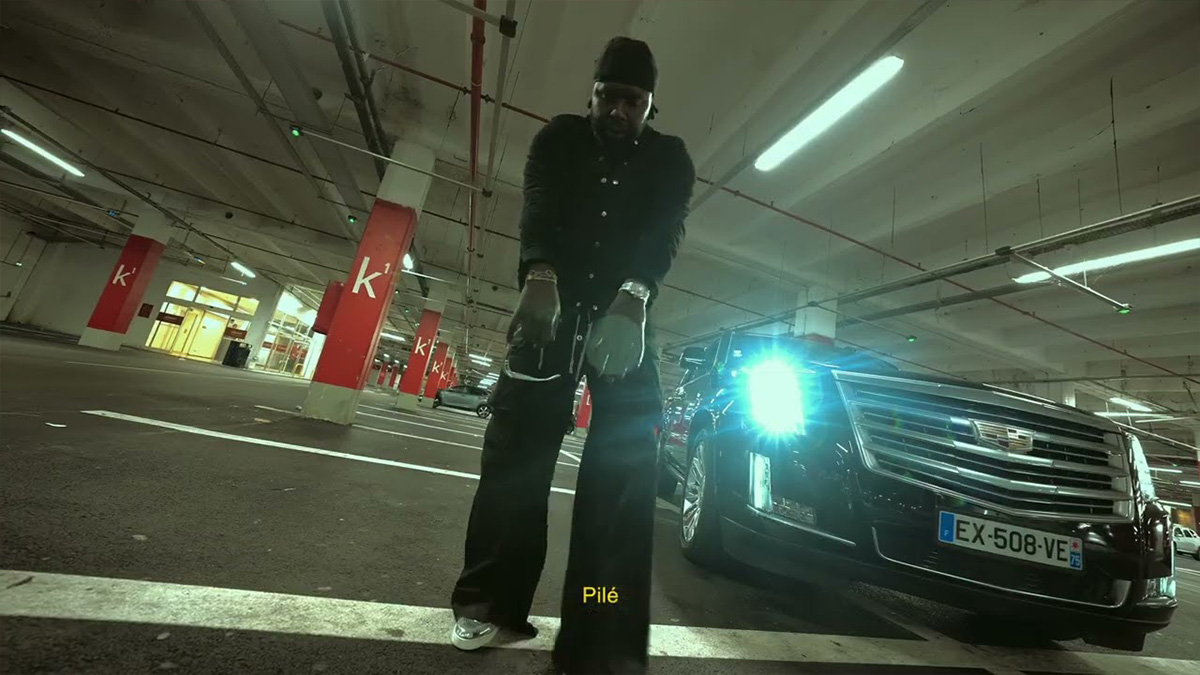
At first listen, the chorus of “Pilé” sounds like one of those absurdly catchy gimmicks designed to get stuck in your head. Yet behind Mauvais Djo’s repeated “pilé” lies a much older reference: a Congolese way of singing Michael Jackson’s “Beat It” without necessarily understanding the English lyrics. It is a small story of cultural transmission that eventually became a massive hit.
Sometimes, all it takes is a few syllables to create a hit. Mauvais Djo is probably one of the best recent examples. Released on August 15, 2025 as part of L’undertaker Part.1, “Pilé” is built around an almost childishly simple formula. The song notably brings together the ideas of money being stacked up and the strange phrase “Michael Jackson a pilé,” meaning “Michael Jackson pilé’d.”
But what exactly is Michael Jackson supposed to have “pilé’d”?
The answer takes us back several decades and thousands of miles away from Évry. It tells us as much about Congolese musical culture as it does about the way American pop music travelled through French speaking Africa.
How “Beat It” became “Pilé”
In 1982, Michael Jackson released Thriller. A few months later, “Beat It” became one of the album’s defining tracks and one of the singer’s biggest international hits.
But throughout much of French speaking Africa in the 1980s and 1990s, American songs circulated widely even though understanding English was far from universal.
So people sang what they thought they heard.
In the Democratic Republic of Congo, a popular story holds that Michael Jackson’s famous “Beat It” was often phonetically reproduced as “pilé”. Several media outlets have since mentioned this explanation when discussing Mauvais Djo’s song, directly connecting it to the artist’s Congolese roots.
The phenomenon itself is nothing unusual.
Before the internet, Genius, Spotify and instant access to lyrics, entire generations sang foreign hits by unintentionally inventing words that sounded vaguely like what they were hearing. In French, this is often casually described as singing in “yaourt,” literally “yogurt,” meaning to imitate foreign lyrics using made up sounds. Linguistically, the phenomenon is close to what English speakers call a mondegreen, when a phrase is misheard and transformed into something else because the brain tries to make sense of unfamiliar sounds.
In this particular case, “Beat It” eventually becomes “Pilé.”
The transformation may sound absurd if you speak English. It makes much more sense when the song is heard by a French speaking listener whose ear instinctively searches for familiar sounds.
A Congolese inside joke turned into a gimmick
Mauvais Djo therefore probably did not invent the word “Pilé” from scratch.
Instead, he taps into a collective memory, a cultural inside joke familiar to some Congolese families and communities, and more broadly to parts of French speaking Africa.
That is precisely what gives the gimmick so much power.
For anyone who knows the reference, “Michael Jackson a pilé” immediately brings a smile. For everyone else, the phrase sounds strange enough to spark curiosity.
Either way, it stays in your head.
There is, however, an important distinction to make. Today, numerous accounts and articles connect this pronunciation of “Beat It” to Congo, but finding an older archive that allows us to precisely date when the nickname “Pilé” first appeared is much more difficult.
It is therefore more accurate to describe it as a Congolese oral tradition or popular cultural anecdote rather than claiming that “Beat It” was officially known as “Pilé” in Congo.
That is exactly how these kinds of references work. They can circulate for decades through families, parties and communities without ever being formally documented.
Mauvais Djo gives the word a second meaning
Mauvais Djo’s real trick is that he does not stop at the Michael Jackson reference.
He builds the chorus around the phonetic connection between the French words “empilés”, meaning stacked up, and “pilé.”
The “pilé” inherited from the popular mishearing of “Beat It” therefore collides with another image: stacks of money.
The song becomes a celebration of success.
The lyrics reference money, nights out, champagne and the people who did not believe in his rise. The wordplay between “pilé” and “empilé” transforms the Michael Jackson reference into a symbol of financial success.
It is an incredibly simple mechanism, but an extremely effective one.
A Congolese memory becomes a French wordplay. The wordplay becomes a chorus. And the chorus becomes a hit.
Yet Michael Jackson is not really in the music
There is another interesting detail. Despite what the reference might suggest, “Pilé” is not publicly credited as sampling “Beat It.”
The published credits for the track list William Davy Fonseca, Alexis Pereira and Joel Raul Marcolino as writers and composers, while Taliixo and Wiils are credited with the production. Neither Michael Jackson nor the writers of “Beat It” appear in the publicly available credits.
That alone is not enough to establish from a legal standpoint that no form of interpolation exists, but musically, the most interesting idea lies elsewhere.
Mauvais Djo is not really borrowing from Michael Jackson. He is borrowing from the way Michael Jackson was heard.
That distinction completely changes how the song can be understood.
Ultimately, “Pilé” is not simply borrowing from American culture. It is borrowing from the African reception of American culture.
A deeply Congolese song in the way it works
This story also fits Mauvais Djo perfectly as an artist.
Originally from Congo and raised in Évry, France, he often presents himself more as a speaker and crowd entertainer than as a traditional rapper. His songs rely heavily on gimmicks, repetition, energy and the immediate reaction of the audience.
This approach to the microphone is far from foreign to Congolese musical culture.
In Congolese rumba and especially in its more modern evolutions, the atalaku occupies a very specific role. The atalaku hypes up the crowd, launches short phrases, encourages dancing and pushes the energy of a song higher.
In a way, Mauvais Djo brings that same logic into contemporary French urban music.
The lyrics do not necessarily need to be complex. They need to trigger something. Make people respond. Make them dance. Make them repeat the words.
And in that respect, “Pilé” is almost a textbook example.
The song found a second life through gospel
The story could already have ended there.
But “Pilé” has an even more unlikely trajectory.
The original track dates back to August 2025. Yet much of its explosion happened several months later.
On April 10, 2026, Kano Choir uploaded a gospel version of “Pilé” to YouTube. An official version bringing together Mauvais Djo and Kano Choir was then released on streaming platforms on May 14, 2026.
The song suddenly reached a new audience and became one of the musical phenomena of summer 2026, almost a year after its original release.
From Michael Jackson to Mauvais Djo, forty years of cultural circulation
Ultimately, this is what makes “Pilé” far more interesting than its apparent simplicity might suggest.
The story begins with an American singer releasing “Beat It” in the early 1980s.
The song travels to Africa.
French speaking listeners who do not necessarily understand English reinterpret the chorus phonetically.
“Beat It” becomes “Pilé.”

The mishearing is passed down for years as a joke or cultural memory. Then a Franco Congolese artist picks up the expression, connects it to the French word “empilé,” uses it in a French afro influenced track and, several decades later, turns it into a popular phenomenon.
The cultural journey is almost perfect: United States, Congo, the Congolese diaspora, Évry, French rap and afro music, then the mainstream.
And most importantly, Mauvais Djo never bothers to explain the reference in the song itself.
He simply says that Michael Jackson “pilé’d.”
Those who know, know. Everyone else dances anyway.
That may be exactly why the gimmick works so well. Behind an apparently absurd phrase lies forty years of popular music, oral transmission and cultural cross pollination.

“`