
France-Africa: Towards a New Generation of Partnerships
In a collective op-ed devoted to relations between France and African countries, twelve figures from diplomatic, political, civic and economic circles are calling for a move beyond the simple idea of equality between partners…
 Written byZEZ XXI — Mazdak Vafaei Shalmani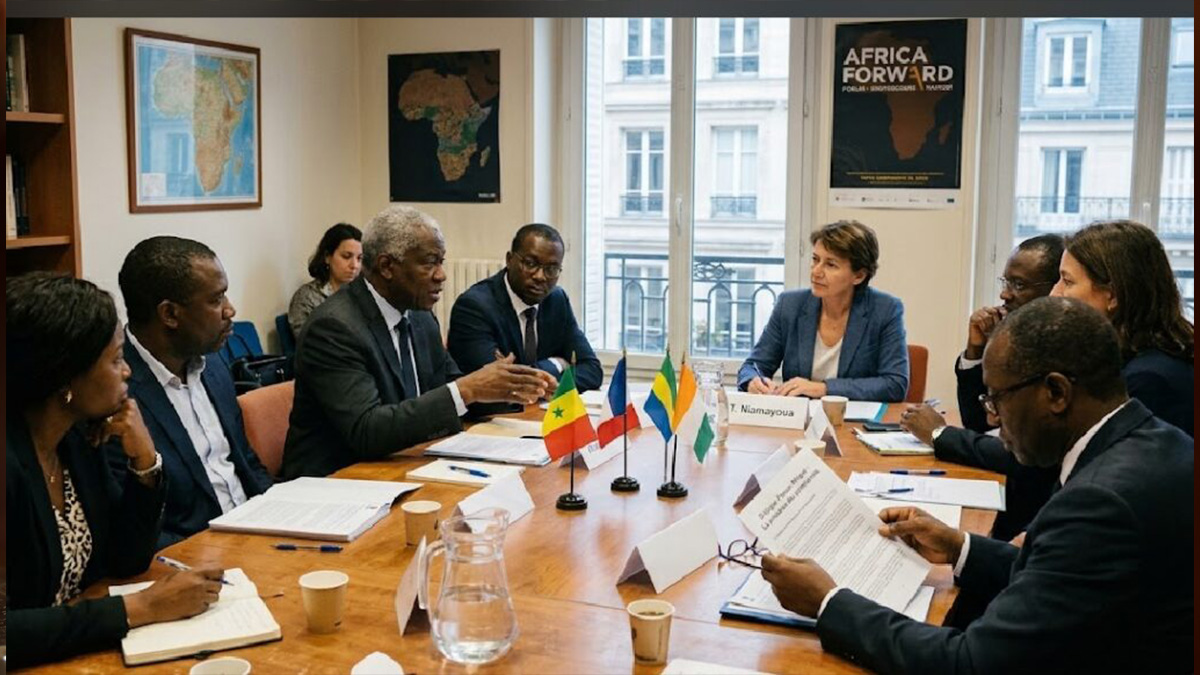
In a collective op-ed devoted to relations between France and African countries, twelve figures from diplomatic, political, civic and economic circles are calling for a move beyond the simple idea of equality between partners toward relationships capable of producing concrete results. Their proposal focuses in particular on investment, the circulation of skills, innovation, territories and the growing role of diasporas.
This reflection, explored in a feature published by Globe Infos, raises a central question: how can institutional cooperation evolve into partnerships that create lasting value on both sides?
For decades, relations between France and African countries have largely been framed through aid, cooperation, diplomatic summits and bilateral agreements. The authors of the op-ed now argue for a different logic: partnerships capable of generating businesses, jobs, infrastructure, expertise and productive capacity.
From cooperation to capacity building
At the heart of the text is a relatively simple idea: a partnership can no longer be measured only by the number of agreements signed or programmes announced.
The twelve signatories argue that attention should instead be paid to what these collaborations actually make possible. Health, energy, agriculture, digital technology, artificial intelligence, pharmaceuticals and financial services are among the sectors in which this new approach could develop.
The shift in perspective is significant. Training should not simply lead to a qualification, but should ultimately make it possible to work, create a company or pass skills on to others. In the same way, technology transfer takes on a different meaning when it can be mastered, developed and adapted locally.
Diasporas at the heart of a new relationship
For a media outlet such as UrbanTrackz, one of the most interesting aspects of this discussion is the role of diasporas.
Between Africa and Europe, there is already a constant circulation of artists, students, entrepreneurs, researchers, creators and families living across several territories. The authors of the op-ed see these diasporas not simply as a consequence of migration, but as genuine economic, cultural and social bridges.
This circulation is particularly visible in music. From Paris to Dakar, from Abidjan to Brussels, and from Conakry to Lyon, artists, producers and audiences already operate across several markets at the same time.
On UrbanTrackz, the career of Saifond is one example of this circulation. The Guinean artist is gradually building an audience far beyond his home market, particularly with his project “Holo Horema” and a growing presence among African diaspora audiences.
This logic is not new in the history of French-language rap. The career of Passi and the experience of Bisso Na Bisso already showed how French rap could become a space of circulation between France, Congo and the diaspora.
More recently, artists such as Soolking have built their musical identity through references and audiences moving between Europe, the Maghreb and the wider African continent.
Youth as an economic and cultural force
Youth also plays an important role in this new vision of relations between France and African countries.
The future of these relationships is unlikely to be shaped only by governments or major international corporations. It is also being built in universities, small businesses, start-ups, associations, studios, creative networks and the cultural industries.
This evolution directly reflects the transformation of African urban music. The international rise of afrobeats, amapiano and rap scenes in Senegal, Côte d’Ivoire, Guinea, Cameroon and Congo shows that part of Africa’s new cultural power has developed outside traditional institutional channels.
YouTube, TikTok, Spotify, Audiomack and social media have enabled a generation of artists to produce, distribute and export their own culture without necessarily waiting for a European market to open its doors.
The next challenge is to turn this visibility into a sustainable economy: labels, studios, tours, management, copyright, audiovisual production, training and cultural infrastructure.
Africa Forward: investment at the centre of the new narrative
This discussion comes just months after the Africa Forward summit, held in Nairobi on May 11 and 12, 2026, by Kenya and France.
The summit was designed precisely to place greater emphasis on innovation, investment, youth, entrepreneurship and diasporas. According to figures published by the Élysée, more than 7,000 participants attended the event.
The economic announcements were significant: €23 billion in investments in Africa were announced, including €14 billion from French companies and €9 billion from African investors and entrepreneurs.
According to the French presidency, these investments were presented as potentially generating more than 250,000 direct jobs in France and across Africa.
The French Ministry for Europe and Foreign Affairs also presents “Africa Forward” as an attempt to renew the partnership between France and African countries, with a greater role for private investment and joint economic projects.
France can no longer rely on history alone
The international context has changed profoundly. African countries now have a much wider range of economic, diplomatic and technological partners.
China, the United States, Turkey, Gulf states, India and several European countries are all developing their own relationships with the continent.
In this environment, historical or linguistic proximity with France is no longer necessarily enough. This is precisely one of the shifts proposed by the op-ed: a partnership should above all be judged on its usefulness and its ability to produce tangible results.
An African country with strong companies, high-performing universities, researchers, engineers, artists able to export their work and capital available for investment can become a more autonomous partner, but also potentially a more powerful one in international relations.
Culture as a laboratory for this new relationship
In the cultural industries, this transformation is already visible.
A partnership can take the form of an artist residency, a tour, a shared festival, a training programme, an audiovisual co-production, a studio or a fund designed to support young creators.
Music is probably one of the clearest examples. Some African artists no longer wait for French validation before developing their careers. They first build a local or continental audience, before using diaspora communities as a bridge toward European markets.
This reversal of the traditional career path is also changing the relationship between music scenes. Africa is no longer seen merely as a source of influences or new talent: it is also becoming a market, a production space and a potential centre of cultural distribution.
This is also what can regularly be observed among the artists covered by UrbanTrackz, whose careers are increasingly built between several cities, several countries and several audiences.
From diplomacy to concrete projects
One essential question remains: what happens to these announcements once the summits are over?
The billions announced, diplomatic agreements and declarations of intent can only truly be assessed once they translate into businesses created, functioning infrastructure, accessible funding, training opportunities or jobs.
In the cultural sector, the logic is the same. The success of a partnership is not measured only by an official photograph or a press release, but also by whether an artist can go on tour, a producer can finance a project, a filmmaker can co-produce a film or a young cultural entrepreneur can build a sustainable business.
This may be the main value of this new reflection on relations between France and African countries: gradually moving from a diplomacy of declarations toward a logic of concrete achievements.
The twelve authors of the op-ed ultimately propose changing the question itself. It is no longer only about asking what France can do for Africa, but rather what French and African actors can build together.
For a generation already accustomed to living, creating, investing, working and listening to music across several continents, this evolution may simply represent the institutional recognition of a reality that has existed on the ground for years.
Read more on UrbanTrackz
- Saifond: Guinean music, Holo Horema and international expansion
- Passi: French rap, Africa and the diaspora
- Soolking: from Africa Jungle to Sans Visa, between rap, Africa and pop
References
- Globe Infos — “France-Africa: twelve voices call for a shift from equality between partners to the power of partnerships”, October 5, 2026.
- Élysée — Africa Forward Summit in Kenya, May 11–12, 2026.
- Élysée — Africa Forward, Day One: investment and youth.
- France Diplomatie — “Africa Forward: a summit for a renewed partnership between African countries and France”.