
How Faïda Momo King Is Bringing African Traditional Healing to a Global Audience
Across West Africa, traditional healers have long played an essential role in community life. They preserve centuries-old knowledge of medicinal plants, spiritual guidance and holistic approaches to well-being that have been passed down through…
 Written byZEZ XXI — Mazdak Vafaei Shalmani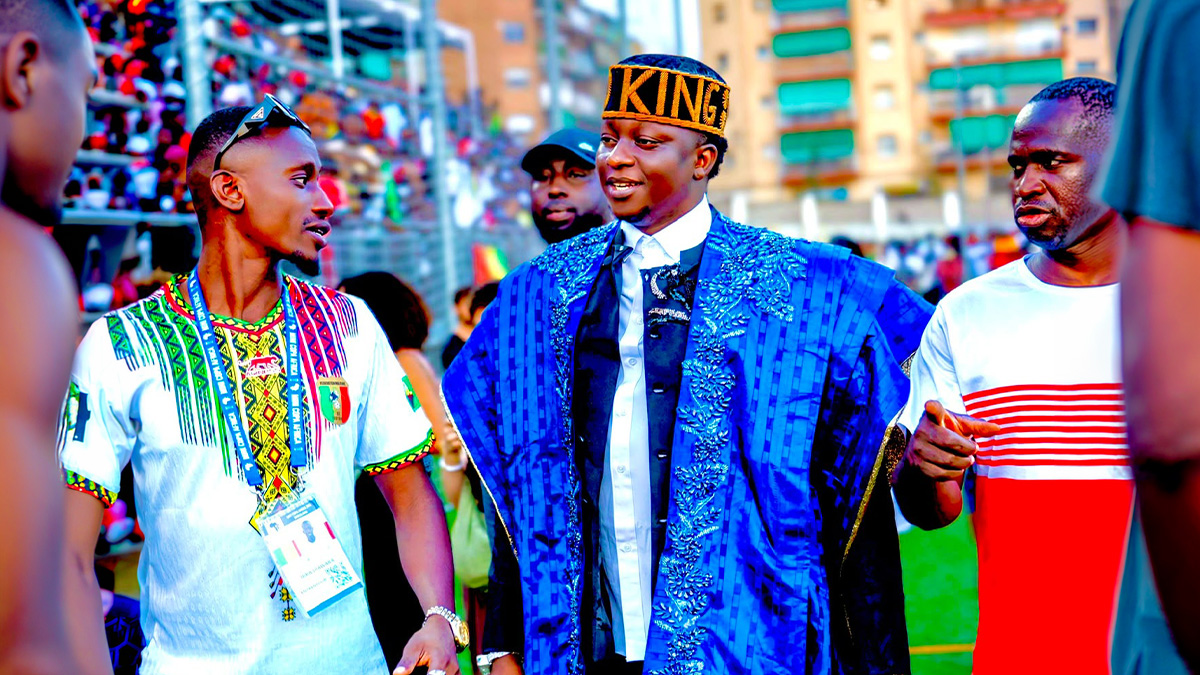
Across West Africa, traditional healers have long played an essential role in community life. They preserve centuries-old knowledge of medicinal plants, spiritual guidance and holistic approaches to well-being that have been passed down through generations. While these practices often remain misunderstood outside the continent, social media is giving a new generation of practitioners an unprecedented global platform.
Among them is Faïda Momo King, born Mamadou Maciré Diagana on February 19, 1999, in Sérénati, a village in Mali’s Kayes Region. Raised in a family of traditional healers and spiritual leaders, he began learning from his father at the age of thirteen, studying medicinal plants, traditional therapies and the cultural values associated with West African healing traditions.
From Local Knowledge to Global Visibility
For centuries, African traditional medicine relied almost entirely on oral transmission. Knowledge was shared within families or between masters and apprentices, ensuring that each generation inherited practical experience alongside cultural and spiritual teachings.
Today, that model is evolving. Through platforms such as Facebook, Instagram and TikTok, practitioners can now introduce these traditions to audiences far beyond their local communities.
Faïda Momo King (@faidamomo10) has become one of the most visible representatives of this movement. With more than 700 000 followers across social media, he regularly publishes educational content about traditional healing, medicinal plants, spirituality and African cultural heritage.
More Than Alternative Medicine
Reducing African traditional medicine to alternative remedies would overlook its broader cultural significance. In many West African societies, healing has historically combined physical care, psychological support, spirituality and community relationships.
Traditional healers often serve multiple functions. Depending on the region, they may act as herbal specialists, spiritual advisers, mediators or educators. Their role reflects centuries of accumulated knowledge adapted to local environments and cultural practices.
While modern healthcare systems have expanded significantly across Africa, traditional medicine continues to coexist with conventional medicine in many countries, particularly where local communities maintain strong cultural ties to ancestral practices.
Changing International Perceptions
Outside Africa, the word “marabout” is frequently associated with sensational advertising, fortune telling or online scams. These stereotypes rarely reflect the diversity of roles historically performed by respected religious scholars and traditional healers throughout West Africa.
Content creators like Faïda Momo King are helping reshape that perception. Rather than presenting traditional medicine as mysterious or exotic, they frame it as part of a broader cultural heritage rooted in history, family transmission and local knowledge.
This educational approach has attracted not only African audiences but also members of the global diaspora interested in reconnecting with their cultural roots.
Recognition Beyond Social Media
Faïda Momo King’s growing influence extends beyond digital platforms. In 2024, the Malian association Mali Kabo Nokola named him Man of the Year in recognition of his efforts to promote peace, social cohesion and African cultural heritage. He was also appointed as a symbolic Ambassador for Peace, highlighting his contribution to cultural dialogue and community engagement.
These distinctions illustrate how traditional knowledge is increasingly being recognized as an important element of Africa’s intangible cultural heritage.
Technology as a Tool for Cultural Preservation
The digital revolution is often viewed as a force of cultural homogenization. Yet it can also serve the opposite purpose by preserving traditions that once depended exclusively on oral transmission.
Videos, live broadcasts and educational posts allow younger generations to discover practices that might otherwise disappear. They also encourage conversations about identity, heritage and the place of indigenous knowledge in contemporary societies.
Although online content cannot replace years of apprenticeship, it offers an accessible introduction to traditions that have shaped African communities for centuries.
A New Generation of Cultural Ambassadors
Faïda Momo King represents a broader movement emerging across Africa: creators, educators and cultural practitioners using digital technology to preserve and promote ancestral knowledge.
Whether discussing medicinal plants, spiritual traditions or the history of West African healing, his work illustrates how ancient practices can find new relevance in the twenty-first century.
Rather than opposing tradition and modernity, his journey suggests that the two can complement one another. Social media has become more than a communication tool—it has evolved into a platform where cultural memory, education and heritage can reach audiences across the world, ensuring that centuries of African knowledge continue to inspire future generations.
“`