
FIFA 27: A Soundtrack Increasingly Shaped by Afro, Hip-Hop and French Artists
There was a time when launching FIFA meant hearing the opening seconds of Song 2 by Blur. In 1997, FIFA: Road to World Cup 98 relied heavily on the British band, as well as…
 Written byZEZ XXI — Mazdak Vafaei Shalmani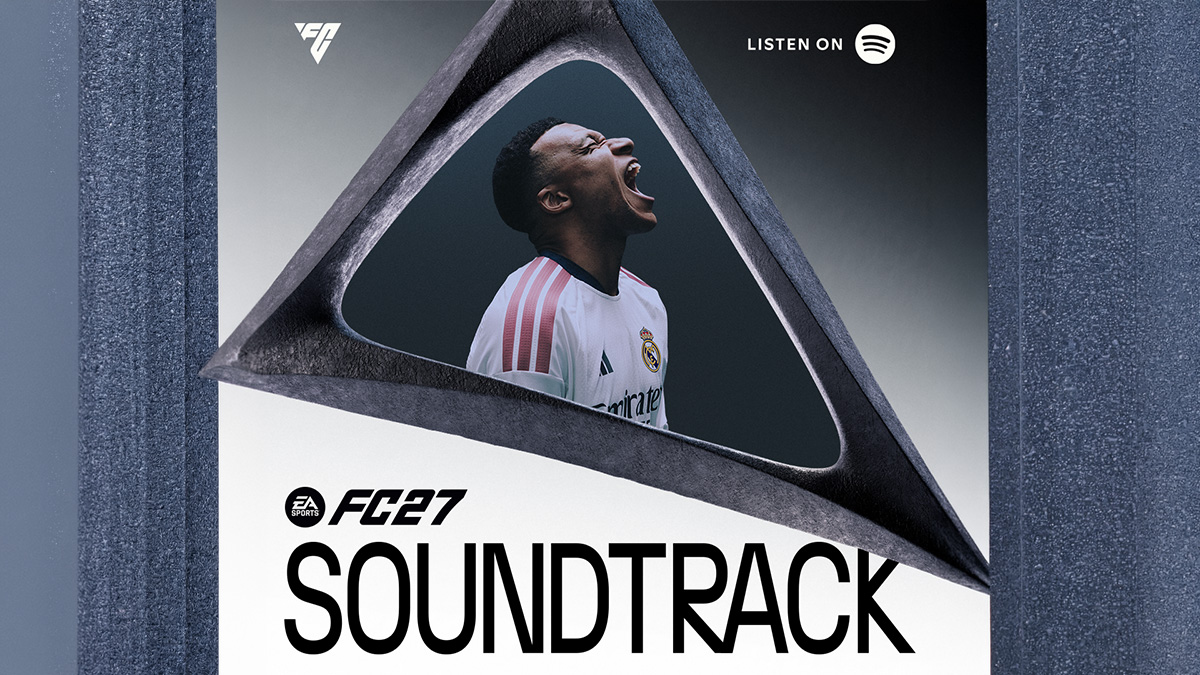
There was a time when launching FIFA meant hearing the opening seconds of Song 2 by Blur. In 1997, FIFA: Road to World Cup 98 relied heavily on the British band, as well as the electronic sound of The Crystal Method. It was a soundtrack deeply rooted in its era and in the influence of British music culture on the video game industry.
Almost thirty years later, the landscape has changed dramatically. The soundtrack of FIFA 27 — officially EA Sports FC 27 — features 120 tracks from 36 countries, and reflects a broader evolution that has been taking place over several editions: hip-hop, African, Caribbean and Latin American music now occupy a central position in the game’s musical identity.
Electronic Arts presents the selection as a reflection of the different communities that make up global football today. It is also an evolution closely connected to the cultures covered every day by UrbanTrackz and its English-language counterpart Hellsinky.
From Blur to a New Global Popular Music
The comparison with FIFA 98 remains striking. In the late 1990s, Blur and the Britpop aesthetic played a major role in the musical identity associated with European football. Song 2 even became, for an entire generation, almost inseparable from FIFA itself.
Today, FIFA reflects a much broader shift in the centre of gravity of popular music. Rock has obviously not disappeared: Interpol, The Strokes, The War on Drugs, Royal Blood and The Neighbourhood are still present on FIFA 27.
But they now share space with artists such as Little Simz, EARTHGANG, Anderson .Paak, Nathy Peluso, Nicki Nicole, El Alfa and Lous and The Yakuza. American and British rap, Afrobeats, R&B, reggaeton, bouyon, dancehall and new music scenes shaped by African and Caribbean diasporas are no longer peripheral elements of the programming: they have become part of its core.
A Shift Already Visible Across Recent FIFA Editions
This movement did not begin with FIFA 27.
In 2023, the soundtrack of FIFA 24 already featured Ninho and Central Cee on Eurostar. The collaboration was symbolic: one of the biggest names in French rap joined forces with one of the leading artists of the new British generation on a soundtrack distributed worldwide.
Central Cee’s connection with the French scene has continued since then, including through several collaborations covered by Hellsinky.
That edition also featured Stormzy, Jack Harlow, Baby Keem and Kendrick Lamar, Major Lazer and Karol G. Electronic Arts explicitly highlighted Afrobeats, reggaeton and grime as musical cultures capable of expressing football’s increasingly global character.
The following year, Tiakola and his track Formidable became one of the main representatives of the French scene on FIFA 25. The artist, whose musical and artistic development has been explored by UrbanTrackz, perfectly embodies this new geography: rap, melody, African influences and pop no longer operate as separate categories.
Around him, FIFA 25 also featured Rema and Shallipopi with BENIN BOYS, Omah Lay, Pa Salieu, Young Miko and the Afro-Colombian collective Kombilesa Mi. Traditional music, contemporary rap and African and Latin American scenes were increasingly brought together within the same soundtrack.
In 2025, FIFA 26 continued this transformation with Sampa The Great, Little Simz, Obongjayar, Moonchild Sanelly, Original Koffee, Skepta and Young Miko. On the French side, artists included sheng, Myd, Polo & Pan and Tshegue.
FIFA 27: France Moves to Another Level
It is with FIFA 27, however, that the French presence becomes particularly visible.
Electronic Arts itself has highlighted the strong representation of the French scene in this year’s selection. And the list shows the scale of the shift: SDM, Laylow, H JeuneCrack, disiz, Theodora, GENER8ION, DJ Pone, Lolo Zouaï, Max Baby, French 79, miki, Miel de Montagne, Adé and LB aka LABAT are among the artists included.
For French rap and adjacent scenes, several choices are particularly significant:
They are joined by artists operating at the intersection of rap, R&B, electronic music and alternative pop, including Lolo Zouaï with Lous and The Yakuza, GENER8ION with Yung Lean, Max Baby and DJ Pone.
The case of melodrama is especially revealing. The collaboration between disiz and Theodora, also covered in English by Hellsinky, sits precisely in the space where older boundaries between rap, pop, electronic music and diaspora-driven sounds are becoming increasingly irrelevant.
From a French Representative to a French Scene
The real difference compared with previous editions is therefore not simply the presence of a French rapper — FIFA had already featured Ninho and later Tiakola — but rather the number and variety of French artists appearing at the same time.
Ninho could still be seen as a major French representative within a predominantly international selection. Tiakola then confirmed that the newer sounds of French rap had a natural place within FIFA’s global programming.
With FIFA 27, it is no longer about one or two ambassadors. Several generations and several different strands of the French scene now appear in the same game: SDM, the highly distinctive world of Laylow, a newer-generation artist such as H JeuneCrack, as well as disiz and Theodora.
France therefore appears less and less like an occasional exception within the playlist and more like one of the music scenes now consistently monitored by FIFA’s curators.
Afro, Hip-Hop and the Caribbean: A New Centre of Gravity
The growing French presence is itself part of a much larger shift.
For several years now, African, Afro-diasporic, Caribbean and Latin American music has circulated internationally far beyond its original markets. Nigerian Afrobeats, South African amapiano, Jamaican dancehall, Caribbean bouyon, reggaeton and the many contemporary forms of African rap now appear naturally alongside major American and British releases.
FIFA is following this evolution rather than creating it.
Football itself has particularly strong connections with these cultures. They can be found in players’ playlists, celebrations, fashion, social media and in the major cities where football and popular culture constantly intersect.
It therefore feels almost natural that, in 2026, an international football soundtrack would place SDM, Little Simz, EARTHGANG, El Alfa, Nathy Peluso, Lous and The Yakuza and Anderson .Paak within the same musical universe.
FIFA’s Soundtrack Ultimately Follows Football
FIFA’s musical programming has always attempted to reflect the culture surrounding football rather than simply stacking the biggest hits of the moment.
In the late 1990s, that culture could be represented by Blur, Britpop and British electronic music.
In 2026, professional football, its players and its audiences are culturally far more connected to rap, Afrobeats, dancehall, reggaeton, R&B and the many scenes shaped by African and Caribbean diasporas.
The soundtrack is ultimately recording that shift.
FIFA 27 still features rock and electronic music, but the major evolution visible over the past several years lies elsewhere: genres once pushed to the margins under the broad label of “urban music” now occupy a significant part of the centre of global pop culture.
And within this new musical geography, France is clearly taking up more and more space.
After Ninho and Central Cee on FIFA 24, followed by Tiakola on FIFA 25 and a 2025 edition featuring artists such as sheng, Myd, Polo & Pan and Tshegue, FIFA 27 now brings together SDM, Laylow, H JeuneCrack, disiz and Theodora at the same time.
From Blur to SDM, it is therefore not only FIFA that has changed. It is also our definition of what global popular music has become.
