
Tonton du Bled: The Story Behind Rim’K & DJ Mehdi’s Classic
Some tracks never really grow old — they become part of a culture’s musical heritage. Tonton du bled now firmly belongs in that category. Released in late 1999 on Les Princes de la ville,…
 Written byZEZ XXI — Mazdak Vafaei Shalmani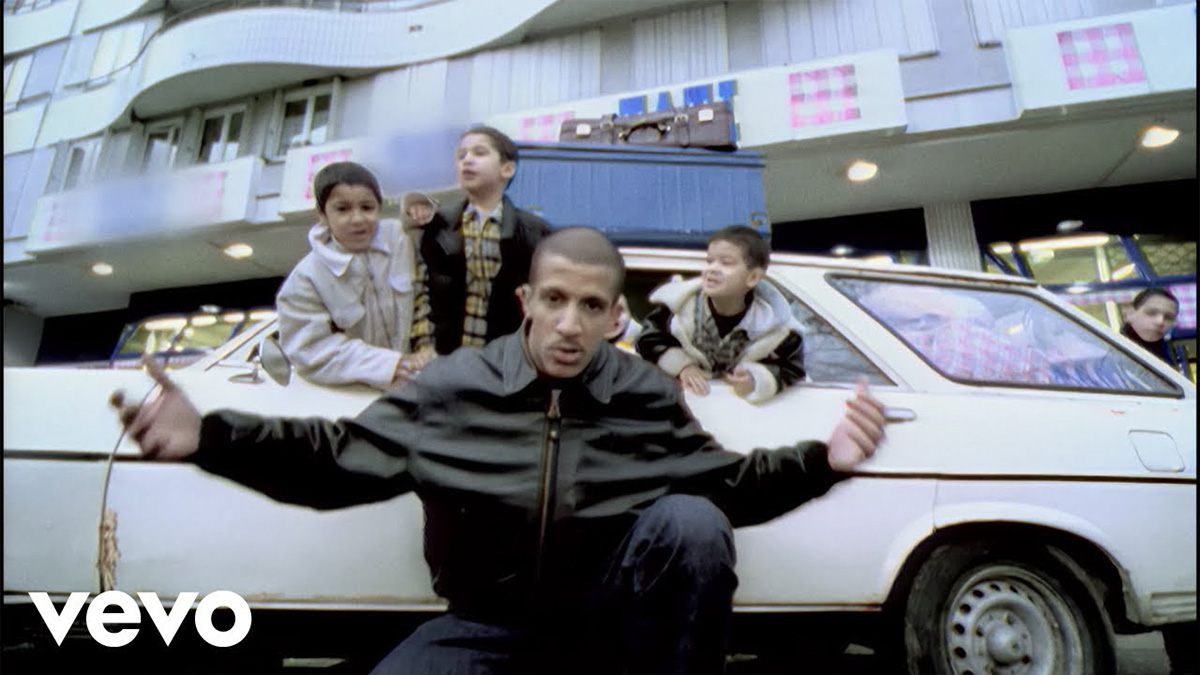
Dans cet article

Some tracks never really grow old — they become part of a culture’s musical heritage. Tonton du bled now firmly belongs in that category. Released in late 1999 on Les Princes de la ville, the debut album by 113, the track performed by Rim’K and produced by DJ Mehdi has become one of the most instantly recognizable classics in French rap history. The song was even certified Gold by France’s SNEP in May 2000, just a few months after its release.
Its success went far beyond the single itself. Les Princes de la ville sold around 500,000 copies, while the group walked away from the 2000 Victoires de la Musique with two awards. More than twenty-five years later, Tonton du bled has also surpassed 9 million streams on Spotify — an even more remarkable achievement considering that the track was missing from streaming platforms for nearly fifteen years.
Before Rim’K, IAM had already opened the door
It would be inaccurate, however, to portray Rim’K and DJ Mehdi as the first artists to introduce Arabic music into French rap. As early as the beginning of the 1990s, IAM and their producer Imhotep were already exploring a Mediterranean musical universe and sampling records from across the Arab world. On the 1993 album Ombre est lumière, IAM notably sampled Oum Kalthoum’s monumental classic Enta Omri on Je lâche la meute.
But something changed with Tonton du bled. Algerian sounds were no longer simply a musical texture or a cultural reference. They became directly connected to the rapper’s story, his identity and his family history. The sample almost tells as much of the story as the lyrics themselves.
That idea would continue to spread throughout French rap. A few years later, Kore and Skalp pushed the encounter between French rap, R&B and North African music even further with Raï’n’B Fever. The fusion became a musical concept in its own right, bringing together French rappers and major figures from the raï scene.
Taking a different approach, La Caution also developed an aesthetic deeply influenced by the duo’s North African roots. Their classic Thé à la menthe, produced by Nikkfurie, notably revolves around a sample of Lebanese singer Assi Al Hallani’s Law Adri. Nikkfurie would later explain that this combination of his Moroccan heritage, French music, funk, hip-hop, new wave and electronic music was precisely what shaped La Caution’s musical identity.
What was still relatively marginal in the 1990s has now become almost second nature. North African music regularly runs through contemporary French rap, from raï and chaâbi to electronic experimentation. Rim’K himself is now described as “the uncle of the new scene blending North African music with rap”.
Before Tonton du bled, there was Tonton des îles
To understand how Tonton du bled came to life, we have to go back to the making of Les Princes de la ville. The album was never intended to be solely about Vitry-sur-Seine and the everyday reality of 113. The group also wanted to tell the story of where its members came from.
AP explored his Guadeloupean roots on Tonton des îles, while Rim’K used Tonton du bled to evoke his summer journeys to Algeria. This approach was later discussed by Thibaut de Longeville through his archival work on DJ Mehdi, and was also highlighted by Radio Nova in its exploration of the track’s sample.
Tonton du bled captures a scene instantly familiar to an entire generation of children from North African immigrant families: the overloaded car, suitcases strapped to the roof, nephews squeezed into the vehicle, the long journey across France and finally the road to Algeria. Rim’K has recalled how, as a teenager, those trips sometimes felt almost like a chore because they meant leaving his friends behind for several weeks. Looking back, however, he now remembers them as extraordinary moments of family togetherness.
His parents’ records became the raw material for the track
The real story behind Tonton du bled, however, begins with Rim’K’s family record collection.
While DJ Mehdi was searching for the musical foundation of the track, Rim’K brought him his parents’ vinyl records. Years later, he recalled the moment: “I brought him my parents’ records for him to sample.”
The selection included several giants of Algerian music: Cheikha Remitti, whom Rim’K has described as his favorite raï singer, Idir, Slimane Azem and, finally, Ahmed Wahby. It was Wahby whom DJ Mehdi ultimately chose. As Rim’K recalled: “And of course the great Ahmed Wahbi, whose strings we sampled.”
The origin of the sample was later confirmed by specialists from Toukadime. DJ Bachir, who tracked down the original recording, explained that Rim’K had previously spoken about bringing his father’s records to DJ Mehdi, who then made his selection from the vinyl collection.
Ahmed Wahby: behind the strings, a song about separation
The song selected by DJ Mehdi was Harguetni Eddamaa by Ahmed Wahby, released in 1971. Its title can roughly be translated as “The Tear Burned Me.” Yet the original lyrics have nothing to do with Algeria, immigration or returning to one’s homeland. Ahmed Wahby is, above all, singing about heartbreak and separation.
He sings about someone who is no longer there, the pain caused by her departure and memories of a happiness that has since disappeared. In the original lyrics, Wahby describes how his thoughts remain consumed by this woman and wonders when the happy days they once shared might return.
That is what makes DJ Mehdi’s choice so striking. Rim’K does not reuse the original lyrics, yet their central emotion survives through the sample. For Ahmed Wahby, it is the longing for a woman. With Rim’K, that same melancholy now accompanies his relationship with a country, his family and his roots.
The track therefore does more than sample Algerian music. It samples music that belonged to Rim’K’s parents’ generation in order to tell the story of their son, born and raised in France.
DJ Mehdi’s technical genius
DJ Mehdi’s work, however, went far beyond simply taking a few seconds of strings and laying drums underneath them.
Years later, pianist and arranger Issam Krimi studied the construction of Tonton du bled while preparing an orchestral reinterpretation of the track. His analysis revealed just how sophisticated DJ Mehdi’s production really was. In Harguetni Eddamaa, the sampled melodies are structured around three-bar cycles, making them difficult to fit directly into a conventional Western hip-hop beat typically organized around four-bar phrases.
DJ Mehdi therefore had to rebuild the musical structure. According to Issam Krimi’s analysis, he duplicates the first bar of the motif before adding the original second and third bars. The three-bar cycle is thereby transformed into a four-bar loop perfectly suited to the structure of a rap track.
This is precisely where part of DJ Mehdi’s genius lies. He does not treat Ahmed Wahby’s music as an exotic flourish layered over a hip-hop production. He takes it apart, analyzes it and reconstructs it until it becomes a genuine rap composition without stripping away its original identity.
That approach perfectly sums up Mehdi as a producer. On Les Princes de la ville, DJ Mehdi could move effortlessly between European electronic music, American soul and Algeria’s musical heritage. As Thibaut de Longeville has pointed out, all of that musical diversity was synthesized through his productions for 113.
The sample that made the track — and then made it disappear
There is, however, a huge irony at the heart of the story. The sample that gave Tonton du bled its unmistakable identity would also become the track’s biggest problem.
At the time, the rights to the Ahmed Wahby sample had not been properly cleared. His rights holders later challenged its use. Tonton du bled was not the only track from Les Princes de la ville affected: the album also contains samples from artists including Marvin Gaye and Curtis Mayfield, which were also caught up in clearance issues.
The consequences were remarkable: one of the most important albums in French rap history became largely unavailable through legal streaming services. Tonton du bled was officially unavailable for around fifteen years.
Rim’K eventually took matters into his own hands in an effort to resolve the situation. By 2024, he had already explained that he had been working on the rights issues for several years. On February 14, 2025, Tonton du bled finally returned officially to streaming platforms.
That same night, Rim’K performed the track at the Victoires de la Musique during a tribute to DJ Mehdi, twenty-five years after the ceremony where 113 famously made their mark by arriving with the iconic car from the video. Le Parisien highlighted the parallel between the two ceremonies.
A parents’ record that became a song for their children
Tonton du bled did not invent the use of Arabic sounds in French rap. IAM had already opened that door several years earlier, while artists such as La Caution would go on to develop their own experiments with those influences.
But Rim’K and DJ Mehdi did something different. They transformed music embedded in a family’s memory into one of the biggest popular classics in French rap.
Rim’K himself summed it up by explaining that the song had long since grown beyond his own story: “This song no longer belongs to me. It belongs to France, it belongs to the history of immigration, it belongs to French rap, to the history of hip-hop.”
Ultimately, the entire story of Tonton du bled can perhaps be summed up by one beautiful paradox: Rim’K went digging through his parents’ records to tell the story of his own generation. DJ Mehdi transformed those records into hip-hop. And more than twenty-five years later, the children of that generation are now listening to the track themselves.
