Nicolas Cazalé: From Actor to Filmmaker, the Wild Child of French Cinema
August 27, 2026
After attracting attention in “Le Conte de la Frustration” by Akhenaton and Didier Daarwin and “Le Grand Voyage” by Ismaël Ferroukhi, this child of southwestern France went on to appear in one film after another before seriously stepping behind the camera with “Un Jour viendra”, his latest short film and a small gem in its own right. We sat down with a multi-talented wild child who has found his place both in front of and behind the camera.
Nicolas Cazalé, you’re a self-taught actor. You grew up in a village near Pau?
Yes. My father delivered washing machines, worked as a salesman at Carrefour and did various other jobs. My mother didn’t really work consistently. She had a difficult life and was sometimes around, sometimes not. She cleaned hotel rooms and worked as a secretary for a while. I wasn’t destined for an artistic career at all. We didn’t go to the movies, there were no books at home and we didn’t listen to the radio. I graduated from high school. I played rugby, handball, football and tennis.
Why and how did you end up moving to Paris?
I was 16, living in a small village in Lot-et-Garonne, and my girlfriend at the time was doing theatre in the village community hall. One Saturday, I went to see her and my life changed. I didn’t tell anyone, but I knew right then that I had to get on stage. They were playing the bottle game and doing a bit of improv, but when I got back on my moped to ride home, I knew my life had changed at that exact moment. I didn’t know how to talk about it with the people around me, but in my head I was already somewhere else. I was supposed to go and work with my father. This was back in the days of phone books and Minitel — there was no internet, no Google (laughs) — so you thought, “Well, it must all be happening in Paris.” So I went to Paris because I had an uncle in Villiers-le-Bel, near Sarcelles.
I left my village, took a train for the first time in my life, then the Métro and the RER (laughs), and ended up in Garges-lès-Gonesse. And I got mugged at the station! Someone tried to steal my bag. I was thinking, “What the hell am I doing here?” (laughs). Then I auditioned for Cours Florent and they accepted me directly into the second year. Amazing! Except that three months later I was asking myself, “What the hell am I doing here?” I had nothing in common with these people. I didn’t feel like I belonged at all. I hated Paris, although I’d loved discovering train travel on my way there, so I left and spent four years travelling. The dream of becoming an actor was still inside me, but it simply wasn’t the right time.
You travelled alone for four years?
I went to Israel, Cuba, Guadeloupe and Réunion Island. I worked wherever I was, found ways to get by, and that was it. Back then, I was emotionally locked up inside. I couldn’t laugh or cry. I had personal things I needed to deal with. I needed to run away too, and to find myself by confronting certain questions: Who am I? How do I relate to the way other people see me? To my upbringing? To my own journey? Four years later, I returned to Paris determined to make it and managed to find an agent through sheer nerve. He told me, “Take out your earrings and cut your hair,” and then I started going to loads of auditions.
Your first role was as a Traveller?
“Les Gens du Voyage” was my first experience, and that’s when I thought: I wasn’t wrong. This is the right road. It might be a rough one, but I’m never going to give up. And that’s still true today. When I’m on a film set, I feel at home. I feel invulnerable, like nothing can happen to me. I love watching everything that’s going on, seeing the crew set everything up. I find it magical.
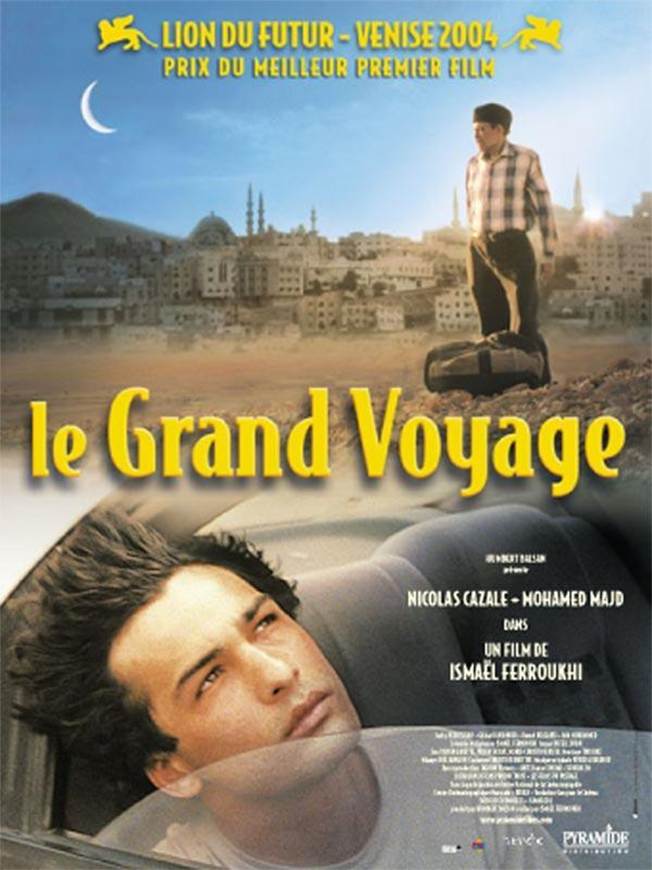
You then appeared in around fifteen feature films, including Régis Wargnier’s “Pars vite et reviens tard” alongside José Garcia, Ismaël Ferroukhi’s “Le Grand Voyage”, which won at Venice, and Éric Guirado’s “Le Fils de l’épicier”, where you played the lead and were nominated for a César for Most Promising Actor. There was also Akhenaton and Didier Daarwin’s “Le Conte de la Frustration”, with Omar Sy, Roschdy Zem and Leïla Bekhti, and “Fabio Montale” with Alain Delon. What are you working on now?
I’m currently shooting Olivier Marchal‘s next feature, “Overdose”, produced by Gaumont and Amazon. It’s a very ambitious film about an undercover cop caught up in drug trafficking and go-fast operations in Morocco. Meeting Olivier has been fantastic. He genuinely wanted to refresh his casting choices. I have one of the leading roles alongside Alberto Ammann (“Narcos”), Kenza Fortas (“Shéhérazade” and “Bac Nord”) and Nassim Lyes (“Made in France”). I’ve also finished two other feature films: “Magnificat” by Virginie Sauveur, with Karine Viard, where I play a Traveller priest (smiles), and “Esperando a Dalí” by David Pujol, alongside José Garcia, where I play a 1970s hippie. One project after another!
You almost ended up in Hollywood with Marlon Brando. Can you tell us about that?
(Laughs) It’s a pretty crazy story. I met a Tunisian director who had written an extraordinary screenplay. The premise was that a huge Hollywood production arrives in a tiny village in the middle of nowhere in Tunisia. The director takes a liking to a young waiter and tells him, “You look like Marlon Brando. You should be in movies.” The guy ends up going to the United States to pursue acting. At the end, he meets Marlon Brando, who tells him, “Stop everything! The movie business is worse than shit. Hollywood is worse than anything.” (laughs). That was the story. Marlon Brando had seen one of my films, “Les Chemins de l’Oued” by Gaël Morel, and had approved me: “Okay, he’s great. That’s the guy.” The entire ending was actually supposed to be shot at his home. I thought that was pretty cool! (laughs). It was a major American production, except that three days after approving me, he died… The contracts had already been sent to my agent. Without him, the film couldn’t happen. It came into my life, passed through it, and disappeared again.
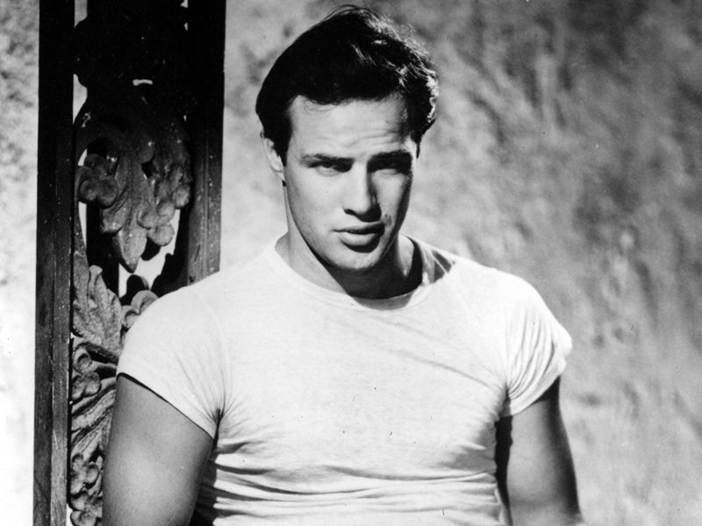
Were you chosen because of that physical quality you have? It’s something that’s very common in American cinema but perhaps less valued in French cinema, outside action films, where we tend to place greater emphasis on dialogue?
Vincent Cassel, Jean Dujardin, Sami Bouajila or Roschdy Zem — I love Roschdy. Actors like that often come from working-class backgrounds. Things are beginning to change. French cinema is still very intellectual, though. That animal, impulsive side tends to be rejected a little. You’re expected to remain polished; everything has to fit the mould. Thankfully, people like Tahar Rahim, Adèle Exarchopoulos and Kenza Fortas are coming through strongly. They’re actors who perform with enormous instinct and emotion. The problem with French cinema is that it puts people into boxes. You’re confined to a single type: “the handsome guy,” “the guy from the projects,” “the weed dealer.” Nobody thinks, “I’d like to see him in Shakespeare,” for example, or playing a lawyer. Eventually, acting stopped being interesting to me.
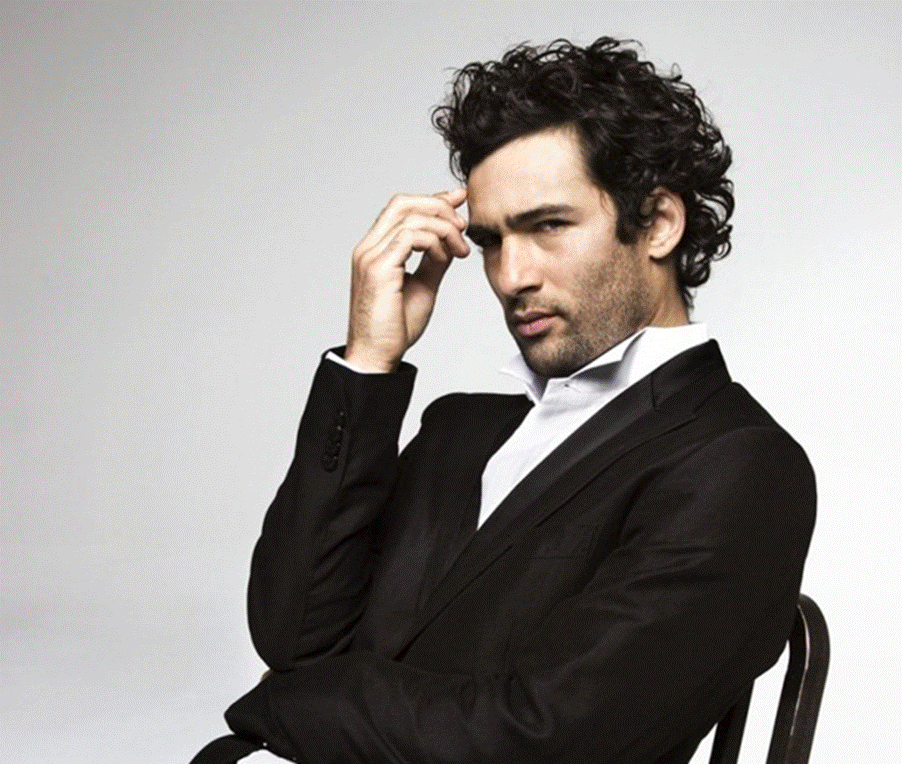
Did you personally experience that typecasting?
Yeah. In the United States, Brad Pitt can play a vampire, then star in “Troy”, then play a doctor or a lawyer. That’s incredibly exciting because you have to prepare completely different characters. In France, you’re categorised according to your body and your social background, and they don’t really want you to break free from that. You’re expected to stay in your place. I was always offered the same thing: the damaged outsider, permanently on the margins of society, quiet and intensely physical.
French cinema has always had this fascination with the working-class body!
That’s who I was originally, but then I blossomed. I changed, I evolved. I spread my wings and started flying, but there was no way they were going to let me! It’s only now that I’m being offered characters who smile, characters who can have some light in them.
That’s interesting.
I felt I was rich in other ways. I had my own way of looking at things, my own poetry. In France, you’re expected to stay in your place, and that can be incredibly restrictive. It’s “the body versus the brain.” What’s interesting is the struggle against all of that.
We have to fight against it. In French cinema today, I really like this new wave of female directors such as Maïmouna Doucouré, Julia Ducournau and Alice Winocour, and before them Claire Denis.
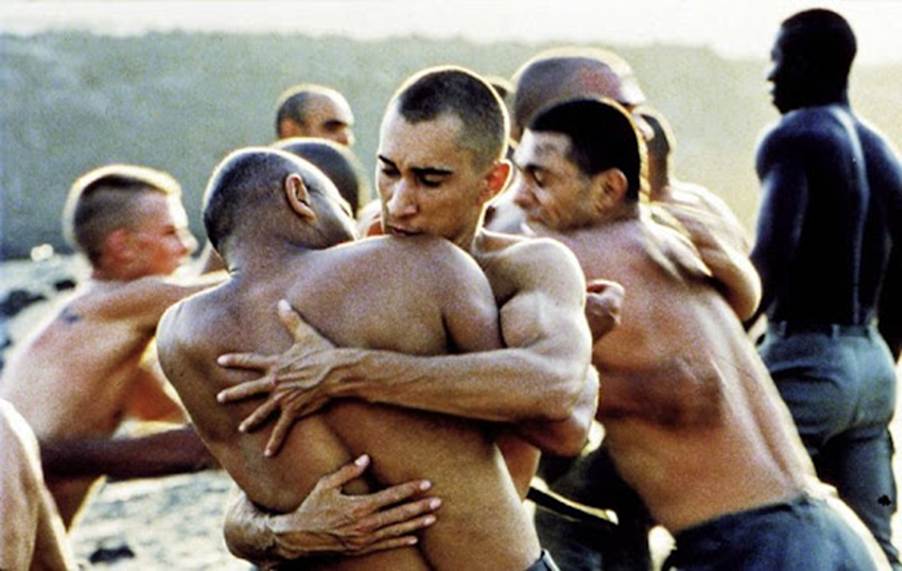
That’s very physical cinema too.
Yes, it’s magnificent. It’s complex.
Over the past ten years, you’ve also done things outside cinema.
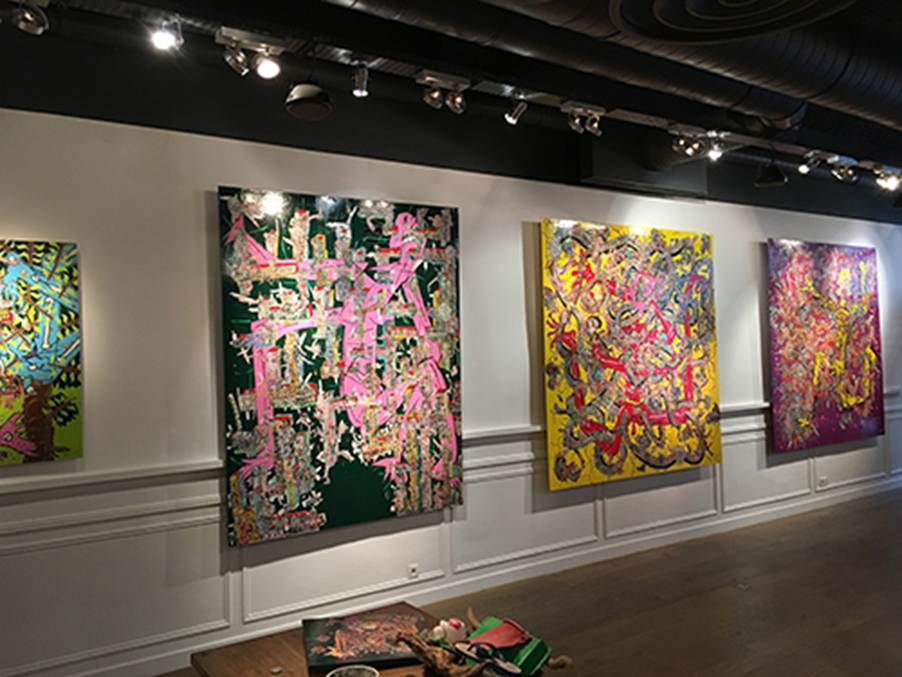
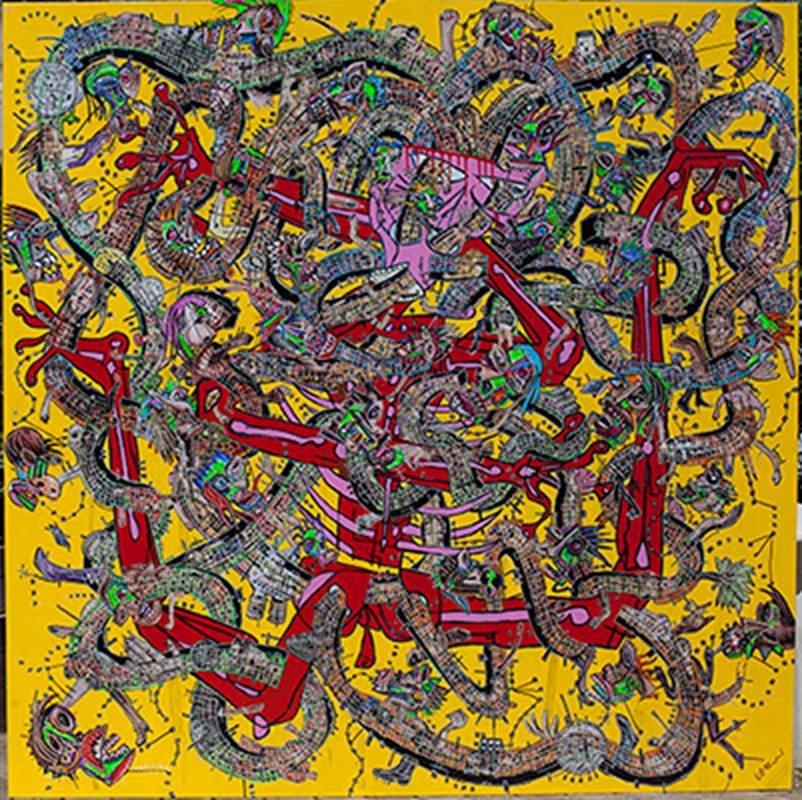
Yes, I’ve done a lot of painting and sculpture. I also needed to be closer to my family. I have two children, and constantly leaving for four-month film shoots didn’t feel very compatible with family life. I exhibited my work in Paris. I took the time to direct three short films and write my first feature film.
All of that takes time. And I decided to give it that time.
In 2010, your first short film, “Le Temps d’après”, starring Daniel Duval, was selected for the Directors’ Fortnight at the Cannes Film Festival. Was it inspired by something you experienced yourself?
At the time, I had no intention of directing. I had a studio in Levallois-Perret, just outside Paris, and I’d been preparing a major exhibition there every day for six months. I had these huge pieces, and one day I walked into the studio and discovered that some kids had broken in and destroyed everything. There was nothing left. All the structures were wrecked, there was paint everywhere, fire extinguishers smashed into the walls. I didn’t take it personally. They’d entered a place and just destroyed everything, including my paintings. I looked at the devastation and I was shocked. But at the same time, I thought, “Fuck, this is beautiful.” So I went home, grabbed my little camera and filmed it — streaks of paint and everything else. Afterwards, I struggled to start drawing again and thought, “I have to do something with this.” That’s when I wrote my first short film. It’s the story of a painter who walks into his studio and discovers that everything has been destroyed. I incorporated the footage I’d shot into the film. That’s how I discovered writing and directing. Behind the camera, I realised I’d found my place. I loved it.
Was it a form of healing?
Yes. It was about needing to come out of something, to grow beyond something that could have destroyed me, you know?
But I wasn’t thinking about making any more films. The film went to Cannes and had a little life of its own. Then, four years later, I was repainting my living room and — bang! — I suddenly had the idea for a second short film, “Croire”, which I directed with actress Emmanuelle Seigner in 2013.
Can you tell us about your latest short film?
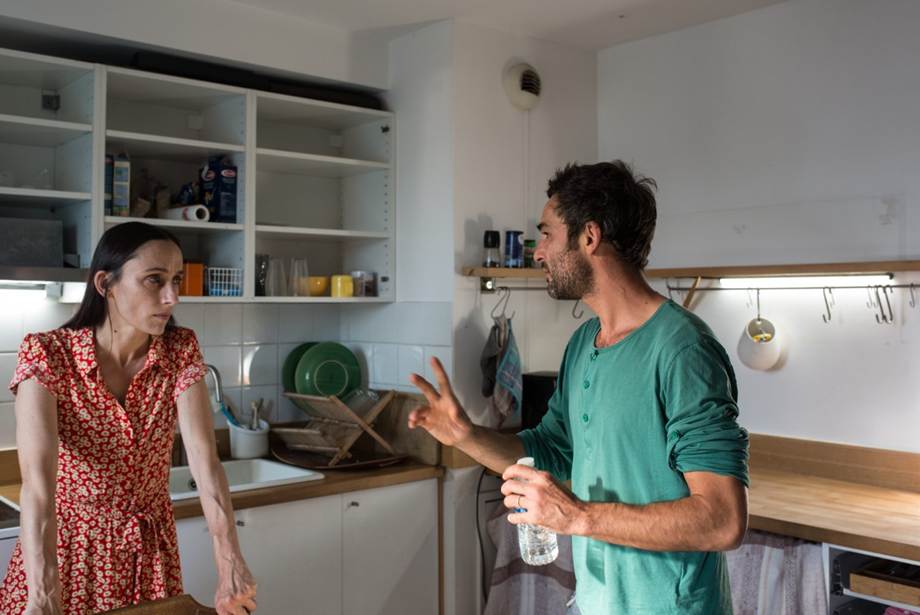
I’ve just finished my third short film, “Un Jour viendra”. It wasn’t something I’d originally planned to make because I was working on the screenplay for my feature film. But my producer, Ron Dyens from Sacrebleu, convinced me to make a short based on the same theme so that I could find my actors and technical crew for the feature.
What’s the premise?
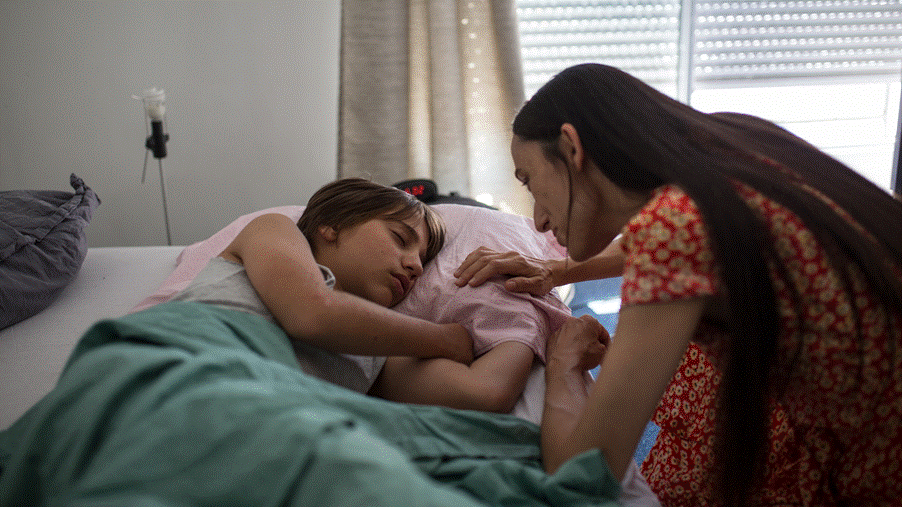
A mother who left the family home a year earlier is reunited with her son.
It’s completely autobiographical.
We had the opportunity to see it. Your actress, Audrey Bonnet, is a genuine revelation.
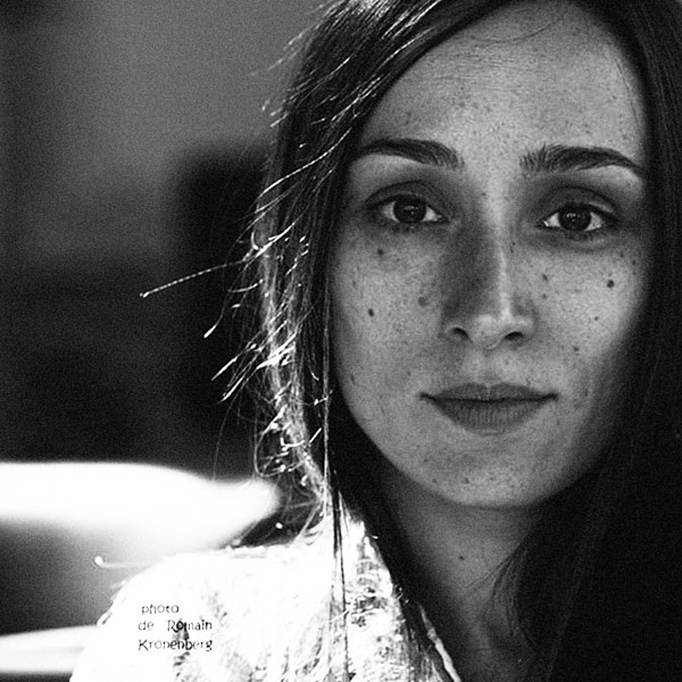
I met Audrey Bonnet at Cours Florent during the three months I spent there when I first arrived in Paris. I admired her on stage. There were 40 students in the class, and she gave me chills. She had an extraordinary emotional quality. I was convinced she would have a great career, which is exactly what she’s doing in theatre.
She’s an extraordinary stage actress. I always kept her in mind. We lost touch, but I continued following her career. For this short film, I’d originally cast a fairly well-known actress, but things went badly between us, so I decided to part ways with her two days before shooting began.
Really? Why?
Because… we just weren’t on the same wavelength. There was too much control. And obviously, for an actress of that stature, doing a short film wasn’t as exciting as it was for me. I needed someone who could trust me and fully commit to it, because that’s how I wanted to make the film. Two days before shooting, we mutually agreed to stop. My producer nearly hit the roof, but at the same time he told me, “Nico, okay. If you don’t feel it, I’m with you. I trust you, but find a solution.” And I immediately thought of Audrey Bonnet. At the very beginning of the project, the character was actually called Audrey. She had been my original choice: Audrey Bonnet. So I called her. She was about to go on tour, but she happened to be free for four days — exactly on our shooting dates.
Incredible!
It was crazy, yes. That’s how she joined us, and it saved me. I had an incredible time working with her. She completely surrendered herself to the role, she trusted me, and I think you can see that in the film.
She brings to mind Gena Rowlands in Cassavetes’ films!
That’s kind of you, thank you. Cassavetes is definitely a reference in terms of the way he worked. But I didn’t want to fall into melodrama. I wanted everything to remain restrained. That’s something I love about Asian cinema: profound themes handled through interiority and restraint, with very little dialogue. Kim Ki-duk, Tsai Ming-liang, the early films of Wong Kar-wai, and Kiarostami too. It’s an introspective, understated kind of cinema.
It’s a very difficult role to pull off, yet she’s the complete opposite of theatrical.
That’s exactly what we were aiming for. The subject could easily lead you towards melodrama — screaming, crying — and I absolutely didn’t want to go there. Audrey has an extraordinary emotional quality.
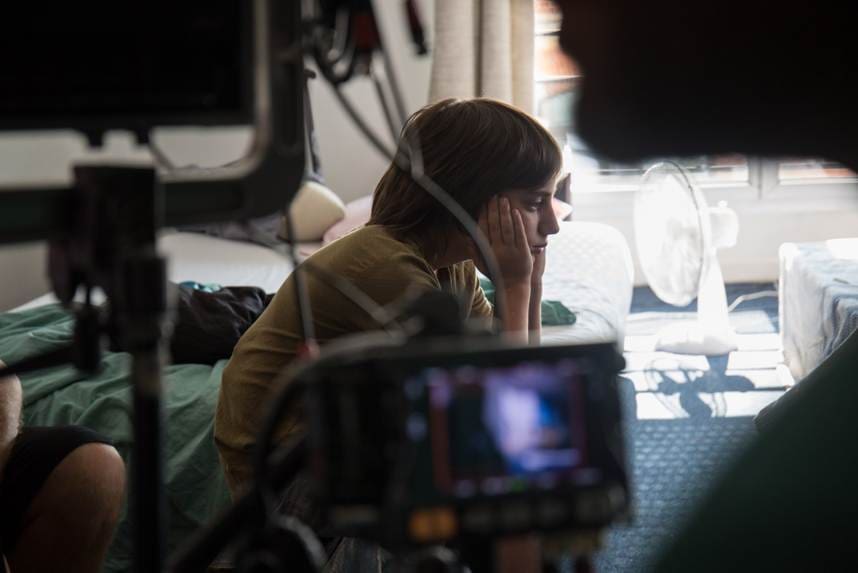
Opposite her is a brilliant young 11-year-old actor. Can you tell us about him?
Kyan Tamadon. Before being a great actor, he’s simply a great human being. There’s a lot going on inside him, and he has a real sense of restraint. He observes everything. At first, he didn’t want to do the film. Why? I realised that the story had affected him very deeply. He was genuinely shaken by my screenplay. I could feel there was a very strong connection between the two of us. So I went back to Rome and gave him time to think about it. Then one day he called me and said, “Okay, I’ve decided to do your film!” And that was it, we were off. We only saw each other once more before shooting, and I hadn’t auditioned anyone else for the role (laughs). I told him, “I guarantee you’ll leave this shoot with some incredible memories.” He’s perfect in the film. And he and Audrey work incredibly well together.
Does this foreshadow your feature-film project?
Yes, “La Bête endormie”, a film set in Béarn, in the mountains, with a very wild atmosphere. Once again, it deals with childhood. At its heart, the film is about emancipation. But right now, I can’t wait to show audiences my new short film.
