
Ziak Reinvents French Drill With “Monsieur Loyal”
Ziak remains one of the most enigmatic figures in French rap. Emerging onto the French scene nearly five years ago, he seemingly came out of nowhere before earning a gold record with “Akimbo” within…
 Written byZEZ XXI — Mazdak Vafaei Shalmani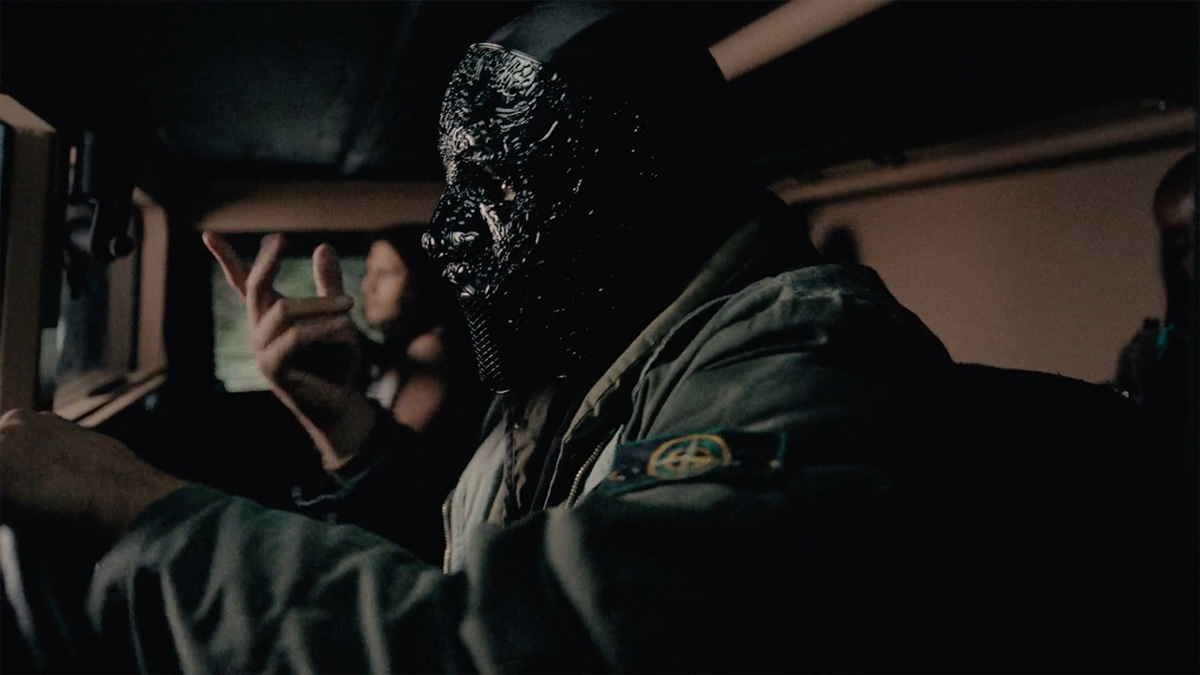
Dans cet article
Ziak remains one of the most enigmatic figures in French rap. Emerging onto the French scene nearly five years ago, he seemingly came out of nowhere before earning a gold record with “Akimbo” within a matter of weeks. Virtually unknown at the time, one of the few major co-signs on the project came from Maes, before the latter became caught up in his legal troubles. Ziak then followed up with “Chrome”, staying within the same dark musical territory.
Across his first two projects, the rapper blended Arabic-inspired sounds and instrumentation with an aggressive, uncompromising take on drill. While some of the leading figures of French drill have since softened their approach and explored other sounds, Ziak has remained something of a purist. His music continues to embrace the defining characteristics of a genre born in Chicago and deeply rooted in gang culture.
Yet as dark as Ziak’s music may be, his earliest projects already revealed an extraordinary level of creativity, both in his writing and in his cold, razor-sharp visual universe. During an interview with Mouloud Achour three years ago, Ziak suggested that “Chrome” marked the closing of the chapter he had opened with “Akimbo”.
He later returned with “Essonne History X”, a play on the title of the cult movie “American History X”. On this project, Ziak gave himself considerably more room to experiment. Drill was twisted, reshaped and rebuilt as he explored different styles without abandoning the principles at the core of his music. There is no sunny crossover music in Ziak’s world. Instead of drifting towards pop, he reshapes urban music according to his own rules.
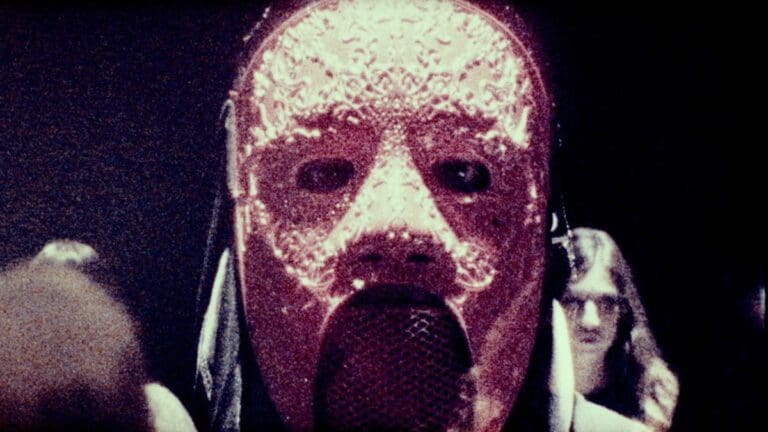
Some of the visuals accompanying the project were equally surreal, including the striking long takes featured in “Maudit Land” and “Manuel de Vengeance”. Yet despite the darkness and the mask, Ziak arguably reveals more of himself through his lyrics than anywhere else, carving his verses into the asphalt, as he does on “Story”. That more personal side also surfaced during his interview with Mouloud Achour, when he spoke about the death of someone close to his family.
The numbers remained strong, but audiences did not embrace Ziak’s increasingly adventurous approach quite as enthusiastically as they had with “Akimbo”. It would have been easy to assume that his next move would be a return to a more orthodox — and commercially reliable — form of drill.
Instead, the artist has just dropped the surprise mixtape “Monsieur Loyal”. While Gazo has previously suggested that the distinction between a mixtape and an album has become increasingly blurred, Ziak uses the format to push his creativity even further. The opening stretch of the project draws on Asian-inspired sounds before he begins combining drill with faster and more dynamic rhythms, notably on “Feng Shui”, which has already attracted considerable attention, as well as the title track “Monsieur Loyal”.
Ziak is now pushing the project further with the visual for “Les Fourmis”.
Ziak pushes “Monsieur Loyal” with the “Les Fourmis” visual
The track’s instrumental production comes from Rosaliedu38 and Koboi. Rosaliedu38 is already a familiar collaborator in Ziak’s universe, having previously worked with him on “Catwalk”. More recently, the producer also contributed to Rim’K’s “Enfants Perdus” and “Café noisette”.
Koboi, on the other hand, does not appear to have previously produced for Ziak. His credits include work with ElGrandeToto on “Paradis”, as well as Eddy de Pretto on “R+V”.
The production carries subtle Asian influences, but at its core this is still drill — and unmistakably Ziak, both sonically and aesthetically. Asia, in fact, appears to function as something of a hidden artistic thread running throughout the project.
On the track, the rapper once again draws directly from his own world:
« Moi, j’ai cassé les deux jambes d’un espoir qui savait même jouer des deux pieds
Faut sortir, faut des pavés, caillasser, ouais c’est bien beau d’éplucher les dossiers
On coupe tout, j’ai la phobie des cadenas, en contrôle comme les fourmis d’la Mara »
The video itself does not appear to carry a director credit, even indirectly on Instagram. Visually, it unfolds in a fiery, almost claustrophobic atmosphere, moving through what resembles a prison “Fight Club” before erupting into a high-speed chase.
Once again, Ziak expands his dark, borderline universe into territory that feels genuinely removed from the visual language usually associated with French rap. Rather than simply reproducing the codes of drill, he continues to distort and rebuild them in his own image.
Ziak is reinventing French drill once again.
