
Passi: From Ministère A.M.E.R. to Bande originale, a French Rap Pioneer
Passi is one of the founding figures of French rap. The context was very different in the late 1990s. “Rap”, rather than what would later be broadly described as “urban music”, was still far…
 Written byZEZ XXI — Mazdak Vafaei Shalmani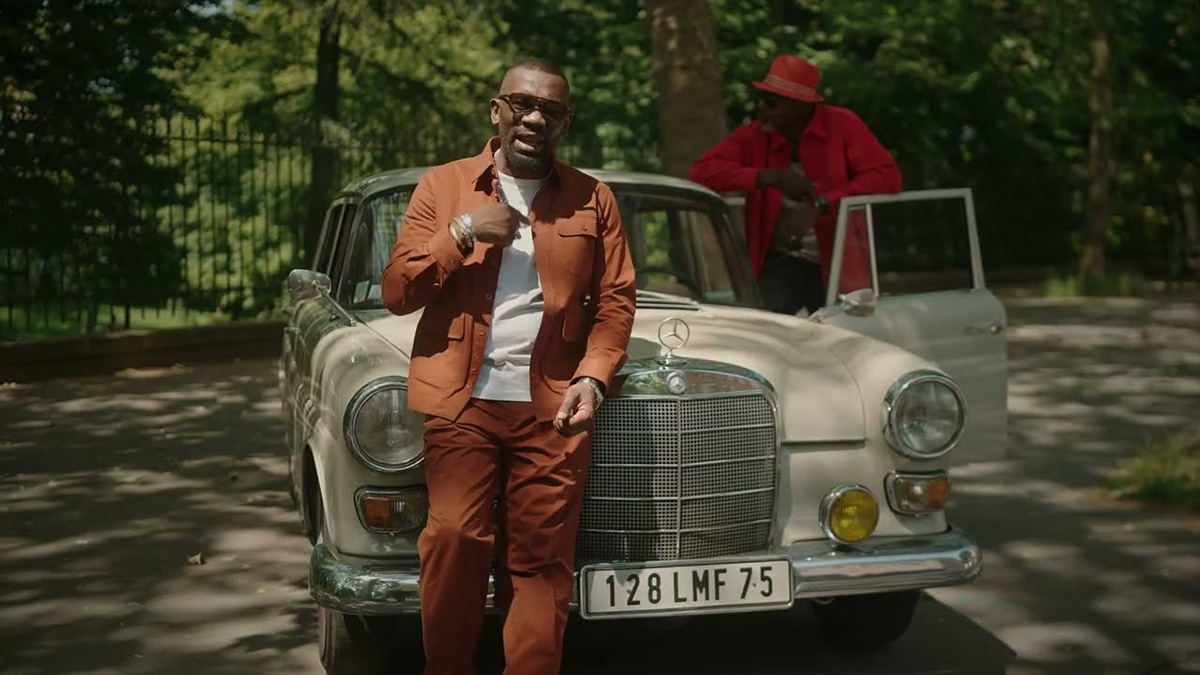
Dans cet article
Passi is one of the founding figures of French rap. The context was very different in the late 1990s. “Rap”, rather than what would later be broadly described as “urban music”, was still far from being France’s favorite genre. Rappers were also highly suspicious of anything melodic, sometimes reacting to it with outright hostility. Rohff once rapped on On fait les choses: “That R&B wave, I’d rather make it sing in its bedroom.” Even today, when you look at the controversy between Booba and journalist Mehdi Maïzi, who was accused of betraying rap through his editorial choices, it is clear that hardcore rap can still be resistant to melody in general… Passi was one of the pioneers in that field.
With his album Les Tentations, which sold at least 450,000 copies, and possibly 500,000 according to some biographies, and tracks such as Je zappe et je mate and Le maton me guette, the artist managed to combine ambitious storytelling with a more accessible approach to rap, which at the time could still be seen as too technical or too niche. With Il fait chaud, he fully embraced a more melodic direction. Then, with the collective Bisso Na Bisso, Passi and his crew became part of one of the earliest major projects to blend African music and rap. Years later, MHD would reach huge heights with Afro Trap, while today the musical links between the African continent and France have become like arteries feeding the same heart.
Passi was also among the first rappers to collaborate with artists from rock and French chanson, including Calogero on Face à la mer and Johnny Hallyday on Le temps passe. He recently discussed this in an interview with 16 Mesures:
“Even though I come from a very hardcore group like Ministère A.M.E.R., I grew up listening to French popular music, which is part of the foundation of francophone music, artists like Brel, Brassens, Piaf and Hallyday. You grow up being moved by songs from Goldman. I was also heavily influenced by the US, and I loved musical bridges like Run DMC and Aerosmith. I was 14 or 15 when it blew my mind, and I told myself that one day I would work with a rock or pop artist.
I first discovered Calogero with his original band, Les Charts, and then followed what he did as a solo artist. I love his melodies. He really got me with En apesanteur; I thought he was incredibly strong. Back then, when we were doing promo, artists would run into each other on TV sets or radio shows. With Calo, we immediately clicked and genuinely got along very well.
We started talking about making a track together, and he played me the notes that would later become Face à la mer. I was stunned. It was exactly the kind of piece I would have sampled to make something else out of it (laughs). We discussed the theme and quickly based it on our own stories: him, of Italian background, growing up in the suburbs of Grenoble, and me, of African background, growing up in the Paris suburbs.
Two different places, but the same kind of story: our parents travelled in search of a better life, with the hope of building something and eventually ending up facing the sea.”
Because when it comes to street credibility, Passi earned his very early on, notably through Sacrifice de poulet with Ministère A.M.E.R., a track that sparked one of the first major controversies in France between rap and the police.
Today, among the most streamed tracks, you still find plenty of rappers, but even more melody. And while Kery James, one of the undisputed godfathers of French rap, said a few years ago that “rap has changed”, Oxmo Puccino now goes as far as saying that “it is dead.” There is a real paradox here: rap has gone from being a niche genre to one of the most popular forms of music in France, yet at the same time, it has lost part of its substance and become a much more acceptable product for record labels and mainstream audiences.
Passi released his latest project, Bande originale, which still carries the seeds of the rebellion that has fuelled French rap since the late 1980s, with legendary posse cuts such as Les Saigneurs du mic, as well as Mon cœur, a track for which he has just unveiled a new visual.
Passi gets personal on “Mon cœur”, the latest track from Bande originale
The instrumental was produced by Yoroglyphe. The producer has worked extensively with Seth Gueko, including on tracks such as Gros gamin and Versace Guevara. He is also one of the beatmakers who played a role in Niska’s breakthrough with Matuidi Charo (Freestyle PSG), a track that became closely associated with Paris Saint-Germain for a time, with its catchphrase even being adopted on the pitch by the player himself.
Far removed from the trap sound of Matuidi Charo, the production combines an old-school siren with a relatively slow BPM, suggesting that the rapper is going back to his roots on this track. Passi speaks openly and intimately about his emotions, going into real detail. It is not really storytelling in the traditional sense; it is more the perspective of a man who has gained wisdom with time. Demi Portion once said: “A young man standing will never see as clearly as an old man sitting down.”
“Winter nights, health turned to ashes
The first setback is what you feel after the first death (heart)
Everything moves so fast from the inside to the mind
It travels through the arteries, through the veins
Like the blood that keeps my heart beating (keeps it beating)”
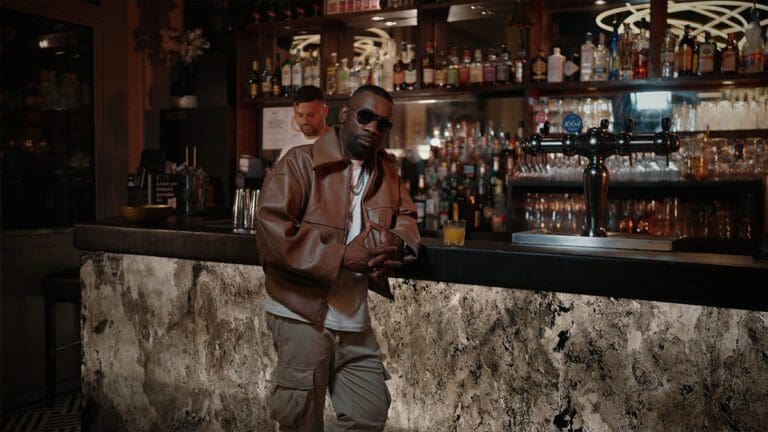
As with Vol au-dessus, Passi’s current-affairs series, whose title references the film starring Jack Nicholson, the video is directed by Flogo. The visual takes a fairly classic approach for this kind of track, following behind-the-scenes moments from Passi’s life and his fast-paced lifestyle. Flogo has also worked with independent rapper Tuta.
