
Zamdane Returns With “Bad Day” as SABR Takes Shape
He is an artist who occupies a unique place within the French urban music landscape. After his journey from Morocco, Zamdane eventually settled in Marseille. Speaking to RFI after the release of Rahma, on…
 Written byZEZ XXI — Mazdak Vafaei Shalmani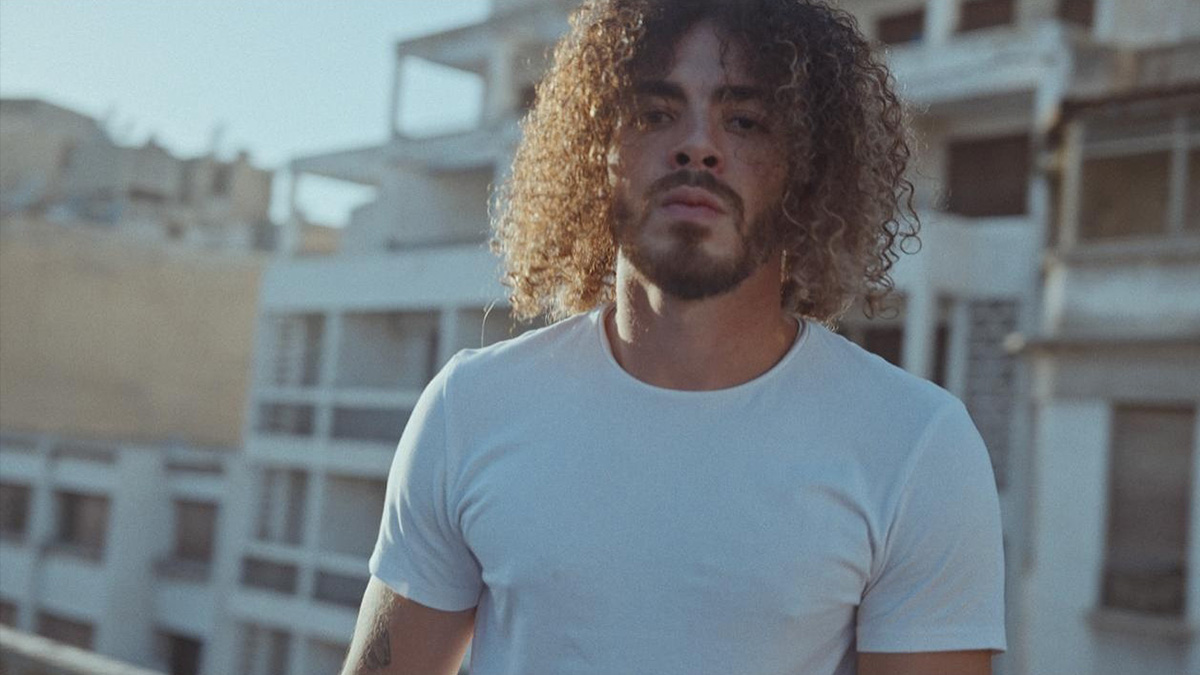
Dans cet article
He is an artist who occupies a unique place within the French urban music landscape. After his journey from Morocco, Zamdane eventually settled in Marseille. Speaking to RFI after the release of Rahma, on the show Légendes Urbaines, he explained that growing up in Marrakech with a father who worked as a tour guide ultimately had a major influence on the choices he would later make. At a time when the Internet was nowhere near as widespread as it is today, tourists brought pieces of European culture with them. Zamdane inherited some of that cultural openness, but he also recalls gradually realising that “you understand that, to them, you are only passing through.”
Without going into too much detail, he describes a sense of distance that may partly have pushed him to cross borders and eventually begin his Affamé freestyle series. Equally comfortable rapping and singing, the artist has never been particularly interested in mastering the art of the egotrip. Instead, he has built a world shaped by melancholy, sadness and exile.
His writing feels particularly distinctive at a time when gimmicks have often taken precedence over punchlines and poetic lyricism. That writing, rooted in emotion and deeply introspective verses, can once again partly be traced back to his family background. Zamdane has never hidden his love for French chanson. He also explained on RFI that he owns a complete Charles Aznavour box set inherited from his father, who had himself received it as a gift from a tourist.
Today, culture is accessible to almost everyone. That may be one of the few genuinely positive consequences of the widespread adoption of the Internet. But at the time, in Morocco, an artist such as Charles Aznavour was not necessarily so easy to discover. From French chanson, Zamdane would draw a taste for melancholy, but also an understanding of the weight and power that words can carry.
A year ago, the artist unveiled Rahma. Always highly prolific, Zamdane received the strongest commercial response of his career with the project, selling more than 10,000 copies in its first week. It was at this point that the artist, who had evolved from his Affamé freestyles towards increasingly aesthetic and highly conceptual music videos, appeared to reach a new level.
Yet he has shown no intention of resting on his laurels. The three tracks that make up Disc 2 of the Rahma reissue carry the acronym SABR, as do several singles released more recently. Everything therefore suggests that Zamdane may already be preparing a new project. Bad Day, a track steeped in everyday sadness, is the artist’s latest single.
Zamdane opens up about his “Bad Day” on his new single!
The instrumental was produced by five beatmakers: Icy, Daiki, Noan, Thug Dance and Bywam. Icy and Thug Dance had already worked with Zamdane on Été solitaire, another track from the SABR series and the Rahma reissue. Daiki and Noan, meanwhile, have recently collaborated with Soprano and Limsa d’Aulnay.
The production sits somewhere between French chanson and contemporary urban music, with a noticeable tempo change midway through the track. It opens with a handful of guitar arpeggios before the rhythm gradually comes in, while Zamdane moves between singing and rapping. His voice retains that slightly elusive, fragile quality that has become one of his trademarks, reinforcing the sense of vulnerability that so often runs through his music.
The artist has always had a gift for striking imagery, as illustrated by the opening lines of the track:
“He asks me, ‘How are you?’, I say, ‘I’m doing alright, my brother’
The bad memories, I forget them with the smoke that I inhale”
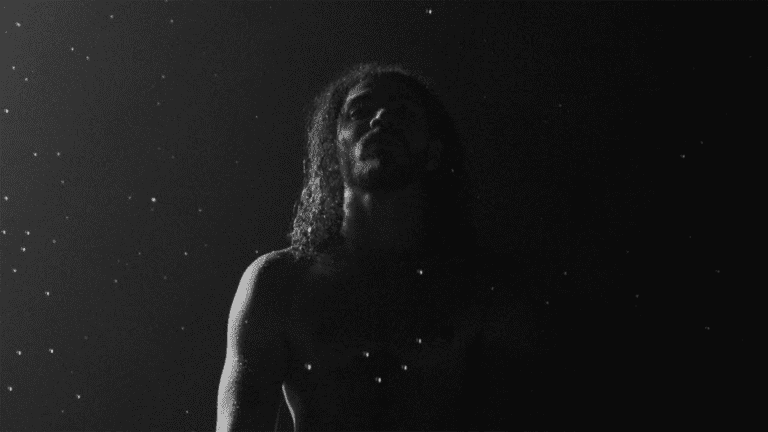
The music video, directed by Axel Chely, plays out almost like a theatrical performance set in an urban environment. There is a choreographed quality to the staging, showing that a compelling visual does not necessarily require an enormous budget or a heavy dose of bling.
Axel Chely is also the director Zamdane previously trusted with the visuals for Été solitaire, another highly conceptual video. The artist therefore appears to have found a creative team he feels comfortable with and may be looking to build that collaboration over the longer term.
