
Rémy Returns With “J’ai donné”, A Powerful Reflection on Success
Rémy is one of those rappers whose journey remains deeply rooted in Aubervilliers. Raised in the legacy of pioneering group Tandem, he came up under the guidance of Mac Tyer, who took the young…
 Written byZEZ XXI — Mazdak Vafaei Shalmani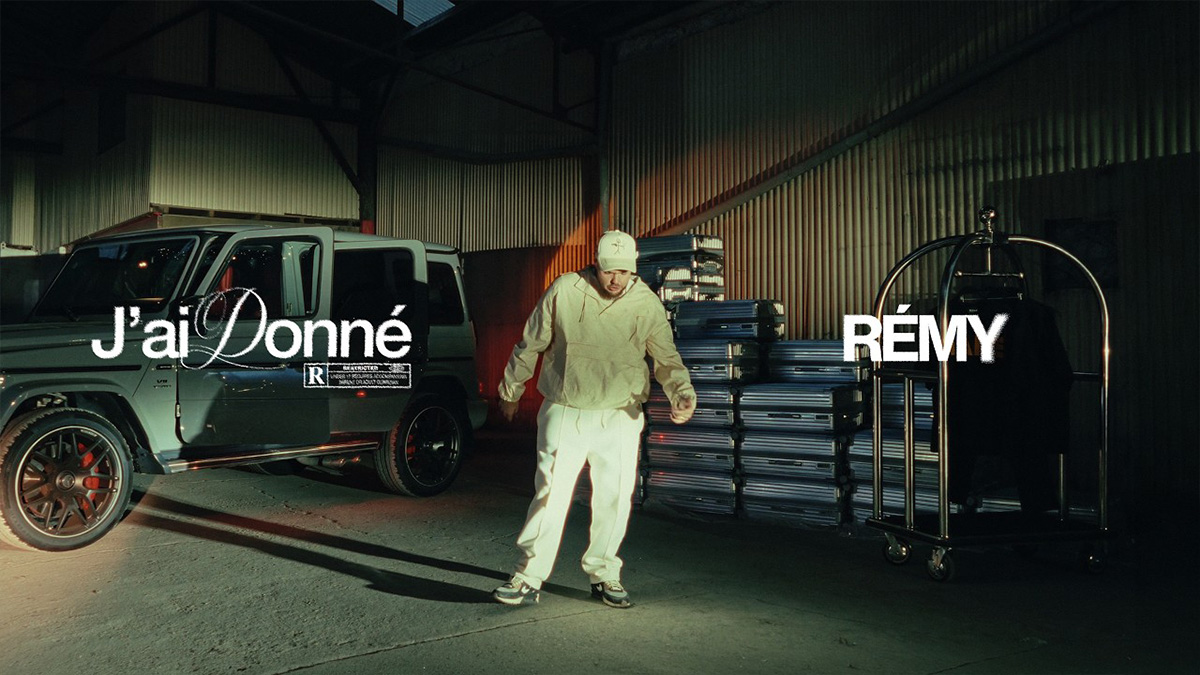
Dans cet article


Rémy is one of those rappers whose journey remains deeply rooted in Aubervilliers. Raised in the legacy of pioneering group Tandem, he came up under the guidance of Mac Tyer, who took the young artist under his wing from an early stage. Long before releasing his debut project, Rémy was already turning heads thanks to a mature pen, razor-sharp technical ability and an authenticity reminiscent of French rap’s golden era in the 1990s.
His first appearances on Planète Rap, alongside Hornet La Frappe and later Sadek, proved to be career-defining moments. It was during Sadek‘s appearance on the show that his freestyle “Reminem”, performed over “Mockingbird” by Eminem, quickly went viral. Ironically, the Detroit legend’s classic wasn’t even one of the records that had influenced Rémy the most at the time. It was another demonstration of how naturally gifted he was as a lyricist rather than simply paying tribute to one of rap’s greatest icons.
The exposure allowed him to reach a new level almost overnight. Driven by honest, deeply personal songwriting rooted in everyday reality, Rémy earned a Gold certification with his debut project. Behind that early success stood Mohand, who oversaw the beginning of his career and helped shape his artistic direction. Their collaboration eventually came to an end, however, as the producer was no longer involved in the development of Rémy‘s next two projects.
Appearing on “Le Code” with Mehdi Maïzi in 2023, just days before releasing his fourth studio album, Rémy looked back with remarkable honesty on what he described as his personal “downward spiral.” The rapper explained that commercial numbers and financial success had never really been his biggest concern. Instead, he admitted that losing the guidance of the person who had helped launch his career gradually left him feeling directionless in an industry where certainty can disappear as quickly as success itself.
More importantly, the interview revealed an artist who has become deeply self-aware. Rémy openly admitted that he has grown “tired of the streets.” Not because he rejects the values that shaped him, but because he refuses to maintain a persona that no longer reflects his everyday reality. Looking back, he explained that he once described street life “as if I’d climbed straight out of a sewer.” Today, that perspective has naturally evolved. The teenager behind “Reminem”, still living in the housing projects, has become an established artist whose life has inevitably changed. Continuing to rap about a reality he no longer experiences, he says, would amount to lying to both himself and his audience. That level of honesty—rare in today’s rap landscape—has become one of Rémy‘s defining qualities and continues to shape the evolution of his songwriting.
That personal growth is reflected throughout Rémy‘s discography. Following the releases of “Camus”, “Le Fils de la Gardienne” and “Après la pluie”, the rapper occasionally experimented beyond the lyrical street rap that first made his name. Across those projects, he explored more melodic territory and broadened his musical palette without ever abandoning the qualities that define his work. No matter how far he ventures sonically, he always finds his way back to his roots: intricate lyricism, compelling storytelling and the technical precision inherited from the great rap tradition of Aubervilliers. That consistency is one of the reasons why Rémy continues to occupy such a unique place within French hip-hop.
In many ways, his artistic journey mirrors that of several major figures in French rap. Artists often experiment with more accessible sounds before eventually returning to the style that first established their identity. Kaaris, for instance, has explored more mainstream records over the years before embracing the raw, uncompromising sound that made his name. Rémy follows a similar path: every creative detour adds another layer to his artistry, yet his writing inevitably returns to the authenticity that has always defined him.
After unveiling the single “Quelques notes”, the rapper continues this new chapter with “J’ai donné”. More reflective than boastful, the track explores the hidden cost of success, the way relationships evolve once recognition arrives, and the disappointments that often come with it. Rather than celebrating fame, Rémy delivers a deeply personal account in which success feels just as much like a burden as it does a reward.
Rémy Returns With “J’ai donné”, A Powerful Reflection on the Price of Success
The production is handled by R.A.F Beatz and Robizz. Over the years, R.A.F Beatz has established himself as one of the most reliable producers in French rap, thanks to collaborations with Bouss on “Pansement”, Némir on “F.M.E” and RK on “I Miss U”. For Rémy, the duo crafts a stripped-back yet contemporary instrumental designed to let the rapper’s lyricism take center stage. Every musical element serves a purpose: understated enough to highlight the writing, yet dynamic enough to support the bursts of technical precision that characterize his flow.
Against this minimalist backdrop, Rémy once again demonstrates why he is widely regarded as one of the finest lyricists of his generation. Rather than relying on flashy punchlines or empty bravado, he builds a narrative in which every bar contributes to the bigger picture. Beneath the technical performance lies a thoughtful meditation on fake friends, hypocrisy, financial interests and the opportunistic relationships that often emerge alongside success. It is a timeless subject in French rap, but one that Rémy approaches with a level of honesty and vulnerability that sets him apart.
The song’s central theme also echoes the work of Jul, who has repeatedly explored how money can reshape human relationships. Across several standout records, the Marseille rapper has reflected on the difficulty of distinguishing genuine loyalty from the people drawn to wealth and success.
“You never underestimate calm waters when you’re too busy fearing the flames.”
“Money isn’t what you should be afraid of. It’s the people it attracts. With deceit and manipulation, it eventually becomes the norm.”
“The Devil wears Prada. So do I—that’s how I’ll win them over.”
Through “J’ai donné”, Rémy continues a long-standing tradition in French rap where success is never measured solely by wealth or status. Instead, it becomes a lens through which artists examine loyalty, betrayal and the shifting dynamics of human relationships. While many rappers choose to celebrate material success, Rémy focuses on what happens behind the scenes, portraying a reality where recognition often brings isolation, distrust and emotional distance.
The track perfectly embodies the artistic identity Rémy has built over the years. Remaining faithful to his introspective approach, he continues to prioritize substance over spectacle and personal storytelling over fashionable trends. More than just another rap record, “J’ai donné” represents another milestone in his artistic evolution—one that reflects the perspective of a songwriter unwilling to sacrifice authenticity for commercial appeal. That consistency is precisely what has allowed Rémy to maintain a distinctive voice within the French rap landscape.
The music video was directed by BloodPict, who also handled the color grading. Staying true to the atmosphere of the song, the visual embraces a minimalist aesthetic. Rémy performs inside a garage, surrounded by stacked suitcases, creating a stripped-back environment that keeps the focus entirely on his performance and lyrics. Rather than relying on extravagant visuals, the video reinforces the emotional weight of the record through simplicity and restraint.
BloodPict has become a familiar name within the French rap scene through his work on several high-profile productions. His portfolio includes filming Gazo‘s concert at Paris La Défense Arena, as well as collaborations with the clothing brand À la French. With “J’ai donné”, he once again demonstrates his ability to enhance an artist’s vision through refined cinematography, understated direction and visuals that remain fully aligned with the music they accompany.

“`