
Kery James honors his Haitian roots with Jacmel!
“And the streets turned me into the melancholic one,” Kery James once confessed. Since his beginnings in the late ’90s with Ideal J—fueled by incendiary tracks like Hardcore and L’amour, songs that would likely…
 Written byZEZ XXI — Mazdak Vafaei Shalmani
Dans cet article

“And the streets turned me into the melancholic one,” Kery James once confessed. Since his beginnings in the late ’90s with Ideal J—fueled by incendiary tracks like Hardcore and L’amour, songs that would likely be censored today—Kery James has never stopped reinventing himself.
In 2002, in a move reminiscent of a French Nas, he dissected his past life in gang culture through Et si c’était à refaire. More than a shift toward conscious rap, it marked a return to his African roots: he collaborated with Salif Keita and brought traditional instruments into his sound. The move even earned him a playful jab from Youssoupha in a mock rap track: “Go back to rapping on your xylophones.”
Since then, the “Black poet” has become one of the moral voices of French rap. With classics like L’Impasse and Constat amer, he has forged a pen that rejects injustice and embraces non-violence as its only banner. He has defended the suburbs on stage through a celebrated theatre play, used his sharp rhetoric in the service of his community, and funded scholarships for underprivileged students. Kery James is no longer just an artist—he has become a pacifist activist, a voice that heals as much as it challenges.
In Lettre à mon public, he insists he does not see himself as a leader—he lacks, in his own words, both “the legitimacy” and the desire. And yet, he embodies a part of France that the country stubbornly refuses to acknowledge.
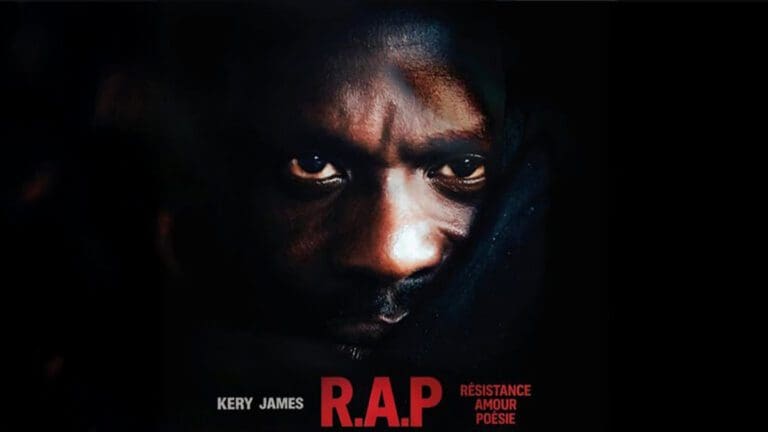
A central figure of the Mafia K’1 Fry collective, he recently released R.A.P (Résistance, Amour et Poésie) alongside a new single, Jacmel. The track is an intimate dive into his Haitian heritage—and into the immense love he carries for his mother, a recurring presence in his work since Le Combat continue. With this release, he signs his first kompa record.
Even back on Et si c’était à refaire, his tone had grown softer, his music more open. But he has never stopped exploring hip-hop’s roots—a culture born in the Bronx with the unique ability to absorb every musical influence and turn it into a new language.
With this kompa track, Kery weaves a bridge between his personal story and that of his people: “Loving your own doesn’t mean hating others.” In a world where messages of tolerance are mocked as fiercely as openly racist rhetoric once was, and where a shifting “right-wing revolution” sweeps across the West, the humanism of Kery James feels like a much-needed breath of air.
Kery James honors his Haitian roots with Jacmel!
The song’s production is handled by Sokhan. Known for his work with Hiro, he has already crafted several notable tracks for Kery James, including Le Poète noir and Marianne. As announced in the YouTube description, Kery fully embraces kompa here—a direct nod to his Haitian heritage.
Despite the more dance-oriented rhythm, he continues to rap with intensity. His lyrics sketch a life journey many listeners may recognize:
“Maman est belle
Couleur ébène
Elle vient d’la vallée de Jacques Me’
Elle a surmonté tant d’peines
J’étais con, j’étais jeune
J’voulais d’l’argent et un gun
Les flics ont défoncé sa porte
Elle n’en a pas perdu sa force
Aujourd’hui, j’me suis assagi
Son cœur s’est attendri
J’l’emmène en Afrique ou en Asie
Son sourire, une poésie”
The video, directed by Ousmane Fall—with the discreet yet unmistakable artistic presence of Leyla Sy—follows Kery back to his homeland, accompanied by his mother, who appears on screen. The result is a tender, poetic tribute.
Despite multiple retirement announcements and sharp opinions on the current rap landscape, he reaffirms his affection for the younger generation in the YouTube description: “I have nothing but goodwill for my young brothers in the new generation of rappers—I wish them all the best.”
In a context where Haiti continues to bear the heavy cost of an independence won in 1804, it is likely that Kery James chose this country to carry the spirit of his new project. He sees in it the reflection of his own mindset:
“My thoughts go to Haitians all over the world who, like me, hope that Haiti—bearing within it the R of Resistance, the A of Love and Independence, and the P of Politics—finally walks toward national Reconciliation, Peace and Prosperity. But being independent since 1804 comes with a price… one Haiti continues to pay dearly.”
Ousmane Fall also directed the visual for Dosseh À chaque jour.
