
Inès Defontaine Challenges Female Stereotypes on “Ma Belle”
“Be pretty and keep quiet.” With her new single “Ma Belle”, Inès Defontaine takes aim at an age-old injunction that continues to weigh heavily on women. Yet the French-Moroccan artist avoids blunt slogans and…
 Written byZEZ XXI — Mazdak Vafaei Shalmani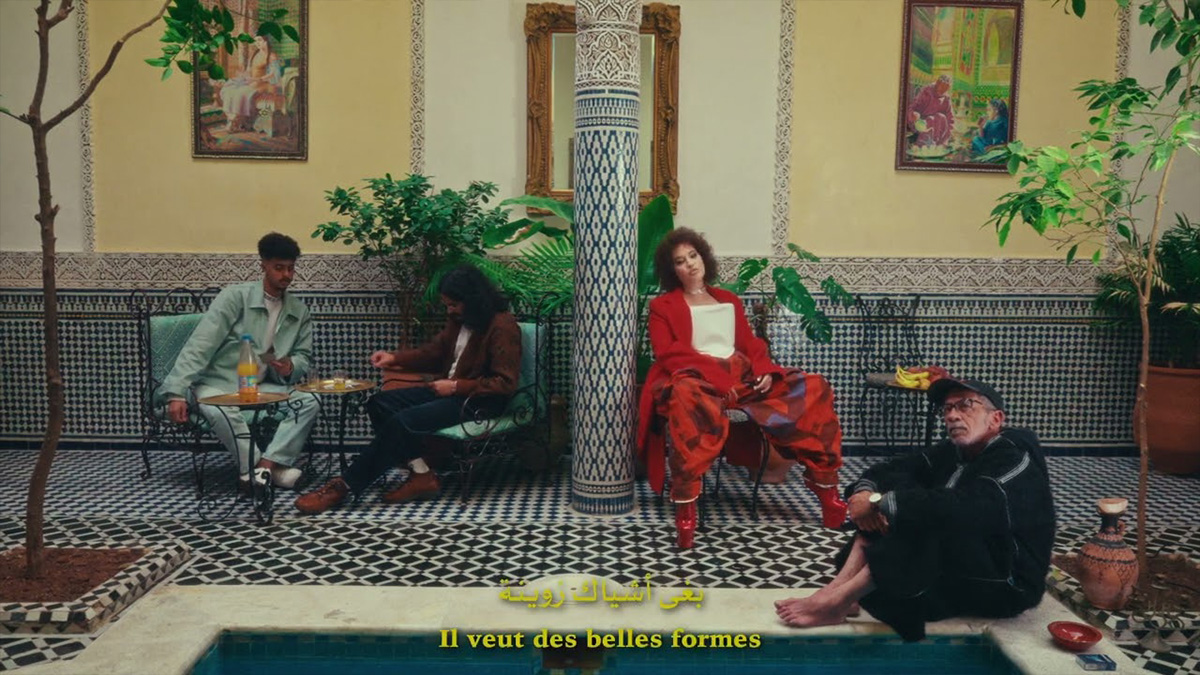
“Be pretty and keep quiet.” With her new single “Ma Belle”, Inès Defontaine takes aim at an age-old injunction that continues to weigh heavily on women. Yet the French-Moroccan artist avoids blunt slogans and heavy-handed activism. Instead, she relies on suggestion, visual imagery and metaphor to reveal what society still too often expects of women: to be watched, judged and put on display without necessarily being given the right to speak.
Released on June 19, 2026, “Ma Belle” further develops a musical world at the crossroads of pop, French chanson and Middle Eastern and North African influences. This fusion is more than a matter of aesthetics. For Inès Defontaine, it reflects a proudly embraced French-Moroccan identity and a desire to bring different cultures into conversation without having to choose between them.
Cultural fusion at the heart of the composition
The instrumental composition of “Ma Belle” was created by Inès Defontaine herself alongside Anthony Hassine. The composer previously contributed to “C’est plus l’heure” by DJ Hamida and “RGPV” by Achim. Together, they have crafted a production in which contemporary pop conventions meet richer, more organic sounds drawn from North African and Middle Eastern music.
This dual influence allows the track to resist rigid categorisation. The production supports Inès’s voice without overpowering it, leaving plenty of room for the lyrics to resonate. Beneath its immediately accessible sound lies a far more serious reflection on how women are perceived and the roles society continues to assign to them.
Being seen without becoming part of the scenery
Directed by Juliette Megevand, the music video intelligently extends this idea. Filmed around a swimming pool, it shows Inès Defontaine surrounded by characters who all appear to be striking a pose. Everyone participates in this carefully staged social performance except her. The artist remains in motion, as though refusing to become yet another frozen image or decorative object.
In one of the video’s most striking scenes, an elderly man sits at her feet. The composition almost resembles a painting: picturesque, unusual and deliberately ambiguous. Rather than offering a ready-made explanation, the video layers contrasts and leaves viewers to interpret the power dynamics running through its imagery.
Particular attention has also been paid to the cinematography. The colours, bodies, poses and poolside setting come together to create a highly polished visual world, yet its beauty never feels entirely innocent. Instead, it becomes the very space in which Inès Defontaine questions appearances and examines how women are watched, displayed and confined within carefully constructed representations.
An intimate voice addressing collective issues
Born in Paris and raised in Morocco, Inès Defontaine writes in both French and Darija. Her songs capture the experiences of her generation — those born in the 1990s — through stories of love, doubt, contradiction and the search for one’s place in an ever-changing world.
Her social awareness naturally runs through her music. Women’s rights, LGBTQIA+ communities, mental health and modern relationships are among the subjects she wants to explore. However, her approach is not about turning every song into a manifesto. Inès favours a sensitive, nuanced style in which personal experiences bring wider social issues to the surface.
After releasing two singles in 2026, “Miskina” followed by “Ma Belle”, Inès Defontaine is now preparing her debut project, due to arrive towards the end of the year. This next chapter should allow her to further define a musical world where French pop meets Morocco’s musical heritage — while asserting a voice that refuses, quite literally, to remain silent.
