
RVZMO: “I’m Not Trying to Make a Viral Song That Disappears Overnight”
Interview – RVZMO Opens Up on À Cœur Ouvert His roots You come from Saint-Ouen, a city that has produced a growing number of rappers in recent years. Was there an artist from your…
 Written byZEZ XXI — Mazdak Vafaei Shalmani
Dans cet article
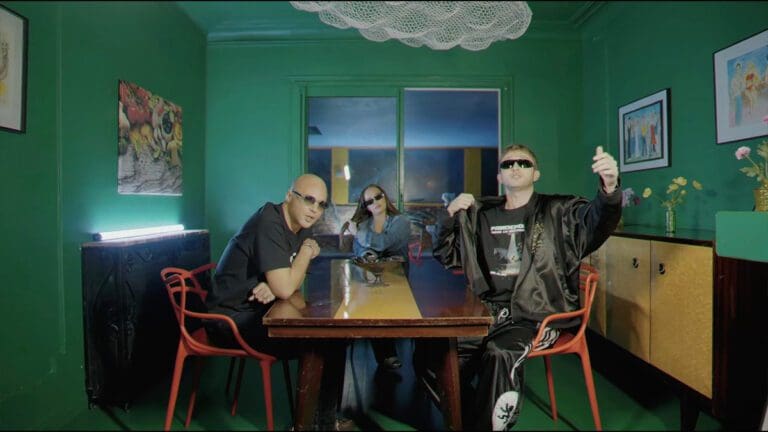
Interview – RVZMO Opens Up on À Cœur Ouvert
His roots
You come from Saint-Ouen, a city that has produced a growing number of rappers in recent years. Was there an artist from your neighbourhood whom you looked up to when you were younger? More broadly, which rappers helped shape your musical culture?
RVZMO: Of course. There has always been a real musical culture in my neighbourhood. There is even a recording studio right in the heart of it.
When I was younger, Nathy, known in particular for “Le son qui tue” with Rohff, lived in the same building as me. I have always considered him family because of how close we were and because of our shared background. I would not necessarily say that I saw him as a role model, but there was obviously a musical influence.

As for the rappers who shaped my musical culture, I listened to a lot of American rap for the flows and production, but I also listened to a huge amount of French rap for the lyrics and the messages. There are honestly far too many names for me to list.
Getting started
Today, many people consider you one of the finest lyricists of your generation. But what originally drew you to rap? Did it begin with writing and lyrics, or was it the music, the production and the sounds that first made you want to rap?
RVZMO: First of all, I would like to thank everyone who considers me one of the best of my generation. But there are so many artists with incredible pens, whether they belong to my generation, the older generation or the younger one.
You have to understand that I have always enjoyed writing, about anything and everything. But sounds and production have also had a major influence on me. Sometimes, simply listening to a beat can give you the motivation to work out, to write or to overcome something.
Production therefore has a huge influence on me. In my view, it represents 50% of a track.
Being recognised early
In 2021, Booska-P named you as one of the rappers to watch. You later joined the AllPoints ecosystem. You experienced a degree of recognition fairly early in your career. Looking back, did that early exposure give you confidence, or did it also create a certain amount of pressure?

RVZMO: (Laughs.) As I say at the end of my Booska-P freestyle: “I genuinely thought I should have been in the previous year’s eleven, in 2020.”
But everyone has their time. I was very proud to be included in the 2021 selection. That was followed by my signing with Believe.
I have always believed in myself and in everything I undertake, but of course, everything that happened during that period gave me even more confidence. My friends and family, my neighbourhood and my city were supporting me. Then you also begin to receive recognition from some of the biggest names in the industry, so naturally, that gives you a great deal of confidence.
We all experience pressure every day, in every area of life. You simply have to learn how to manage it. That is actually where the title of my “Sans pression” freestyle series came from. Those freestyles are what first brought me wider recognition.
100 Moi: a defining debut project
In 2023, you released 100 Moi. It is a very raw, rap-focused project that seems driven by a desire to showcase your technical ability and your writing. Looking back, do you see the album as a calling card? A way of saying: “This is who I am”?
RVZMO: “100 Moi” was a calling card in some ways, but not entirely. Before that, I had already released quite a few tracks and freestyles on social media. I had also appeared on a number of radio shows to demonstrate my ability as a rapper.
I would describe that raw first project more as the culmination of everything I had done up to that point. But it was not enough to fully understand who I am, even though listeners could already begin to get a sense of the person behind the music.
The collaborations on 100 Moi
On 100 Moi, you worked with DA Uzi, Nahir, So La Lune and Lawiloo. Why those artists in particular? Was there already a genuine artistic or personal connection between you?
RVZMO: Every collaboration on that first project was with family. Personal relationships matter enormously to me.
Nahir, DA Uzi, So La Lune and Lawiloo, who has been a friend of mine since childhood, are all friends and brothers to me outside music. It therefore felt essential to have them involved in my first project.
Looking back on the first album
When you listen to 100 Moi today, do you completely recognise the rapper you were at the time, or do you feel that you still had a great deal to learn before reaching À Cœur Ouvert?
RVZMO: There are always things to learn, every single day. But at that point in my life, the first project represented me perfectly. That was me. That was RVZMO.
During the recording of the project, I had already started experimenting with more open and melodic tracks, including songs on which I sang a little more. However, I wanted “100 Moi” to remain a very raw project. I was saving that more open side of my music for a potential follow-up.
Three years between the two albums
More than three years passed between 100 Moi and À Cœur Ouvert. At a time when many artists release several projects a year, that gap may come as a surprise. What happened during that period? Did you need to take a step back, live through certain experiences or simply allow your writing to mature before returning with a new album?
RVZMO: Had it been entirely up to me, I would easily have released several projects a year. An artist should provide content as often as possible. You need to remain present.
Certain things did happen during that period. They are quite personal and need to remain private. I learnt a great deal about everything. Explaining the entire situation would take hours. (Laughs.)
I share some of the responsibility for what happened, but I am not responsible for everything. There is the music business, and then there is real life. It is a very long story.
À Cœur Ouvert: a more personal and disillusioned album
À Cœur Ouvert is often described as a more personal and mature album. That is true, but what struck me most was the sense of disillusionment that runs through almost the entire project. You explore themes such as betrayal, disappointment, loneliness, mistrust and the darker realities of success. Was there a particular event in your life that led you to make such an introspective album?
RVZMO: As the title suggests, the album is called “À Cœur Ouvert”, meaning “With an Open Heart.” Throughout the project, I open up about many of the things I have experienced in my real life.
Between the two projects, I grew up and matured. I also became calmer. I have always been someone who thinks a great deal, sometimes a little too much. Even when I am surrounded by people, I have always been fairly solitary and tended to keep to myself. I do not bother anyone, and no one bothers me.
When you begin to receive exposure and there is a little more attention on you, all kinds of people start emerging from the shadows. You have to deal with jealousy, betrayal, opportunists, hypocrisy, disappointment and mistrust.
Despite all of that, I also experienced many good times. It was not constantly sad, but sadness was often part of it. People do not necessarily envy what you have. Sometimes, they envy who you are. I needed to express how I felt about all of that.
In the anime “Naruto”, there is a character named Obito whom I identified with in many different ways. The album cover is actually a reference to one of the anime’s most iconic scenes.

“I lost, I learnt, I understood”
There is one line that particularly stood out to me. You reinterpret Julius Caesar’s famous phrase, Veni, vidi, vici, by saying: “I lost, I learnt, I understood.” I found the line extremely powerful. Does it ultimately sum up your journey, your vision of success and everything you have learnt since the beginning of your career?
RVZMO: Yes: “I lost, I learnt, I understood.” It is like learning how to walk. You first have to fall.
It happens in three stages. You fall, so you lose. You get back up, so you learn. Then you walk, which means you understand.
Veni, vidi, vici.
A more clear-eyed generation?
For a long time, French rap was dominated by braggadocio: artists had to show that they were in control, that they had won and that they were the best. On À Cœur Ouvert, you also discuss success and business, but with far greater clarity. Do you think your generation has become more realistic, or even more cynical, than the generation of the 2000s?
RVZMO: Honestly, no. I think today’s generation is actually a little less realistic.
When you listen to most of the music being released today, everyone appears happy and everything sounds celebratory. There are fewer and fewer meaningful messages. Yet I do not think that image reflects what everyone is genuinely experiencing behind the scenes.
That does not take anything away from the talent or the work of the artists who make that kind of music extremely well. As artists, we have to try to adapt to our time and to what currently works, without completely changing our identity or abandoning who we are.
In 2026, music is no longer consumed in the same way it was during the 2000s. Today, everything revolves around short-form content. Hardly anyone can sit through an entire album in the way people once did.
There are too many releases every week, too much new material and an enormous number of talented, highly capable people. You therefore have to find the best possible way to stand out.
The producers: a long-standing partnership with Seezy
Several producers worked on À Cœur Ouvert, but Seezy appears more frequently than anyone else. You have been working with him for a long time, as he was already producing Sans Pression 7 at the beginning of your career. What has allowed this partnership to last for so many years? What does Seezy bring to your sound that other producers do not?
RVZMO: As I mentioned earlier, personal relationships matter enormously to me. Seezy is someone I genuinely appreciate.
We met in 2020 during a writing and recording camp that Fianso had invited me to attend. Seezy happened to be there as well. We made music together, and everything has always gone very well, both in terms of the chemistry between us and the way we understand a track.
I believe he is one of the best in his field. But once again, there are so many talented producers. There are far too many to name, and every producer has their own distinctive touch.
We continued working together because our respective labels were also collaborating. His manager was my manager as well.
The collaborations: Ninho, DA Uzi and Nahir
The major guest appearance on the new album is obviously Ninho on DUR. But DA Uzi and Nahir, who were already featured on 100 Moi, also return. Is that a sign that you have built a genuine relationship over the years? Why did you want them to be part of this new chapter in your career?
RVZMO: To be completely honest, Nahir and DA Uzi genuinely are family to me. You can find me spending time with them outside music.
For an album on which I wanted to open up, who could have been better than two artists who know me almost inside out?
I would have liked to work with other artists as well, but when you lose some of your hype, people are not always willing to collaborate with you. Talent is not always enough. That is the game. It is a business.
As for Ninho, we met through DA Uzi because we have many mutual friends and acquaintances. I really had the opportunity to get to know him on the day he and DA Uzi came to my neighbourhood to shoot the video for “Crois-moi.”
We spoke a great deal, there was an immediate connection, and we told each other that we would collaborate one day. I liked what he was doing, and the feeling was mutual. Once again, we all share the same wider circle, which made everything easier.
Ninho
Ninho is renowned for his writing, his memorable lines and his ability to tell stories while remaining highly accessible. Do you feel artistically close to him? Is he one of the rappers who influenced the way you write?
RVZMO: Ninho is an incredibly talented artist who no longer has anything to prove in the rap world.
There is not a major age difference between us, but I listened to him constantly when I was still going to school in 2016 and 2017. At that time, especially for young people, he was the face of rap.
I think he opened the door for all the people who now feel confident enough to start rapping. Before that, the scene felt more restricted.
When I was genuinely starting out and writing my first lyrics in 2016 and 2017, he obviously influenced the way I wrote. Over time, through experience and working in the studio, I eventually managed to develop my own identity.
Writing above everything else
People often describe you as an exceptional technical rapper. Personally, what strikes me most is your writing. Your tracks are filled with double meanings, references and lines that sometimes require several listens to fully understand. When you write, are you primarily looking for technical skill, emotion or simply the greatest possible level of honesty?
RVZMO: As a rapper, writing is absolutely essential to me. I do not want to say things that are meaningless or untrue, first for my own sake, but also because younger people listen to my music.
I never want to influence them negatively, encourage them to make bad decisions or lead them to imitate harmful behaviour.
I try to be as honest as possible in my lyrics and to make you feel whatever emotion I am experiencing. Many people can relate to the things I discuss. We all know what it feels like to listen to someone whose experiences reflect our own.
As far as technique is concerned, flow and delivery are obviously extremely important to me. Alongside the lyrics, those elements are part of what gives a rapper their distinctive appeal.
The music industry
Today, there is constant discussion surrounding streaming, algorithms and TikTok. In your case, it sometimes seems as though you prioritise the quality of your writing over the pursuit of the most viral possible track. Is that a deliberate decision? Do you think it is still possible to build a major career while remaining faithful to that level of artistic ambition?
RVZMO: As I said earlier, you have to know how to adapt to your time. You need to use the tools available to you, and for an artist, social media remains the most powerful tool.
It allows artists to communicate and share things with their fans, while also promoting their work.
However, I am not necessarily trying to make a track go viral only for it to disappear as quickly as it arrived. Music is consumed extremely quickly these days. I am thinking in the long term.
But naturally, if one of my tracks goes viral tomorrow, I will take it. That is completely normal.
To build a career, you have to create a loyal audience. To achieve that, listeners need to become attached to who you are, what you offer and the emotions your music gives them.
A listener who is only attracted to a moment of hype will not necessarily become a genuine fan who comes to see you perform live.
What comes after À Cœur Ouvert?
À Cœur Ouvert feels like the closing of a chapter in your life. Now that the album has been released, what are your ambitions for the future? Do you already have an idea of the artistic direction you would like to explore on your next projects?
RVZMO: “À Cœur Ouvert” is indeed a chapter that I am closing. I needed to express myself in that way and to make something that felt like a confession.
I love melancholy, and I think it is something I do well. But moving forward, I want to rap. So that is exactly what I am going to do.
I want to show that I still have the same hunger I have always had.
That does not mean I am going to stop singing altogether or abandon melody, but rap will clearly be my main focus.
“`