
Morain Crew, the Firebird: From Pain to La Belle Vie
From his brother’s suicide to “La Belle Vie”, through separation, fatherhood, doubt and rebuilding, Morain Crew has turned a succession of personal trials into a deeply human musical journey. Behind the artist’s name lies…
 Written byZEZ XXI — Mazdak Vafaei Shalmani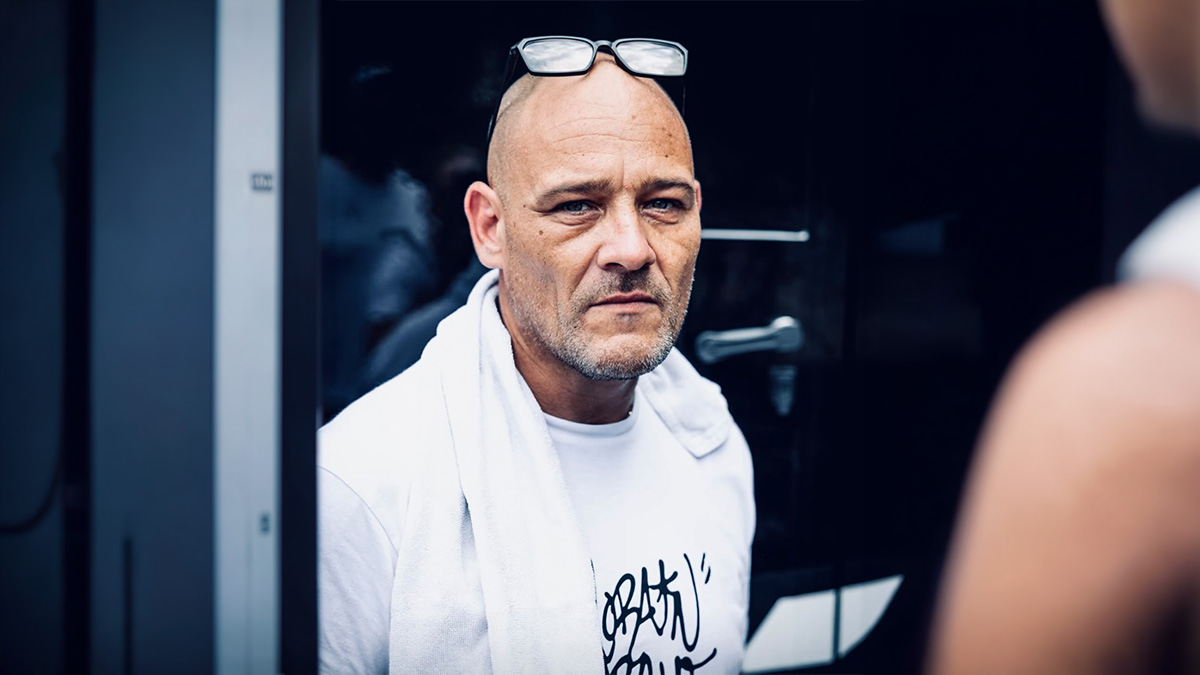
Dans cet article
From his brother’s suicide to “La Belle Vie”, through separation, fatherhood, doubt and rebuilding, Morain Crew has turned a succession of personal trials into a deeply human musical journey. Behind the artist’s name lies a collective, a musical family and, above all, the story of a man who seems to have learned how to rise again every time life tried to knock him down.
Some musical careers are told through certifications, streaming figures, sold-out tours and photographs taken in front of walls covered with gold records. And then there are stories like Morain Crew’s, where success does not necessarily mean becoming a star, but sometimes simply finding the strength to keep writing, bring a few friends together around a song, step back onto a stage or manage to speak about happiness after spending so long writing about pain.
Morain Crew has never built his story around a straightforward rise to the top. His journey is closer to the uncertain flight of a firebird: a fall, ashes, and then a return. Put together the songs he has released over the past few years and something becomes increasingly clear: perhaps what Morain Crew has been telling us all along is less the story of his career than that of his own reconstruction.

Before Morain Crew, there was a teenager from Saint-Quentin
The story begins far from algorithms and TikTok strategies. Originally from Saint-Quentin, Morain discovered hip-hop at a very young age. He belongs to a generation whose gateways into rap had names like Public Enemy, IAM and NTM, followed by Fonky Family. By the age of 15, he was already rapping with friends, performing at open mics and handing out his own CDs. There were no digital campaigns then: rap still circulated physically, through venues, streets and communities of enthusiasts, as we previously explored in “Morain Crew: Rap as an Outlet” on UrbanTrackz. His story was also told in English on Hellsinky in “Morain Crew: Hip-Hop as Redemption”.
Music, however, had not yet become his destiny. Morain went on to attend business school and gradually stepped away from his first passion. The story could easily have ended there: rap reduced to a teenage memory, a few CDs gathering dust at the back of a cupboard and that familiar sentence uttered by so many former musicians: “I used to rap back in the day.” But life would brutally reopen that door, and it would do so in the worst possible way.
The loss of his brother
Morain and his younger brother shared, among other things, a passion for rap. Then his brother took his own life. In the story Morain has shared publicly, which we previously covered in our UrbanTrackz feature about his return to rap, his brother had been deeply affected by losing contact with his children. The English version published by Hellsinky also revisits this defining tragedy. Morain suddenly found himself confronted with something that artistic ambition alone could never have produced: the need to write.
Music stopped being simply a source of enjoyment and became a language through which he could continue speaking to someone who was no longer there. Out of that impulse came À gauche de la Lune, released in 2023, a project deeply shaped by grief, memory, absence and the need to preserve a symbolic dialogue with his late brother.
The album title already says a great deal. It is not simply about looking at the Moon, but about searching somewhere “to the left” of it, as though the person who is gone might still exist just outside the frame, in an imaginary geography only the two brothers could truly understand. Morain therefore returned to rap through grief, and this is probably where the Morain Crew we know today was truly born.

Morain Crew: far more than a stage name
It is worth stopping for a moment on that word: “Crew.” It would be reductive to tell this story as though it were simply about one man locked away in a studio with his trauma. Around Morain, a small constellation gradually came together again, made up of friends, musicians, producers, directors and people close to him. DJ Fabio has been part of that adventure, while Lucas has become one of the recurring creative forces behind Morain’s musical world. This collective dimension was already visible in the portrait published by UrbanTrackz, as well as in its English-language counterpart on Hellsinky.
Perhaps this is what the Morain Crew adventure truly represents: not simply a stage name, but a way of saying that he never comes back entirely alone. In a music industry that increasingly turns artists into individual brands, Morain retains something of hip-hop’s old collective spirit: the idea of the crew, the DJ, the producer, the director, the friends appearing in videos and music being created together.
That collective dimension has become essential to his storytelling. Morain Crew tells the story of one man’s wounds, but the “Crew” tells us how he survives them.
When his brother’s story seems to repeat itself
Then came a particularly unsettling turn of events. Years after losing a brother whose distress, according to Morain’s account, had been closely connected to being separated from his children, Morain himself went through a painful separation and has spoken about becoming largely estranged from his own children.
The circumstances naturally belong to a private family dispute and should therefore be presented as Morain’s own experience rather than as an attempt to establish legal responsibility. Artistically, however, the consequences are unmistakable: Morain wrote “SOS Papa Abîmé” with Tarik Piano. It became one of the most intimate songs of his career. That period was explored in French in “Morain Crew: The ‘Battle’ for My Children” on UrbanTrackz and in English in “Morain Crew Sings for the ‘Broken Fathers’” on Hellsinky.
From that point on, the story takes on an almost dizzying symmetry. His brother had suffered after being separated from his children before eventually taking his own life. Years later, Morain found himself confronting a family situation that inevitably echoed that past. The two stories begin to mirror one another in a disturbing way, with one crucial difference: this time, Morain writes. He uses the microphone as a release valve and transforms pain into artistic material.

Talking about men’s pain without turning it into a war against women
This is also where one of the most important aspects of Morain’s position begins to emerge. In an era profoundly shaped by #MeToo, by women speaking out and by a necessary reckoning with violence and unequal power dynamics, talking about the pain of a father separated from his children can quickly be appropriated by far more ideological narratives.
Morain Crew’s message does not require that kind of opposition. He is not arguing that women have “too many rights”, nor does he frame his position as a backlash against #MeToo. That distinction was already present in UrbanTrackz’s article on “SOS Papa Abîmé” and in the version published on Hellsinky: recognising the progress made for women and the importance of their voices does not prevent us from acknowledging that a man, a father or a brother can suffer too.

That distinction matters. Morain is not trying to replace one struggle with another; he is describing a blind spot in his own life. A father can be broken. A man can cry, feel afraid or lose his footing without that vulnerability automatically becoming a manifesto against women.
In that sense, Morain is actually quite far removed from caricatures of hypermasculinity. His artistic persona is not built around the image of the invincible man, but around that of the wounded man, someone willing to expose his fractures rather than hide them behind a pose.
Music as a diary of reconstruction
From this point onward, his discography can almost be read like a personal diary. After À gauche de la Lune, Morain continued releasing music and experimenting with different sounds. Even the song titles often suggest a world shaped by melancholy, doubt, introspection and the search for balance.
Then something begins to change. With “HH”, alongside Patchooli and $nef, Morain reconnects more directly with hip-hop’s fundamentals. It feels almost like a return to the teenager from Saint-Quentin, the one who discovered rap before adult life made everything more complicated. The track and the story behind it are explored in “Morain Crew: Rap as an Outlet” on UrbanTrackz and “Morain Crew: Hip-Hop as Redemption” on Hellsinky.
A few months later came “Dansez”, and the title is almost too perfect. After spending so much time writing about death, separation and absence, Morain suddenly asks people to dance. In UrbanTrackz’s article on Morain Crew’s summer release, the artist summed up that new impulse in a few simple words: “dance is life.”
Taken on its own, it may simply be another single. Within the wider Morain Crew story, however, it means much more. This is the point where the character begins to step out of the dark room, and where music gradually stops being only the place in which he deposits his wounds.

Becoming more than his own pain
Rebuilding does not mean that Morain suddenly decides to stop looking at everything that is wrong around him. With “Je dénonce”, his focus shifts instead, and his anger becomes less personal. The artist who had written for his brother, and then about the pain surrounding his children, begins to look outward: at the people society leaves behind, at indifference, injustice and those who are too often ignored.
This shift in perspective was at the heart of UrbanTrackz’s article on Morain Crew moving into “Je dénonce”. Hellsinky also published an English-language version, “Morain Crew Steps Into ‘I Denounce’!”. It marks an important evolution in his story: at first, Morain writes because he himself is suffering; gradually, he begins writing because others are suffering too. That is often another stage of rebuilding — the moment when you finally regain enough inner space to see something beyond your own wound.
The “Crew” keeps growing
The Morain Crew adventure, however, has never been limited to autobiography. Morain continues to collaborate, keep his hip-hop roots alive and take part in collective projects. That approach can already be seen in “HH”, as well as in the projects that followed, as he multiplied collaborations and reaffirmed his attachment to a collective vision of hip-hop.
This collaborative approach perfectly reflects what Morain Crew has become. He produces, collaborates, experiments and, above all, keeps moving forward without allowing himself to be trapped inside a single chapter of his life. As the songs accumulate, he gradually stops being defined solely as the man behind SOS Papa Abîmé and becomes, once again, an artist able to explore different musical colours.
Then Sacha Distel enters the story
It would be difficult to imagine a more striking contrast. A few years earlier, Morain was writing to his late brother. In 2026, he found himself reinterpreting “La Belle Vie” by Sacha Distel.
The project emerged from a meeting with Laurent Distel, Sacha Distel’s son, who discovered Morain’s work and agreed to the reinterpretation on the condition that the spirit of the original song be respected. The full story behind that encounter and the making of the track is told in UrbanTrackz’s feature on Morain Crew’s heartfelt reinterpretation of Sacha Distel’s “La Belle Vie”.
The choice could almost serve as the final chapter of a film. Morain does not turn La Belle Vie into a simple exercise in nostalgia, but into a song about small pleasures, friendship and love. The lyrics draw in part on his relationship with Madeleine, his wife, who also appears on the chorus, as explained in the article devoted to the track.
Put everything together and the trajectory almost feels too symbolic to have been planned. A brother disappears, Morain looks toward the Moon in order to keep speaking to him, then he goes through a family storm of his own and becomes the “broken father” he puts into song. Later, he starts dancing again, starts looking outward again and eventually writes about love with the woman who shares his life. The song is called “La Belle Vie”. It would be hard to imagine a more fitting title.
Morain Crew has not turned into a fairy tale
It would be a mistake, however, to turn this story into something too neat or too perfect. Morain Crew did not suddenly become a French rap superstar overnight. His remains the journey of an independent artist building an audience little by little, song by song, encounter by encounter and collaboration by collaboration.
And that is precisely what makes the story compelling: he did not simply make it; he came back. The distinction matters. The traditional music-industry narrative is often about starting from nothing and setting out to conquer the world. Morain Crew’s story is different: he had a passion, put it aside, was struck by tragedy and then by further hardship before gradually finding his way back to music and, with it, a reason to keep moving forward.
It may be less spectacular on a promotional poster, but on a human level it is infinitely richer.
A different idea of success
Perhaps this is where the remarkable Morain Crew adventure ultimately lies. A boy from Saint-Quentin starts rapping at fifteen, puts his dreams aside for a while, loses his brother and picks up the microphone again. Around him come friends, musicians, producers, a DJ, a pianist, a partner and a growing circle of collaborators who help shape videos, songs, an album dedicated to someone who is gone, a track about paternal pain, another inviting people to dance and, eventually, one celebrating “La Belle Vie”.
Looking back over the entire timeline, perhaps the most important word in Morain Crew is not even “Morain” but “Crew”. Behind every rebirth, someone seems to be there: the brother who continues to live through the lyrics, Fabio, Lucas, Tarik Piano, fellow rappers, close friends, Madeleine and everyone else who, in one way or another, has helped rebuild what had been broken.
The firebird
The phoenix is usually imagined as something majestic and spectacular, bursting from the flames with its wings fully spread. Real-life rebirth is rarely so elegant. It hesitates, relapses, doubts, makes mistakes and sometimes moves forward in steps so small they are almost impossible to see. It writes one sad song, then another, before one day discovering that it is capable of singing about something resembling happiness again.

That is probably where Morain Crew stands today. Not at the top of a mountain, and not free from his past, but alive, creative, surrounded by people and still able to tell a story. More importantly, he now seems capable of telling stories about something other than his pain.
From À gauche de la Lune to “La Belle Vie”, it has taken several years to travel a distance that cannot be measured in miles or streams. Morain Crew began by searching for his brother somewhere in the sky. Today, he is looking forward again.
The firebird has not forgotten the flames. It has simply learned to fly again.
