
Souffrance and Jewel Usain say: “See you later.”
Souffrance, a key figure in the L’Uzine collective, continues his rise with a bold artistic evolution. His latest project, Hiver Automne, released last March, marks a true turning point in his career. On this…
 Written byZEZ XXI — Mazdak Vafaei Shalmani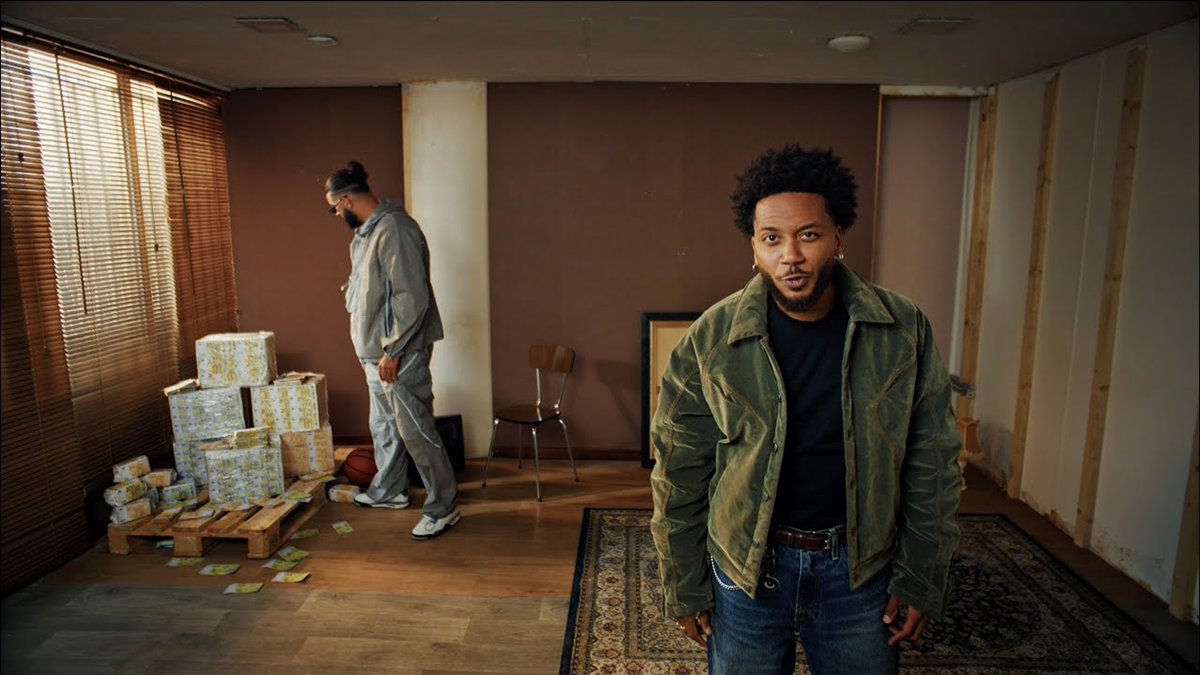
Dans cet article
Souffrance, a key figure in the L’Uzine collective, continues his rise with a bold artistic evolution. His latest project, Hiver Automne, released last March, marks a true turning point in his career. On this dense and refined record, Souf surrounds himself with heavyweights such as Jewel Usain, Soprano, and Isha. The rapper has just unveiled the visuals for his collaboration with Jewel. Known for blending trap rhythms with old-school textures, he now broadens his musical scope, guided by his long-time collaborator Tony Toxik. According to Le Monde, Souffrance embodies a rapper who stands apart — a craftsman of words who rejects both the glorification of street life and the illusion of easy success.
While venturing into more pop-tinged soundscapes, the artist’s message remains as sharp as ever. He continues to denounce the excesses of materialism and the spiral of violence consuming modern society. On this track, he joins forces with Jewel Usain, a lyricist equally committed to precision and substance, for a dialogue of rare depth and sincerity.
Souffrance and Jewel Usain say: “See you later.”
The production, this time handled not by Tony Toxik but by Stab, leans toward a more classic and intentionally contained approach. Known for crafting Phœnix for L’Uzine, Stab has also collaborated with Youssef Swatt’s on Nostra Culpa and with Furax Barbarossa on Freestyle de la goutte d’eau. The instrumentation remains minimal yet impactful — perfectly aligned with Souffrance’s signature style: understated, but razor-sharp.
The punchlines keep coming:
“I told you to fuck off with your seventeen hundred a month
And you look at me like I’m a homeless man refusing a roof
Or a drunk old man refusing a liver.”
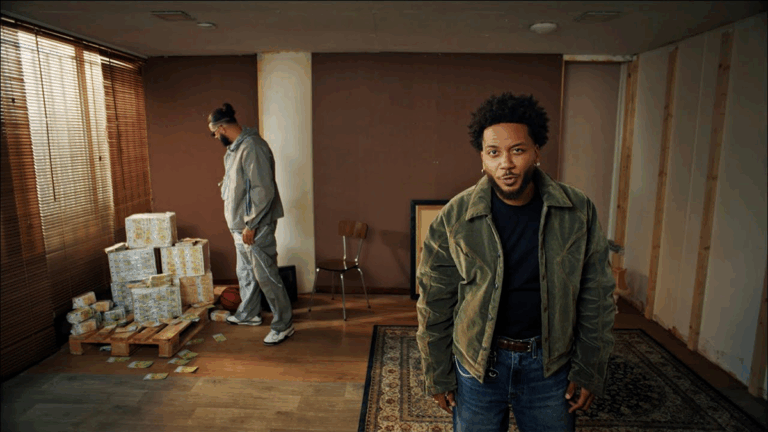
The video, directed by Joshua Megüira and Khidao, extends the project’s minimalist and introspective tone. Joshua Megüira previously directed Vide for Sicario, while Khidao — recently behind the powerful visual for Bordel by Kekra — oversaw the entire visual direction of Jewel Usain’s latest project. Conceptual and stripped-down, the video places the two rappers in a single fixed-shot setting — a static frame that lets performance take center stage. No Ferrari, no over-the-top imagery: here, authenticity replaces extravagance. The intensity lies in the words, the glances, and the raw emotion that fills the frame.
