

Djadja & Dinaz continue to carve out their own unique legacy within the French rap landscape. In 2025, the duo from Meaux released “Terminal 7”, a new album that further expanded a discography already defined by a level of consistency that has become increasingly rare. During its first week alone, the project sold nearly 22,000 copies before quickly earning a platinum certification just a few months later. Another major achievement that once again confirms the special place the duo holds in French rap culture.
Their journey feels even more remarkable when looking back at their turbulent beginnings and the legal controversies surrounding the use of real firearms in some of their early music videos. Since then, Djadja & Dinaz have managed to evolve without ever losing their artistic identity or the strong connection they maintain with their audience. During an appearance on Fred Musa’s iconic radio show “Planète Rap”, the two artists even admitted that they had never seriously considered going their separate ways.
At a time when many legendary French rap groups have eventually split up or pursued solo careers — from la Sexion d’Assaut to MMZ and 13 Block — the duo stands out as one of the rare exceptions. Alongside PNL, they represent that increasingly uncommon ability to preserve artistic chemistry over the years. A powerful symbol when remembering that their very first project was already titled “On s’promet” (“We Promise Each Other”). A promise they still seem determined to honor today.
That artistic continuity can also be heard in their latest single “À qui la faute”. Floating somewhere between nocturnal melancholy, atmospheric production and raw introspection, the track perfectly captures the duo’s ability to move seamlessly between hard-hitting street rap and more emotional, melodic records. Since day one, Djadja & Dinaz have refused to lock themselves into a single style, naturally balancing street narratives, introspection and melodic sensibilities. A versatility that likely explains their longevity.
Djadja & Dinaz ask themselves: “À qui la faute?”
On Spotify, the instrumental composition is credited to Cemo44. Slow, hazy and almost hypnotic, the production perfectly complements the mood of the song. Staying true to themselves, the two rappers speak about their reality without falling into forced optimism or exaggerated glorification of street life. Their strength lies precisely in that constant lucidity about their environment and the consequences of the lifestyle they describe.
As often with the duo, some lines immediately stand out because of their honesty:
“C’est la jungle y’a les braves y’a les buffles, je voulais pas faire la guerre mais j’ai dû, ça sert à rien de causer, posé je médite”
“Ils sont remplis de vices je les ai vus, j’ai pris mes distances, petit frère tu grandis vite fais gaffe à ce qui se passe”
Behind its apparent simplicity, “À qui la faute” almost feels like a letter addressed to those growing up in the same difficult environments. The track moves forward without any heroic posturing, carried instead by a cold melancholy and a lucid sense of resignation that have always defined the duo’s writing style.
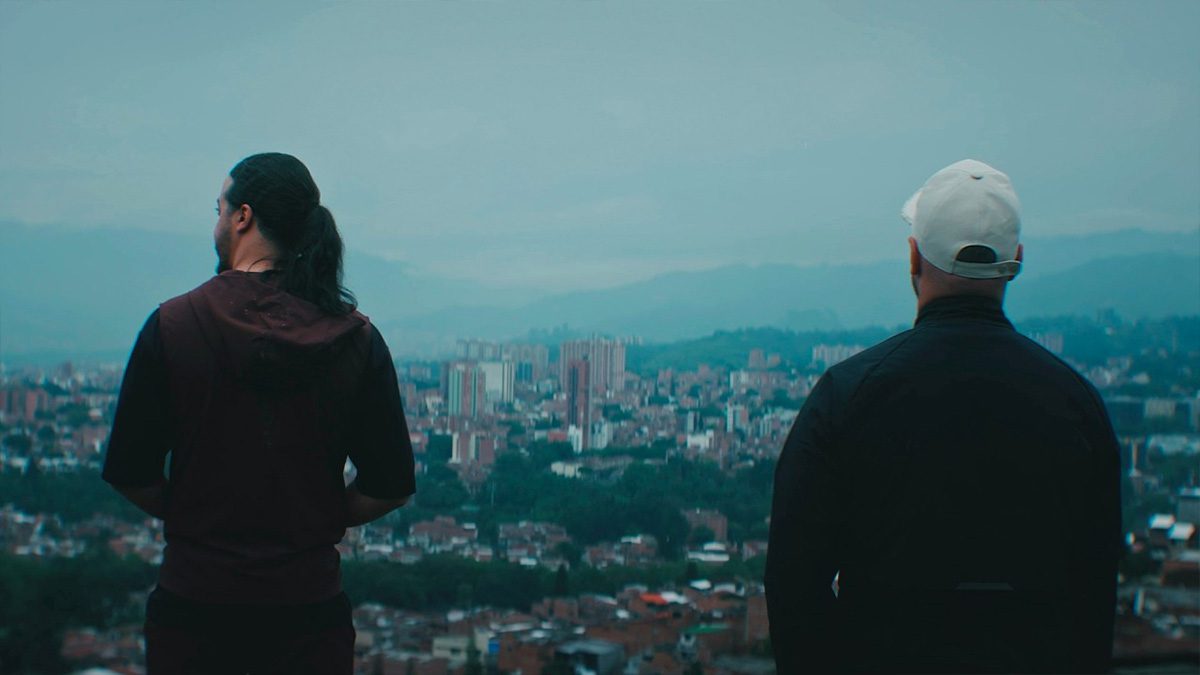
The music video further strengthens that atmosphere. Shot in Colombia, around Medellín, on lands associated with la Madrina and Pablo Escobar, the visual benefits from a particularly polished direction handled by 10 Creation. The collective had previously worked with the duo on “Tu sais” and “Les Bases”, but also collaborated with Benab on “À jamais” and with GLK on “100 Pas”.


