

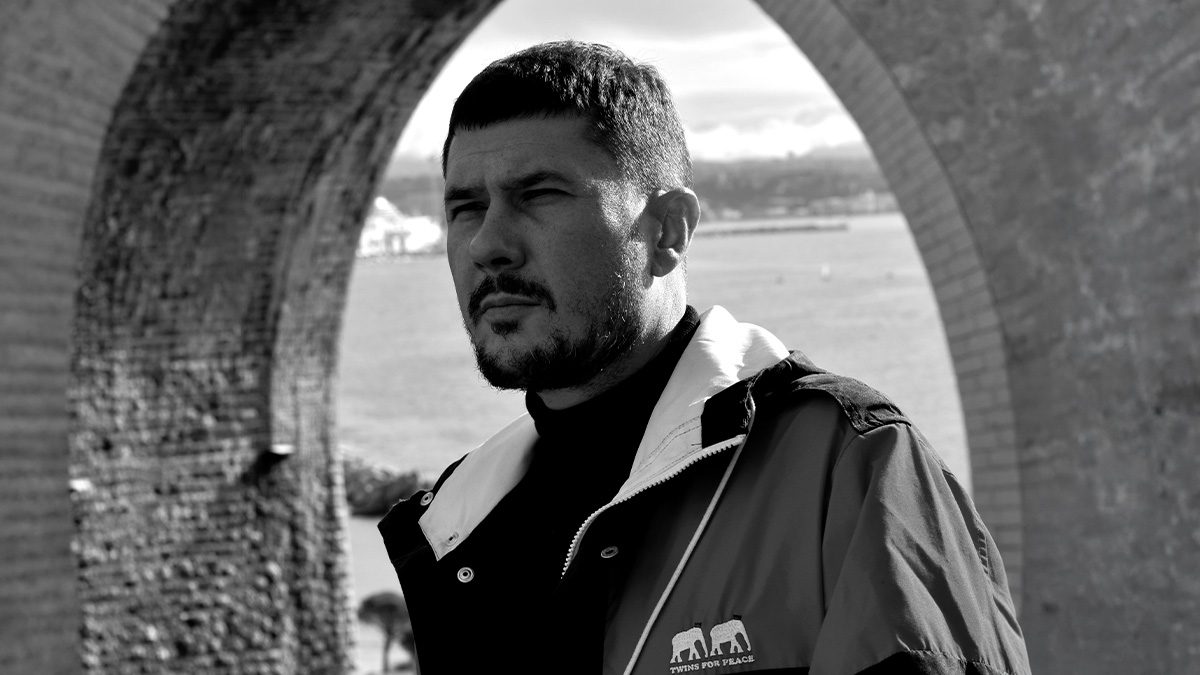
Introduction / Artistic Direction
The new project “L’Éveil” marks a new chapter in Flem’s artistic journey. A project created with a very specific mindset, almost like making a debut album all over again:
“I was in the mindset of making a first album. Doing things as if it was the beginning… or the end, it doesn’t matter. No calculations, no trying to follow trends, just being connected to the moment and to the present.”
While his previous project carried strong Malian influences, Flem refuses to see this new work as a break from his past:
“In reality, it’s not that different. In ten years, I’ve been to Mali six times. That country exists in all my projects. Every kind of music we listen to today is connected to Africa, whether it’s rock, rap or even electronic music.”
With “Nomades”, created notably alongside Vieux Farka Touré, the artist explored a deeply musical and cultural approach. With “L’Éveil”, he returns to something more personal:
“Mali is still there, just like France. My music remains mixed and multicultural.”
For Flem, there is no real opposition between evolution and continuity:
“Everything is continuity. Even rupture is part of it. Mixing influences is endless, just like cooking. You simply have to do it with taste. L’Éveil is an evolution.”

Introspection also plays a central role throughout the project:
“Everything I talk about is personal. My travels, my life in France… all of that is part of me. In every work, an artist leaves a piece of themselves behind. Introspection and self-reflection are essential. L’Éveil is simply Flem in 2026.”
Building the Project
“L’Éveil” came together in a very instinctive way, without rigid concepts or predefined directions:
“In the studio, very naturally. Some lyrics were written directly on top of the music, others already existed. There was no global vision from the start, just the desire to create what I love without locking myself into one style.”
That approach also explains why the media sometimes struggles to categorize him:
“That’s exactly why the media sometimes has trouble labeling me… and honestly, so do I.”
The creative process often begins alongside pianist Mattias Mimoun:
“I bring the words, he brings melodies and rhythm. That’s how the work starts.”
Raised on 2000s rap music, Flem also keeps a strong attachment to the album format:
“Back then, singles existed, but they were part of a bigger project.”
Musicality & Evolution
Rap, trap, melodic tracks — diversity remains at the heart of his artistic identity:
“Diversity is my lane. If I stay in the same place creatively, I get bored.”
His writing style relies more on rhythm and vocal placement than pure melody:
“I play with words more than I play with notes.”
That also explains why he frequently collaborates with singers who can bring different textures and emotions into his music.

When it comes to the term “urban music”, Flem remains highly critical:
“There’s good music, and there’s the rest. The genre itself doesn’t really matter.”
The artist also criticizes the way the music industry labels artists:
“Vianney is considered pop because he’s white, while Gims becomes ‘urban’ because he’s Black? Racism has a real place inside the industry.”
Mali & Identity
Flem’s relationship with Mali began almost by accident:
“It all started with a friendship. A friend from high school invited me to stay with his family in Mali after graduation.”
But the power of Malian musical culture deeply transformed his artistic path:
“When you discover Malian music culture, you can’t remain untouched by it.”
Collaborations
On “L’Éveil”, Flem invited two artists: Manda Sira and Ladj.
Ladj, whom he met in Tombouctou during the “Festival au désert”, comes from a reggae background and collaborates notably with Manjul and the Danakil collective.
Manda Sira, whom he met during the “Nomades” tour, represents for him:
“A form of modernity rooted in ancestral heritage.”
She is currently preparing her debut EP alongside members of the legendary duo Amadou & Mariam.
For Flem, choosing collaborators remains above all a human decision:
“Talent, and human connection.”
Production & Studio Work
The project was developed with the structure 123 Test at the legendary Planète Sun studio in Puteaux, a place where artists such as NTM, 4MyPeople, Sniper and Dosseh have all recorded.
Flem also works closely with sound engineer Geoffrey Ferreira, as well as pianist Mattias Mimoun and beatmaker Medhi Zehar.
Over time, his artistic vision has become increasingly precise:
“I love today’s sounds just as much as the older ones.”
Live Performance
The stage remains a central part of his identity:
“I built myself through live performance, always with musicians rather than DJs. That’s my strength.”
In an era dominated by assisted performances, Flem embraces a far more organic approach:
“No backing tracks, no autotune. On stage, you can’t fake it.”
Among his recent highlights, he mentions the release party held at Nouveau Cap in Aulnay-sous-Bois, an iconic venue that has hosted artists such as Kery James and Souffrance.
Beyond Music
Alongside music, Flem also released a book titled “Le retour de Niafounké”, where he explores his connection to Mali, his travels and his encounter with Vieux Farka Touré.
The book also details how part of his debut album was recorded there. It is available through FNAC and bookstores.
Final Question
At its core, what does “L’Éveil” truly mean to Flem?
“It means being connected to yourself and to the present moment. Not lying about who you are. L’Éveil is simply Flem, today.”


