
Orelsan vs. the Far Right: Did French Rap Lose Its Political Soul as It Became Mainstream?
By unveiling “XXX” during his concert in Bordeaux, Orelsan has taken direct aim at the far right and French television channel CNews. The statement follows the political themes explored in “L'Odeur de l'essence,” while…
 Written byZEZ XXI — Mazdak Vafaei Shalmani

Dans cet article
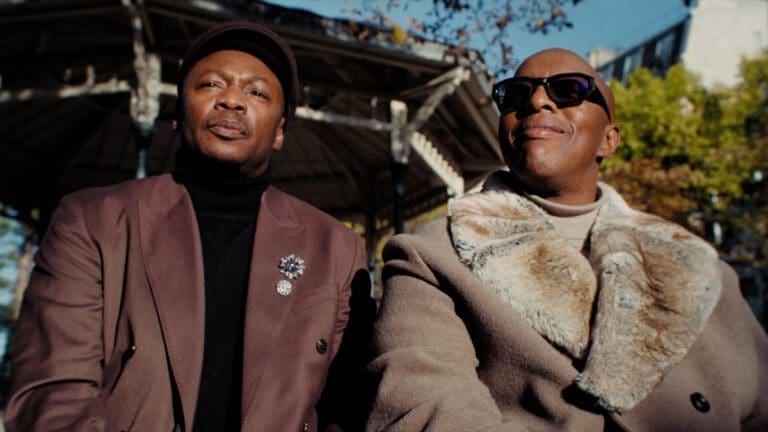


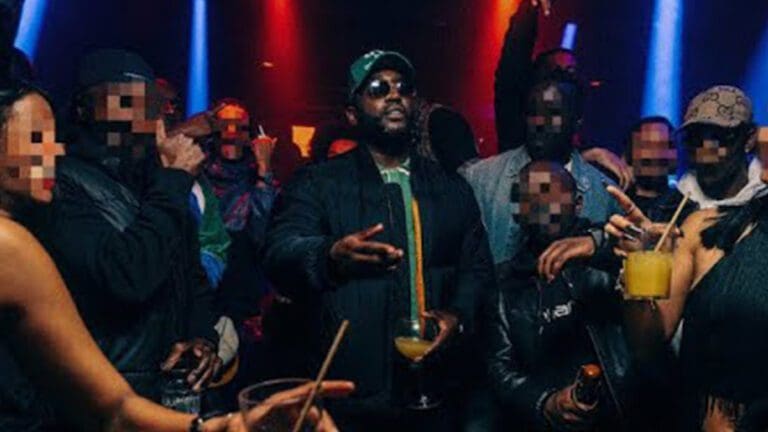
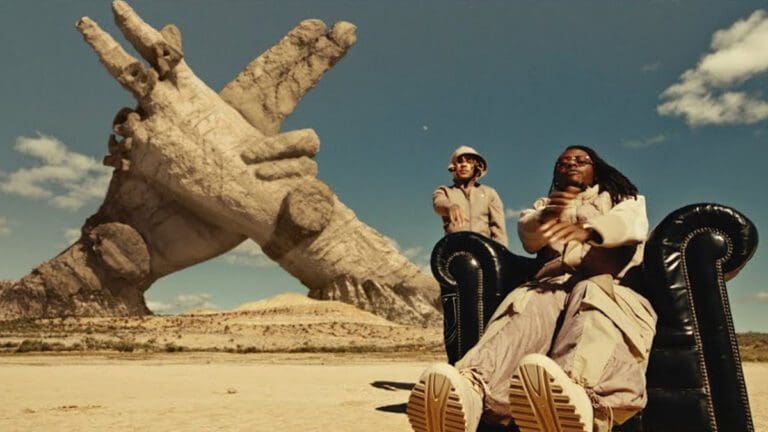
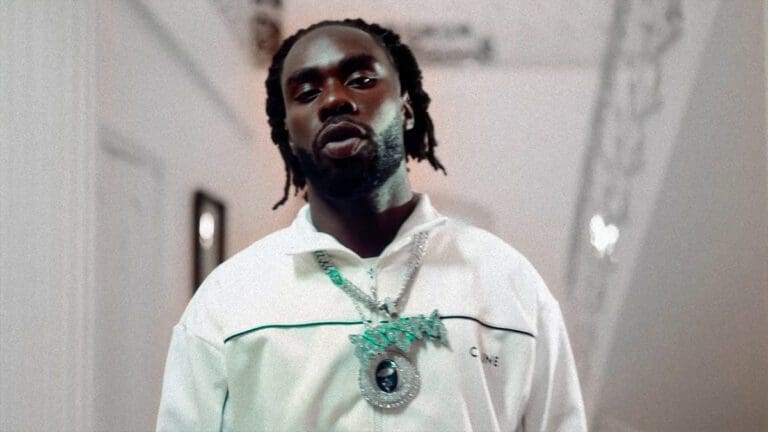
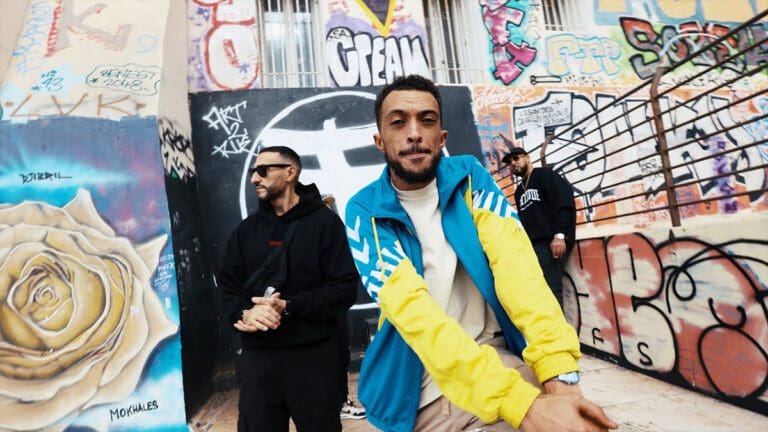
By unveiling “XXX” during his concert in Bordeaux, Orelsan has taken direct aim at the far right and French television channel CNews. The statement follows the political themes explored in “L’Odeur de l’essence,” while raising a broader question about French rap’s sometimes ambiguous relationship with politics. As Kery James argues that rap has been stripped of its original purpose and Oxmo Puccino declares that the genre as he once knew it no longer exists, one question becomes increasingly difficult to ignore: did rap become so popular precisely because it gradually abandoned its rebellious spirit? It is a paradox that rock music encountered decades earlier.
Orelsan: From “Civilisation” to a Direct Attack on the Far Right
On October 27, 2026, at the Arkéa Arena in Bordeaux, Orelsan unveiled an unreleased track entitled “XXX.” The Normandy-born rapper openly expressed his opposition to the far right, specifically targeting the French news channel CNews.
He declared that he did not want fascists listening to his music, before describing himself as the opposite of CNews.
It was a particularly explicit statement from an artist whose political positions have often been expressed through more indirect observations.
The performance quickly attracted media attention, including coverage from Le Parisien and Générations. The track was announced for release during the night of October 29–30.
However, this is far from Orelsan’s first political song.
In November 2021, with “L’Odeur de l’essence,” the lead single from his album Civilisation, he delivered an exceptionally dark portrait of French society.
The rise of political extremism, distrust of institutions, conspiracy theories, identity-related tensions and the environmental crisis all appeared in a track depicting a deeply divided country.
Even the visual identity of Civilisation, drawing on the symbols of the French Republic, carried an unmistakable political dimension.
At the time, TF1 Info highlighted the political nature of the song.
Yet Orelsan did not publicly align himself with a particular political party. Instead, he described the contradictions and failures of contemporary society without explicitly endorsing a candidate or calling on listeners to vote in a particular way.
With “XXX,” his approach appears different.
The rapper is no longer simply documenting social divisions. He is directly identifying an ideology he rejects.
This shift had already become apparent in June 2026, when Orelsan criticised the far right during the Boss Cypher, notably targeting events organised by the nationalist collective Le Canon français in Caen.
His Bordeaux performance therefore confirms a political stance that had already been emerging, but which is now being expressed with unusual clarity.
This evolution is particularly interesting because Orelsan built much of his artistic identity around self-deprecation, social observation and personal contradictions, rather than a permanently militant image.
Orelsan — L’Odeur de l’essence (Official Music Video)

Diam’s, Svinkels and Sofiane: A Long Tradition of Political Resistance
French rap has maintained a confrontational relationship with the Front National, renamed the Rassemblement National in 2018, for decades.
During the 2000s, Diam’s became one of the most prominent examples of this political opposition.
With “Marine,” released in 2004 on her album Brut de femme, the rapper directly addressed Marine Le Pen and openly challenged the ideology of the Front National.
At a time when the far right was still widely treated as politically unacceptable across much of the French cultural establishment, Diam’s adopted an unmistakably confrontational position.
She did so while her commercial popularity was rapidly increasing.
Diam’s — Marine (Official Music Video)

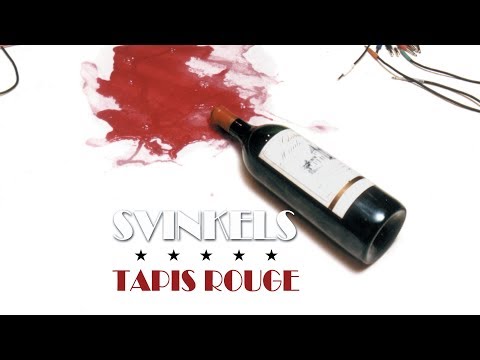
Even earlier, the French rap group Svinkels had attacked the far right with “Front contre Front,” released on their 1999 album Tapis rouge.
The song directly condemned neo-Nazi ideologies and racism.
In a 2018 interview with Le Bon Son, the group’s members explained that the track emerged from a genuine desire to become politically involved.
They also warned about the gradual normalisation of far-right ideas in public debate.
Svinkels — Front contre Front
In 2017, Sofiane, also known as Fianso, approached the subject differently with “Marion Maréchal-Le Pen.”
Disguised as an ironic love declaration, the track confronted the world of France’s working-class suburbs with that of the former far-right member of parliament.
The song generated considerable controversy, as reported by TF1 Info in May 2017.
However, artistic provocation should not automatically be confused with political activism.
During an interview alongside Virginie Despentes, Sofiane described the track as a humorous exercise rather than an attempt to deliver an explicit political message.
This example illustrates how rap can address politics through satire without necessarily expressing partisan allegiance.
Médine and Booba: Politics Hidden in the Punchlines
Médine has repeatedly addressed political issues throughout his career.
On “KYLL,” his collaboration with Booba, released in 2018 and accompanied by a music video in January 2019, Médine refers to Marine Le Pen through the image of a piñata ordered for a birthday celebration.
For Médine, political confrontation is not an occasional artistic choice. It is a defining feature of his writing.
His work regularly explores the relationships between religion and secularism, discrimination, colonial history and the place of people from immigrant backgrounds within French society.
Yet political criticism is not limited to rappers traditionally classified as conscious artists.
It also runs through street rap, hardcore rap and commercially successful productions, sometimes appearing as a single provocative punchline.
This diversity makes it difficult to reduce hip-hop to one ideological position.
We previously explored this contradiction in our UrbanTrackz feature “Is Rap Right-Wing?”.
Médine feat. Booba — KYLL (Official Music Video)

French Rap Is Often Associated With the Left, but Its Artists Are Far From Politically United
It would be misleading to treat French rap as a politically homogeneous movement.
The case of Gims illustrates this complexity.
In June 2021, the singer appeared in a video circulated during a campaign event for Valérie Pécresse, then the incumbent president of the Île-de-France regional council.
The appearance was interpreted as political support for the centre-right candidate, as reported by Le Figaro in June 2021.
Gims subsequently clarified that he supported Pécresse’s initiatives for young talent, rather than her candidacy in the 2022 presidential election.
Nevertheless, the episode illustrates an important reality: being a rapper does not automatically imply political allegiance to the left.
Similarly, condemning racism, police violence or social inequality does not necessarily mean supporting a particular political party.
There is a difference between social protest, deeply rooted in hip-hop history, and explicit electoral engagement.
It would also be inaccurate to suggest that rappers have completely abandoned political debate.
“No Pasarán”: When Twenty Rappers Mobilised Against the National Rally
In July 2024, the collective track “No Pasarán” brought together approximately twenty rappers during France’s snap legislative elections.
Produced by DJ Kore, the song featured artists including Akhenaton, Fianso, Soso Maness, Mac Tyer, Zola, Kerchak, RK and Demi Portion, expressing their opposition to the Rassemblement National.
UrbanTrackz covered the mobilisation in an article published on July 2, 2024, connecting it to the history of politically engaged collective rap tracks, including “11’30 contre les lois racistes,” released in 1997.
The mobilisation demonstrated that part of the French hip-hop scene remained willing to express its political opposition publicly.
However, it also attracted criticism over lyrics considered violent, misogynistic or insulting, including from observers who sympathised with the project’s stated political purpose.
Political engagement can also have legal consequences.
In July 2026, Le Parisien reported that Kerchak faced a complaint involving Jordan Bardella and the Rassemblement National over his verse on the track.
A legal complaint does not constitute a conviction, but it illustrates how political statements made through music can extend far beyond the artistic sphere.
Political rap therefore still exists. The real question is how much space it occupies within a genre that has become mainstream.
No Pasarán — Twenty Rappers Against the Far Right

Kery James: Has Rap Been Stripped of Its Original Purpose?
The debate over political engagement is part of a broader discussion about the evolution of hip-hop.
In an interview published by La Dépêche du Midi on October 27, 2026, Kery James offered a particularly critical assessment of contemporary French rap.
For the artist behind Banlieusards, the genre’s democratisation has been accompanied by a weakening of its original spirit of protest.
Rap, in his view, has gradually become another form of mainstream French popular music, losing part of its original purpose as a vehicle for expression and social criticism.
In the interview, Kery James specifically identifies the radio station Skyrock as one of the institutions that, according to him, helped transform the genre.
He also highlights a particularly revealing paradox.
Originally, rap was, in his view, inherently conscious. Today, this aspect has become sufficiently separate from mainstream production that it requires its own label: “conscious rap.”
In other words, what once helped define the culture has gradually become a subgenre.
His criticism carries particular weight because Kery James is not an outside observer.
From Ideal J to his album R.A.P. — Résistance, Amour, Poésie, he has remained one of the artists most closely associated with social reflection and political expression in French hip-hop.
His career also illustrates an evolution in the way political engagement can be expressed.
He moved from the raw anger of Ideal J toward a form of writing more deeply concerned with responsibility, education, history and transmission.
This transformation was explored in our Hellsinky profile, “Kery James: From the Fire of Ideal J to the Black Poet”.
Kery James is not necessarily calling for the return of an older musical style. Rather, he questions why a genre historically conceived as a means of expression now appears to devote less space to social and political demands.
It is also worth recalling the famous question raised by Ärsenik in “Je boxe avec les mots”: who claims to make rap without taking a stand?
That question was revisited in an October 13, 2026 article in Le Monde, published during a tribute to Calbo of Ärsenik.
Almost thirty years later, it remains remarkably relevant.
Kery James — Je ne plaisante pas (Official Music Video)

Oxmo Puccino: Has Rap as We Knew It Disappeared?
Several weeks before Kery James, Oxmo Puccino had expressed a remarkably similar view.
On September 7, 2026, during an interview with Mauritius-based publication L’Express, conducted around the Francofolies festival on Réunion Island, the rapper declared: “Rap is finished. It no longer exists.”
It was a deliberately radical statement, but it did not mean Oxmo was denying the existence of contemporary artists.
Rather, he argued that rap had changed so profoundly that it no longer corresponded to the musical form he had known.
He described a genre that had become a mixture of sounds drawn from several decades of popular music, with the word “rap” continuing to be used largely because no alternative term had replaced it.
But his criticism goes far beyond musical arrangements.
Oxmo Puccino argues that when an artistic movement born outside the mainstream reaches industrial scale, its motivations inevitably change.
Passion, sincerity and artistic experimentation must now coexist with commercial expectations, audience figures, distribution strategies and profitability.
For Oxmo, this transformation is closely connected to the workings of a capitalist society in which any cultural movement that becomes sufficiently popular eventually attracts significant financial interests.
Yet Oxmo does not dismiss the entire younger generation.
He acknowledges that some contemporary artists manage to preserve their creative identities despite commercial pressures.
This distinction matters.
His argument is not simply nostalgic. It raises a fundamental question about how an industry transforms the music it commercialises.
The similarities between his position and that of Kery James are striking.
Within a matter of weeks, two major figures in French hip-hop questioned the same transformation: rap has become a dominant musical force, but that dominance has profoundly changed its identity.
Oxmo Puccino — Interview, September 2026

Rap Has Never Been More Economically Powerful. But What About Politically?
The question deserves serious consideration.
According to the 2025 report published by France’s recorded music industry association, SNEP, the French recorded music market generated €1.071 billion in revenue, continuing a decade of growth.
Streaming alone generated approximately €702 million.
Rap cultures, including their Caribbean, African and Latin-influenced variations, accounted for approximately one-third of French audio and video streaming consumption.
Hip-hop and its related styles now occupy a central position within the music industry.
Rap artists can sell out the largest venues, generate hundreds of millions of streams and dominate national charts.
But has this economic strength been accompanied by equivalent political influence?
That is far less clear.
There is no simple statistical indicator measuring the proportion of politically engaged songs across all rap releases, nor one conclusively establishing that political engagement has declined over successive decades.
The arguments advanced by Kery James and Oxmo Puccino therefore remain historical and artistic interpretations rather than definitive statistical findings.
Nevertheless, they raise a more uncomfortable question:
What if rap became so popular precisely because it gradually abandoned part of its rebellious spirit?
The question may sound provocative, but it goes to the very heart of the cultural industries.
A form of music born from social protest may attract an increasingly broad audience as its most confrontational references become less central.
Its aesthetic survives. Its vocabulary spreads. Its influence grows. Yet its message can become increasingly compatible with commercial expectations.
Conversely, commercial success can also allow politically engaged artists to reach audiences they would never otherwise have encountered.
The relationship between commercialisation and political decline is therefore not automatic.
But this tension has a long history, and rap is not the first musical movement to experience it.
From Rock to Rap: When Rebellion Becomes an Industry
This evolution recalls, in a different historical and ideological context, the development of American rock music during the 1960s and 1970s.
At the time, parts of rock and folk music provided the soundtrack to powerful protest movements.
The Vietnam War, the civil rights movement and the rejection of established social norms helped shape a genuine counterculture.
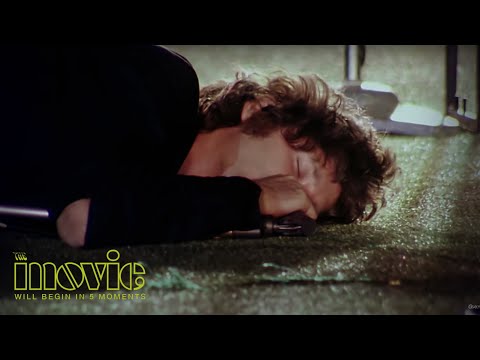
The Doors, for example, recorded “The Unknown Soldier” in 1968, an anti-war song accompanied by a film directly evoking the Vietnam War.
The promotional film, directed by Mark Abramson and Edward Dephoure, staged a fictional execution of Jim Morrison intercut with images of warfare.
Its violent imagery created resistance to its distribution, as documented in the official archives of Doors keyboardist Ray Manzarek.
It was an example of artistic protest directly connected to international politics.
The Doors — The Unknown Soldier (Hollywood Bowl, 1968)
Other musicians went beyond artistic criticism.
Joan Baez, a major figure in protest folk music, was arrested in October and December 1967 for participating in nonviolent demonstrations that blocked access to a military induction centre in Oakland, California.
Her opposition to the Vietnam War resulted in several periods of detention.
Her husband, activist David Harris, was also imprisoned for refusing military conscription.
These events are documented in Joan Baez’s official biography.
Political engagement was not simply an aesthetic posture. It could have genuine legal and personal consequences.
In August 1969, the Woodstock festival symbolised the meeting point between music, political protest and the desire for a different society.
Before hundreds of thousands of spectators, part of America’s youth expressed its opposition to war, its desire for peace and its rejection of established social conventions.
The Bethel Woods Museum, dedicated to Woodstock’s history, documents this intersection of counterculture, mass participation and the music industry.
Yet as rock became a mass phenomenon, its economic structure began to change.
Major record labels, international tours, commercial radio stations and marketing strategies gradually transformed parts of this counterculture into an entertainment industry.
What had begun as an expression of rebellion could now be sold as a cultural product.
The paradox is striking: the music industry can transform the aesthetics of rebellion into a consumer product while preserving the symbols of that rebellion.
However, it would be inaccurate to claim that rock completely disappeared or that its political engagement ended with commercial success.
Punk, followed by bands such as The Clash, reinvented forms of musical resistance from the late 1970s onwards.
But part of rock’s rebellious identity had become compatible with the very commercial structures it had initially challenged.
The parallels with contemporary rap are difficult to ignore.
The ideologies, social contexts and political demands are different. Yet both movements confront a similar question:
What remains of rebellion when rebellion itself becomes a commodity?
When Record Labels Turn Rebellion Into Capital
When a record label invests in an artist, it naturally seeks a financial return.
This does not eliminate artistic ambition, but it introduces economic constraints into the creation, production and promotion of music.
Music now operates within an environment where performance indicators play an increasingly central role: streaming figures, chart positions, audience retention, playlist placements, audience growth and commercial potential.
Under such conditions, it can become tempting to prioritise works capable of reaching the broadest possible audience over those likely to generate political controversy or divide listeners.
This does not mean that record labels systematically impose political neutrality on their artists.
Many politically engaged songs have been released by major commercial companies.
Nevertheless, economic considerations can influence artistic and editorial decisions.
Over time, the risk is that the aesthetic codes of a culture survive while the ideas that helped create it become secondary.
Rap can preserve its vocabulary, attitudes, street imagery, references to marginalisation and rebellious symbolism without necessarily maintaining its original political purpose.
The language of rebellion can become an aesthetic.
That aesthetic can become a brand.
And the brand can become economic capital.
This is precisely where Oxmo Puccino’s reflections intersect with those of Kery James.
Neither artist is simply criticising the musical quality of contemporary releases.
They are questioning the changing values that shape the music itself.
The debate extends beyond rap. It concerns any culture born on the margins that is gradually absorbed by the marketplace.
However, the music industry is not the only factor at work.
The development of streaming has also created new opportunities for independent distribution.
Artists can now bypass parts of the traditional record industry and communicate directly with their audiences.
This transformation can encourage artistic diversity just as easily as commercial standardisation.
Rap’s mainstream success does not necessarily imply its depoliticisation. It changes the conditions under which political engagement is expressed.
Orelsan: An Exception or the Beginning of a New Movement?
Against this background, Orelsan’s new political statement becomes particularly significant.
Unlike Médine or Kery James, whose political engagement has long formed a defining element of their work, Orelsan built his popularity on social observation, individual contradictions, humour and self-deprecation.
His political commentary was already present, but it has now become more direct.
His example shows that an artist capable of filling the largest concert venues can still address controversial political issues without necessarily pursuing consensus.
Does this mark the return of politically engaged rap?
Probably not on its own.
Political commitment cannot be measured through a single song or a handful of statements.
It develops over time through artistic works, publicly expressed positions and career decisions.
Nevertheless, “XXX” demonstrates that commercial success does not automatically prevent an artist from taking a political stand.
This discussion also connects with other recent developments in French rap.
In our feature “Soso Maness, Lacrim, La Fouine: When Street Rap Challenges the Myth of the Streets”, we explored how artists historically associated with street culture have increasingly questioned some of its traditional representations.
Social commentary does not necessarily disappear. It evolves, changes its vocabulary and can emerge from artists who were never traditionally associated with conscious rap.
Orelsan’s evolution may be part of this broader movement.
Must Rap Abandon Its Rebellious Spirit to Conquer the Mainstream?
Ultimately, the question deserves to be considered without excessive nostalgia.
Hip-hop in the 1990s was not uniformly political.
It already included party records, deliberately provocative songs, ego-driven performances and commercial strategies.
Similarly, contemporary rap cannot simply be reduced to music without convictions.
Artists continue to address injustice, discrimination, violence and inequality.
Others explore intimate experiences, identity and social issues without necessarily adopting the vocabulary of partisan politics.
It would therefore be misleading to divide the genre’s history into a politically conscious golden age and an exclusively commercial present.
Nevertheless, the concerns expressed by Kery James and Oxmo Puccino raise legitimate questions about the transformation of the music industry.
Can a culture become dominant without losing part of what originally made it a counterculture?
Rock confronted this contradiction decades ago.
Rap may eventually produce new movements that define themselves in opposition to its commercial standardisation.
After all, a culture does not necessarily disappear when it loses its marginal status.
It can transform, fragment and give rise to new forms of expression.
Perhaps it is within these margins, far from the charts and the demands of profitability, that part of hip-hop’s original spirit of protest is now being rebuilt.
Conclusion: Has Rap Sold Its Rebellion?
With “XXX,” Orelsan reminds us that enormous commercial success can coexist with an explicit political message.
The Normandy-born rapper has not reinvented political engagement within hip-hop.
He continues a tradition that began long before him, from Diam’s and Svinkels to Médine, Kery James and the artists who came together for “No Pasarán.”
Yet his statement carries particular significance because it comes from an artist whose popularity extends well beyond rap’s traditional audience.
At the same time, two of the most respected figures in French hip-hop have delivered a severe assessment of the genre’s evolution.
Kery James regrets the dilution of its spirit of protest.
Oxmo Puccino believes that its commercial transformation has carried it so far from its origins that it no longer resembles the music he once knew.
Their statements do not constitute statistical proof that political engagement in rap has declined.
They do, however, offer a warning about what can happen to countercultures when they become major industries.
The comparison with rock reminds us that this contradiction is nothing new.
When rebellion becomes popular, it inevitably attracts economic interests.
When those interests become central to the culture’s operation, they can reshape the very qualities that made it distinctive.
Yet it would be too simplistic to conclude that money systematically destroys artistic engagement.
Commercial success can also give certain political statements an extraordinary reach.
Orelsan provides a contemporary example.
The real question, then, is not whether rap is dead, as Oxmo Puccino suggests, but what rap has become.
Can a musical genre that dominates the charts still present itself as the voice of those who challenge the established order?
And above all, did rap lose its political engagement because it became popular, or did it become popular because it was willing to sacrifice part of that engagement?
Somewhere between those two possibilities may lie much of the recent history of French hip-hop.
And perhaps the answer will help determine what rap becomes in the decades ahead.
Further Reading: UrbanTrackz and Hellsinky Features
- UrbanTrackz — Is Rap Right-Wing?
- UrbanTrackz — No Pasarán: Twenty Rappers Make History
- UrbanTrackz — When Street Rap Challenges the Myth of the Streets
- UrbanTrackz — Kery James and His History With Générations FM
- Hellsinky — Kery James: From the Fire of Ideal J to the Black Poet
- Hellsinky — Is Rap Right-Wing?
- Hellsinky — Orelsan and Yamê: Encore une fois
Journalistic and Historical Sources
- Le Parisien — Orelsan Unveils a Political Track in Bordeaux, October 28, 2026
- La Dépêche du Midi — Kery James Interview, October 27, 2026
- L’Express — Oxmo Puccino Interview, September 7, 2026
- Le Monde — The Political Legacy of Ärsenik, October 13, 2026
- Le Parisien — Kerchak and the No Pasarán Legal Complaint, July 17, 2026
- SNEP — French Recorded Music Market Report, 2025
- The Doors — The Unknown Soldier Film Archives
- Joan Baez — Official Biography and Anti-Vietnam War Activism
- Bethel Woods Museum — The History of Woodstock
UrbanTrackz is an independent media outlet dedicated to rap, urban culture and the music industry. Discover our investigations, analysis and emerging artists at UrbanTrackz.fr and through our international English-language publication, Hellsinky.art.
Both publications are supported by Hell Sinky, an independent creative agency specialising in communications, public relations and artistic development.